"Delivering USB memory to each store is a hassle, costly, and worrying about accidents." "Store staff forget to update, and old information is left playing." Although you have introduced digital signage, are you facing such challenges in content updates at multiple stores (USB or SD card operation)?
As the number of stores increases, the labor costs for updates, delivery costs, and management risks—such as "not knowing if it's being aired as intended"—grow. In this article, we explain "cloud-based digital signage" to solve such multi-store operation issues, from three benefits of introduction to "how to choose without failure" and success stories.
1. What is cloud-based digital signage (difference from USB type)
Cloud-based digital signage is a system that allows you to remotely perform content playback settings and distribution management in real-time via the Internet (cloud server). Compared to the conventional "standalone type (USB type)," the difference is clear.
Standalone Type (USB Type)
A USB memory or SD card containing content data is inserted directly into the STB (playback device) connected to each display to play the content.
Since it does not require a network environment, the initial cost is low, but it is time-consuming as you must deliver media each time you update the content or visit the site (where the signage is located) to manually swap the media.
Cloud-based
The STB is always connected to the Internet. By accessing the management screen (CMS) from a computer browser, headquarters staff can upload videos and images and set distribution schedules, allowing them to update signage across stores nationwide simultaneously. It also allows for centralized management of flexible adjustments, such as changing content by area.
2. Three benefits of introducing a cloud-based system
In interviews with companies that have introduced our cloud-based signage, "Clomoni," the following three benefits are particularly highly rated.
Benefit 1
Remote "simultaneous distribution" and "area-specific distribution" are possible
The biggest benefit is that you can control the playback content of all stores from a single computer at headquarters. You can synchronize the video for a "nationwide simultaneous campaign starting tomorrow" to the signage of all stores with one click. Furthermore, with the latest systems, you can easily perform grouping distribution such as "Kanto area limited" or "roadside store limited," as well as time schedule settings according to the time of day, making detailed sales promotion (store DX) tailored to the target audience of each store possible.
Significant reduction in operational costs (labor costs, delivery costs)
You can complete everything from content management to distribution by yourself as a staff member at headquarters. You can significantly reduce or eliminate these burdens: "delivery costs" to send USB memory to each store, "headquarters work time" for copying data to media and sorting, and "labor costs for store staff to swap media." Even if there are equipment costs at the time of introduction and monthly system usage fees, you can reduce invisible costs associated with operations, leading to a significant total cost reduction.
Benefit 3
Risk reduction for information leakage, misdelivery, etc.
When delivering USBs containing new product information to each store, there is a risk of information leakage due to misdelivery or loss. In addition, in operations where externally prepared USBs are directly inserted, there is a possibility that the system could be affected by virus infections, etc. With a cloud-based system, since data is managed in a server environment where centralized security measures are applied at headquarters, you can fundamentally prevent physical loss and leakage risks.
3. Reasons why you should switch from multiple store/USB operation to the cloud
So, why should companies currently operating multiple stores with a standalone type (USB type) switch to a cloud-based type immediately? We explain the reasons based on real challenges in the field.
Reason 1
Eliminate the "black box" of the invisible frontline
The biggest challenge in USB operation is that "you don't know if it's really being played at the site exactly as headquarters instructed."
● Staff are too busy to remember to swap the USB drives
● No one notices that the signage screen is pitch black due to an error
● Old information continues to play even though the campaign has ended
With a cloud-based system, you can grasp in real-time from the management screen "which store's monitor is operating normally (vitality monitoring)" and "what content is playing now." Its greatest strength is that headquarters can execute reliable promotions without bothering the staff on the front lines.
Reason 2
Cost comparison in chain operations (TCO optimization)
It is often misunderstood that "cloud-based systems are expensive because they require monthly license fees," but in multi-store operations, the opposite is true.
*For a detailed understanding of cost market prices, please refer to Digital Signage Costs
In the case of USB operation: USB memory costs, packaging materials, delivery costs to each store (twice a month x 50 stores), headquarters sorting work time, and labor costs for swapping work at each store. If you add these up, there are cases where invisible running costs of several hundred thousand yen per month are occurring.
For Cloud Operation: Only the system usage fee (several thousand yen per month per unit) and communication costs. Update work is completed by headquarters in a few minutes.
The more stores you have, and the more frequently you update content, the more the long-term total cost of ownership (TCO) will decrease significantly by switching to a cloud-based system.
4. How to Choose a Cloud-Based Signage System Without Failure (5 Checkpoints)
When considering the actual switch to a cloud-based system, we organized 5 points for choosing one that suits your company from among many systems.
① Operability (UI/UX): Can field staff without specialized knowledge or sales assistants at headquarters operate it intuitively (playlist creation and schedule settings)?
② Multi-location management/distribution function: When expanding to 100 or 500 stores, can "tagging/group simultaneous distribution" by area and attribute be performed smoothly?
③ Scalability and expressiveness: Does it support the latest web-based systems? Can it handle 4K high-definition video or multi-display distribution that links multiple monitors in the future?
④ Fee structure: Is it a plan that is easy to start small (a few units) and offers cost benefits when the number of stores increases?
⑤ Support system: Is there maintenance support that will quickly rush to the site or handle send-back in the event of network trouble or equipment failure on behalf of headquarters?
5. BEEATS support cases for multi-store implementation (Clomoni)
The cloud-based digital signage "Clomoni" provided by BEEATS has evolved further after a full renewal to a web-based system, and currently boasts a track record of being introduced to a total of 250 companies and over 9,000 units (as of 2026) at stores and facilities nationwide. We will introduce 3 case studies that solved challenges in multi-store expansion.
Case Study 1
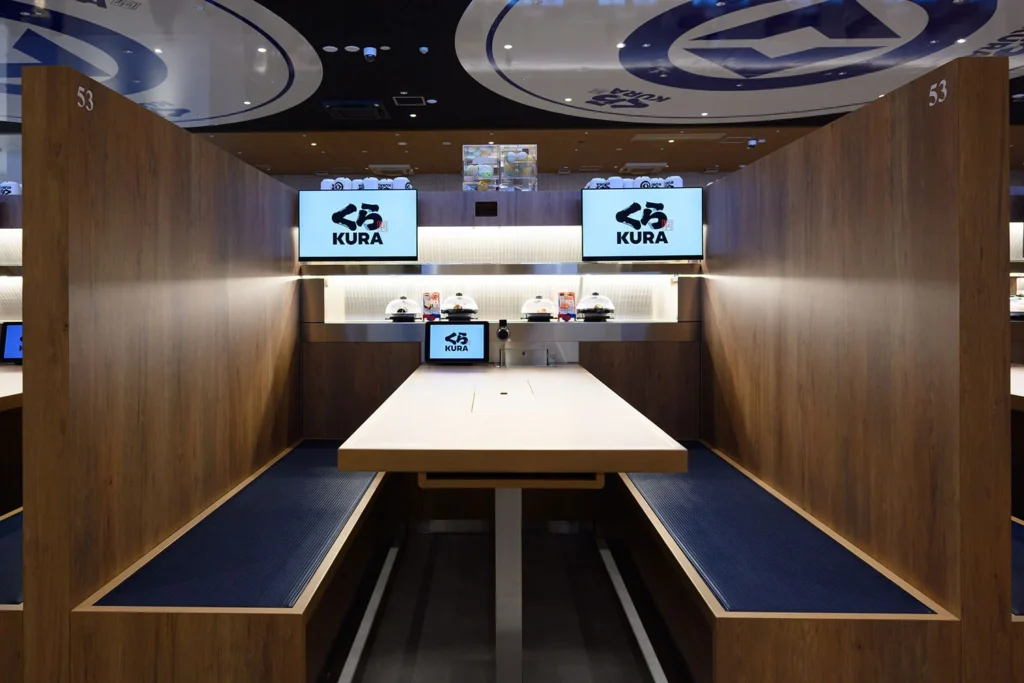
Kurasushi (approx. 200 stores, 595 units nationwide)
At Kurasushi, which operates stores on a national scale, the burden of printing and delivering posters and the work of swapping them by store staff were issues. By introducing Clomoni and switching to cloud operation, they became able to distribute campaign information from headquarters all at once. This significantly reduced the workload of store staff and realized faster information dissemination.
For details, please click the case study page below.
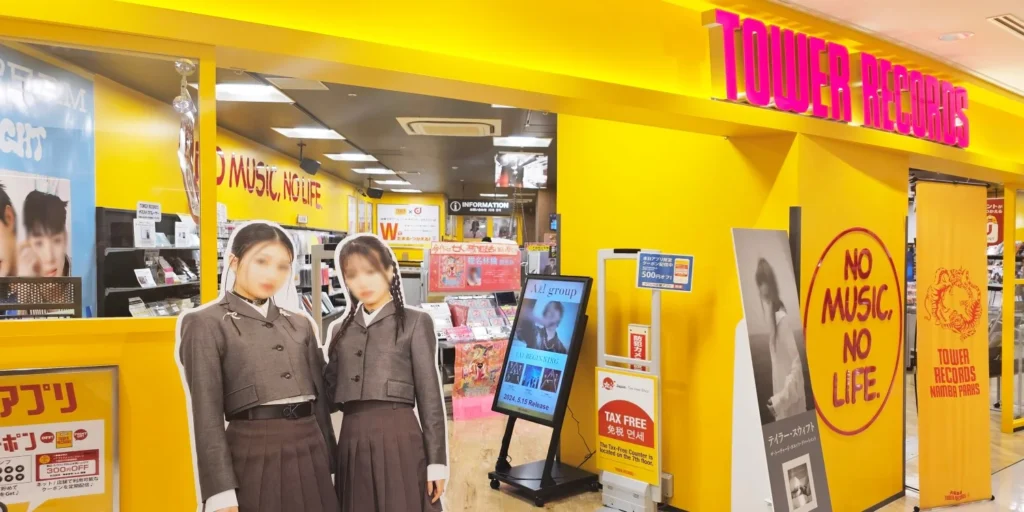
At each Tower Records store nationwide, Clomoni is used for promotional videos at the storefront and for playing artist MVs. By centrally managing numerous stores and monitors with the headquarters' cloud system, they have built a structure to deliver fresh entertainment information to fans in a timely manner.
For details, please click the case study page below.
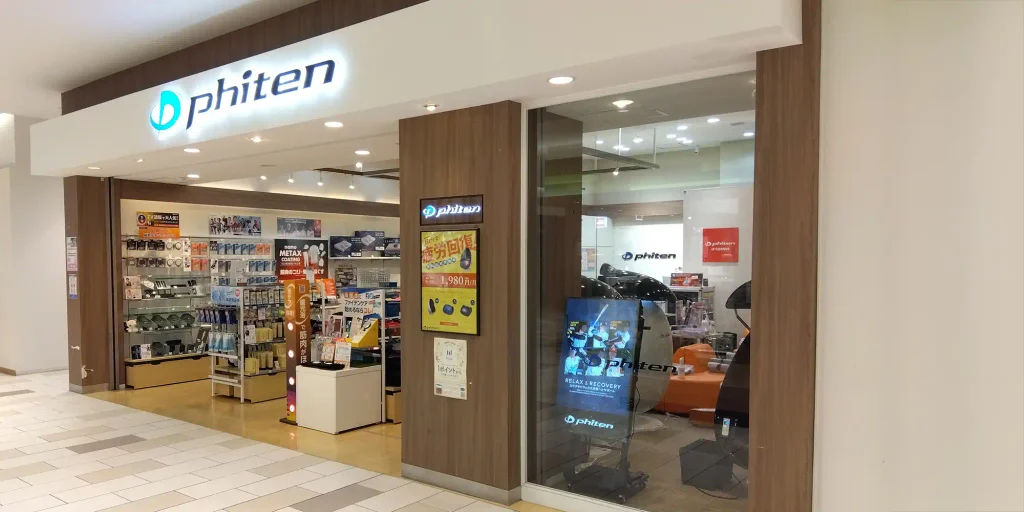
At Phiten, which develops health and body care products, they have integrated product PR and campaign announcements for 137 direct-managed stores nationwide in the cloud. They have succeeded in reducing operating costs while providing a uniform brand experience nationwide by setting up flexible distribution schedules according to the characteristics of the areas and stores.
For details, please click the case study page below.
For companies expanding with multiple stores, stand-alone signage operations using USB or SD cards have many limitations, such as the hassle of updates, delivery costs, and the risk of missing broadcasts.
By switching these to "cloud-based digital signage," you can simultaneously achieve business efficiency through remote simultaneous distribution, reduction of running costs, and "certain information dissemination (store DX)."
BEEATS CO.,LTD.'s "Clomoni" is a cloud-based signage system optimal for multi-store chains, combining intuitive operability with advanced functions such as area-based distribution and 4K support. If you are a person in charge who "wants to move away from current USB operations" or "wants to manage multiple store signage more efficiently in a centralized way," please feel free to contact us.
Q. What is the difference between cloud-based and non-cloud-based (USB type)?
A. The biggest difference is the "presence of a communication environment" and the "effort of updates." Since USB types involve inserting media directly into the monitor (STB) for playback, manual work on-site is required for every update. On the other hand, since cloud-based systems allow for simultaneous distribution and management from a remote location via the Internet, they can significantly reduce the effort and cost of multi-store operations.
Q. What are the challenges of USB operation for multiple stores?
A. There are costs to deliver USBs from headquarters to each store, the hassle of sorting, forgetting to insert by field staff (update omissions), misdelivery, and even the risk of information leakage due to loss. The more stores there are and the higher the frequency of content updates, the greater this burden becomes.
Q. What are the benefits of switching to a cloud-based system?
A. The point is that you can manage and simultaneously distribute playback content for all stores from a single PC at headquarters. This reduces invisible operating costs (labor costs, shipping costs) and also leads to risk reduction. The more stores you have and the higher the update frequency, the higher the cost-effectiveness (ROI) of moving to the cloud.
Q. What are the points for choosing cloud signage?
A. We recommend comparing and considering these five points: "intuitive usability (UI) that anyone can use," "ease of multi-site management such as grouping by area," "fee structure that allows for a small start," "nationwide support (maintenance) system," and "extensibility to the latest systems (4K and web-based)." For details, please refer to the main text and the free white paper for stores.