In-store digital signage is an electronic signboard that uses displays to transmit information via videos and still images in the front or sales area of retail stores and restaurants. In recent years, in-store promotional activities have rapidly shifted from traditional paper posters and POPs to digital signage. This is not just "digitizing signboards"; it is directly linked to solving multifaceted issues such as improving store operation efficiency, enhancing customer experience (CX), and consideration for the environment.
In this article, we will explain in detail the basic knowledge of in-store digital signage, specific usage scenarios, benefits of implementation, and successful examples of multi-store expansion. If you are a person in charge considering store DX or improving sales promotion efficiency, please use this as a reference.
In-store digital signage (Digital Signage) is a promotional system that delivers and displays digital content such as videos, still images, and text through displays installed in store entrances, around registers, and on product shelves.
The biggest difference from conventional paper posters and handwritten POP lies in "movement" and "updatability." By using video and audio, you can strongly appeal to the product's charm (sizzle feel and usage image) that cannot be fully conveyed in still images. Also, since it is possible to flexibly switch the displayed content according to the time of day, day of the week, and visitor demographic, you can deliver "the information you want to convey most now" in a timely manner.
Today, it has established itself as a standard promotional tool in all types of stores, including supermarkets, drugstores, apparel shops, restaurants, and electronics retailers, and plays a role as an important communication channel with customers.
2. Why is in-store promotion shifting to digital?
Behind the shift from paper sales promotion materials, which have been the main character of store sales promotion until now, to digital signage, there are major challenges facing the retail industry and social changes. Specifically, the following three factors can be cited.
【 1 】
Response to environmental considerations (SDGs) and paperless initiatives
In the retail industry, the conventional operation of printing large quantities of posters, POPs, and flyers for each campaign and disposing of large amounts after the period ends has become a major problem from the perspective of environmental impact. At a time when efforts toward SDGs (Sustainable Development Goals) influence corporate value, moving away from the mass consumption of paper resources is an urgent task. By switching to digital signage, these paper resources and waste can be significantly reduced, directly contributing to the company's environmental conservation activities and the promotion of paperless initiatives.
【 2 】
Need for strong eye-catching effects at limited customer touchpoints
In today's world where consumers are constantly exposed to vast amounts of information, it has become very difficult to capture customer attention with just stationary paper posters in stores. The "light" and "movement of videos" emitted by digital signage strongly appeal to human visual instincts. Even from the slight contact of passersby walking through the aisles, it serves as a powerful hook to reliably attract customer attention, increase product recognition, and encourage visits to the store.
【 3 】
Improving operational efficiency and addressing serious labor shortages
Paper poster operations involve many steps and time lags: "design production/printing → shipping arrangements to each store → unboxing/inspection after store arrival → replacement work by staff." Especially with chronic labor shortages in stores, diverting valuable staff time to replacing promotional materials is a major opportunity loss. With digitalization, the latest information can be instantly delivered from headquarters to all stores simultaneously, allowing for the transmission of fresh information at all times while drastically reducing the operational burden on field staff (operational costs) and creating an environment where they can concentrate on their primary duties such as customer service.
3. Main usage scenarios for in-store signage
In-store digital signage can be used in a variety of ways depending on the purpose, not just for displaying advertisements. Here, we introduce four main usage scenarios in the store business.
Promotion (Sales promotion/Revenue improvement)
We introduce new products, announce limited-time sales, and campaign information through videos to directly stimulate the purchasing motivation of visiting customers. For example, by showing coordination proposals in apparel stores, functional explanatory videos in electronics retailers, or sizzle-filled videos of food being cooked in the delicatessen or meat sections of supermarkets, we encourage impulse buying such as "Let's have this for dinner tonight," contributing to increased sales by visually communicating the added value of the products.
Promotion (Sales promotion/Revenue improvement)
We provide information that increases customer convenience, such as store business hours, floor maps, facility guides, and event schedules, in an easy-to-understand manner. Furthermore, in recent years, cases of using real-time information such as register wait time displays, numbered ticket guidance, parking availability, or emergency information in the event of a disaster are increasing, helping to reduce customer stress and improve store hospitality.
Environmental direction (Branding/Improving spatial value)
In addition to product information, we create store atmosphere by playing concept movies that embody the brand's worldview and beautiful environmental footage that incorporates seasonal feelings (such as the sound of waves or forest scenery). In apparel and cosmetic brand shops, hotel entrances, cafes, etc., it enhances the value of the entire space and provides a comfortable, high-quality store experience (customer experience) for customers.
Advertising media (Usage as retail media)
The use of "retail media," where retailers sell signage delivery slots installed in their own stores to manufacturers and external companies as advertising media, is attracting attention. Because advertisements can be displayed at a powerful touchpoint—the "sales floor" where consumers are actually in the process of purchasing—it is a highly valuable advertising slot for manufacturers. For retailers, it is being introduced as a next-generation business model that generates new advertising revenue (monetization).
4. Benefits of introducing digital signage
Based on the background and usage scenarios mentioned above, introducing digital signage in stores offers the following specific benefits.
Benefit 1
Can disseminate a lot of information in a small space
While physical posters can only display "one piece of information per space," digital signage can switch the screen (slide) to display content every few seconds. This allows you to maximize the use of limited sales floor space and appeal to a wider range of items.
Benefit 2
High freedom of installation location and shape
Digital signage comes in a wide variety of sizes and shapes, from large stand-alone types (floor stand types) placed at entrances, to small monitors embedded in gaps on product shelves, ceiling-mounted types above registers, and even massive LED visions covering walls. You can flexibly select and install the optimal device according to the store layout and the customer flow you want to target.
Benefit 3
Speed of information updates and long-term reduction in promotional costs
With digital signage, you can immediately change content according to campaign start dates or sudden weather changes (e.g., "rainy day coupons"). Although initial installation costs are involved, since there is no need to repeat the printing, distribution, and replacing of posters, it becomes a cost-effective (ROI) measure when viewed from a long-term perspective of several years by significantly reducing printing, distribution, and disposal costs.
There are two main types of digital signage operating systems: the "standalone type (offline type)" which plays videos by inserting a USB memory or SD card directly into the monitor, and the "cloud type (online type)" which updates data remotely via internet communication.
While standalone types function well for single stores, for chain companies with multiple locations, the "cloud-based" type is overwhelmingly superior for maximizing promotional effects and operational efficiency. By introducing a cloud-based system, the following advanced operations can be realized.
Feature 1
Batch delivery/management to multiple locations
From a computer at headquarters (office), you can simultaneously change the signage content for dozens to hundreds of stores scattered across the country with a single click. This prevents information discrepancies that lead to damaged brand images, such as "Store A is updated, but Store B still has the old poster," and allows for the instantaneous deployment of company-wide unified campaigns.
Feature 2
Real-time information delivery
You can immediately correct and deliver content according to sales floor conditions, such as time sales, urgent out-of-stock information, or product replacements according to temperature (e.g., switching to iced coffee promotions when it suddenly gets hot).
Feature 3
Detailed date and day-of-the-week specified distribution
Settings are possible to automatically switch content according to the time of day when the customer base changes, such as breakfast menus during morning commute hours, lunch sets at noon, and alcoholic beverages at night.
The more stores you operate, the more dramatic the benefits of cloud-based systems become: "reduced burden on field staff (e.g., preventing forgotten USB swaps)" and "maximization of sales promotion opportunities."
6. Is moving to the cloud difficult? The "Clomoni" option
There is no doubt that cloud-based signage is essential for multi-store operations, but many companies hesitate to introduce it due to concerns such as "the initial implementation hurdle seems high," "monthly communication and running costs will be a burden," or "the operation seems complicated and will require a specialized IT staff." That is why we recommend "Clomoni," a cloud-based digital signage system that realizes multi-store operation with low costs and intuitive operation.
Clomoni lowers the barrier to introduction by eliminating complex settings and keeping necessary functions simple. The main features are as follows.
Benefit 1
Intuitive User Interface (UI)
No specialized knowledge is required. From the management screen on your browser, you can complete the creation of playlists and setting of delivery schedules with simple drag-and-drop operations.
Benefit 2
Low-cost and clear fee structure
We have adopted a simple monthly fee structure per unit. You can also select optional functions as needed, allowing you to operate while keeping running costs down after introduction.
Benefit 3
Real-time monitoring of operating status (vitality monitoring)
Since you can check from headquarters a list of "which store's monitor is working normally," you can quickly detect errors or stoppages without going to the site.
By introducing "Clomoni," you can build a reliable and speedy digital promotion system led by headquarters without burdening field staff.
7. Introduction cases of storefront digital signage
We will introduce successful examples of companies that have implemented the cloud-based signage "Clomoni" provided by BEEATS CO.,LTD. to strengthen in-store sales promotions and improve operational efficiency.
Case Study 1
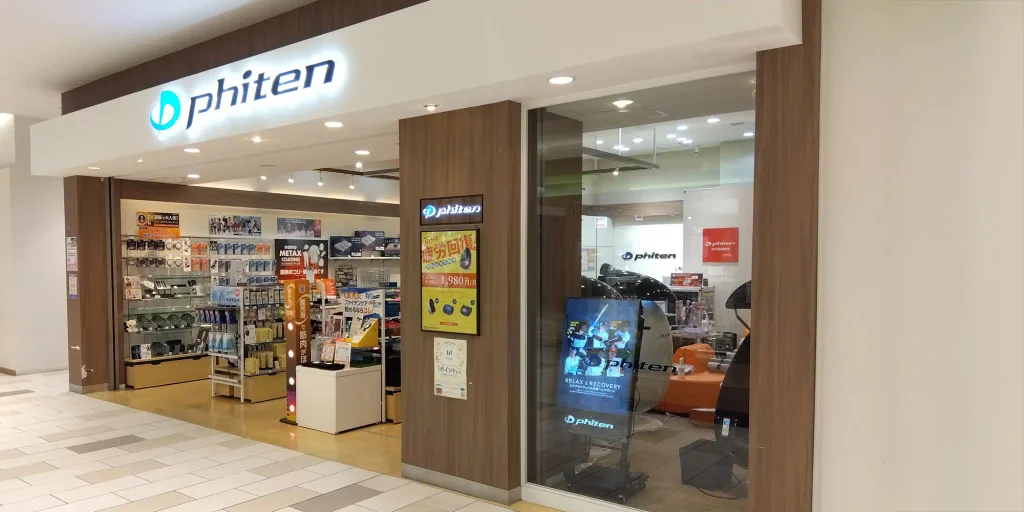
Phiten Co., Ltd.
137 stores nationwide / 142 units
Based on the concept of "Everything is to support health," Phiten Co., Ltd. is a body care company that develops various products related to clothing, food, and housing, as well as body care goods. They have introduced the cloud-based digital signage "Clomoni" in Phiten shops nationwide for the purpose of in-store promotion since January 2022 and continue to use it.
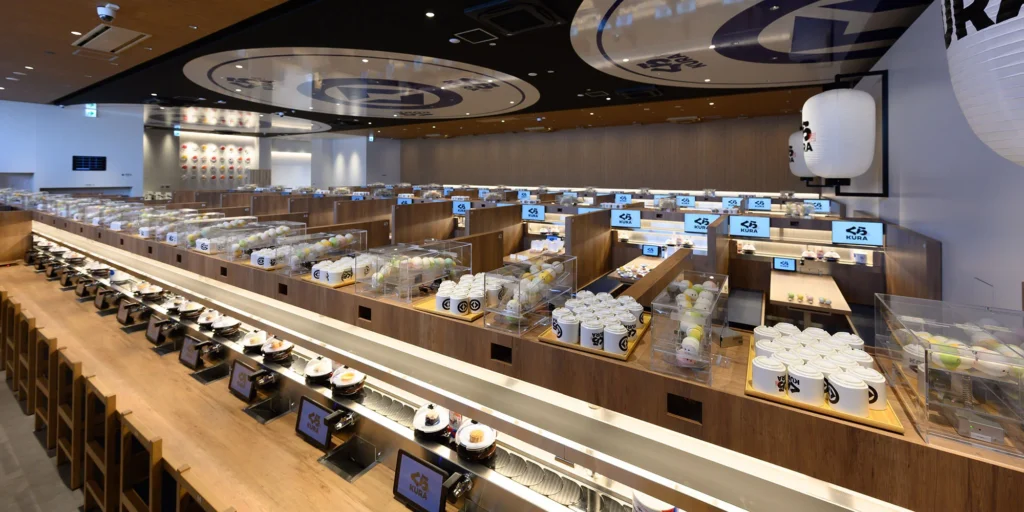
Kura Sushi, which operates the conveyor belt sushi chain "Kura Sushi" nationwide. They opened their largest store, "Kura Sushi Osaka/Kansai Expo Store," inside the venue for EXPO 2025 Osaka, Kansai, and introduced the cloud-based digital signage "Clomoni" as the in-store signage. In addition, they have also introduced "Clomoni" in 200 stores nationwide.
Capcom Co., Ltd. (Electronics retailer game section)
38 electronics retailer stores nationwide / 40 units
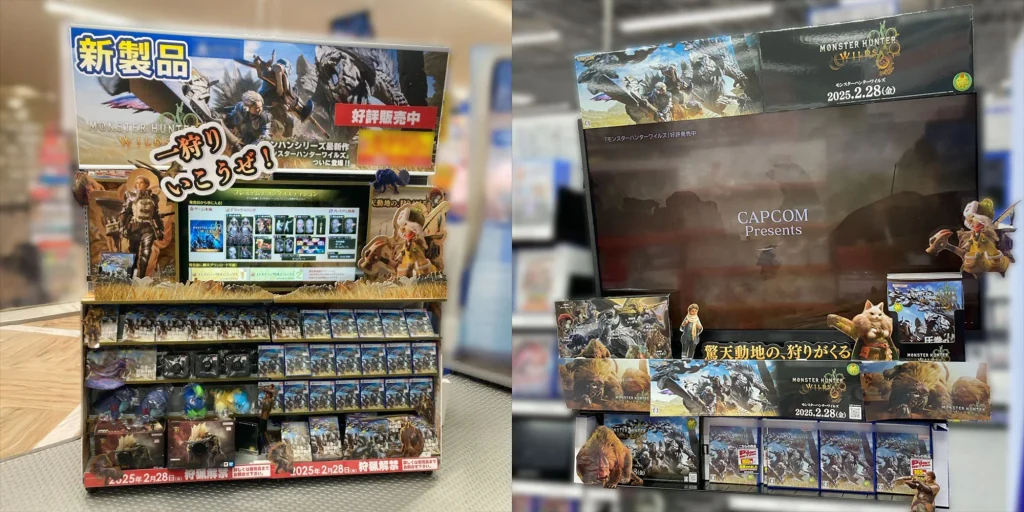
Capcom Co., Ltd., a game software manufacturer that develops numerous popular game series. As part of their in-store promotional measures at electronics retailers nationwide, they have introduced the cloud-based digital signage "Clomoni" since December 2019 and continue to use it. They were originally using another cloud-based signage service, but decided to replace it with Clomoni while reviewing their operating costs and functions.
In-store digital signage is no longer just "digitized posters." It is an extremely powerful "essential infrastructure for the digital age" that reduces environmental impact, compensates for labor shortages, and delivers attractive information to visiting customers at the most effective timing, thereby boosting purchasing behavior. Especially for companies with multi-store operations, the introduction of a "cloud-based" system, which allows headquarters to centrally manage the delivery status of each store and execute rapid promotions, will be a key factor in future store DX.
If you are in charge and have issues such as "I don't know how to choose signage that suits my company's store environment," "I want to streamline sales promotion operations at multiple stores," or "I want to review operating costs," please feel free to consult BEEATS, which has abundant retail support achievements. We will propose the optimal solution for your business type and objectives.
Q. What are the benefits of introducing digital signage to the storefront?
A. Points include the ability to disseminate a vast amount of information in a limited space and high freedom of installation according to the sales floor layout. Another major benefit is that, compared to paper posters, content updates are faster, and in the long run, it reduces the time and cost of printing and distribution.
Q. What is cloud-based digital signage?
A. It is digital signage that delivers and manages content from a system on the cloud via the Internet. It enables batch delivery to multiple locations, real-time content updates, and scheduled delivery according to the time of day, and the more stores you operate, the higher the introduction effect.
Q. Isn't the introduction cost of cloud-based signage high and the operation difficult?
A. With a system like "Clomoni," it can be introduced with a low-cost and simple fee structure. Because it uses an intuitive operation screen (UI), even those in charge without specialized IT knowledge can easily manage it in batches.
Q.What types of industries is in-store digital signage used in?
A. It is used in a wide range of industries, starting with sales promotions in supermarkets, drugstores, and electronics retailers, as well as commercial facility guidance and environmental direction in apparel and hotels. There are also many examples of simultaneous introduction to multiple stores.