From spring to early summer of 2025, opportunities to see the word "Wishcore" in news articles and social media posts have increased. Around the same time, I felt there were many scenes where words like "Balletcore" and "Angelcore," and the term "-core" in general, were also being seen. In this article, starting with what Wishcore is, we will look back at the types and background of the spreading "-core" word trend, and search for hints that could lead to Gen Z marketing in 2026.
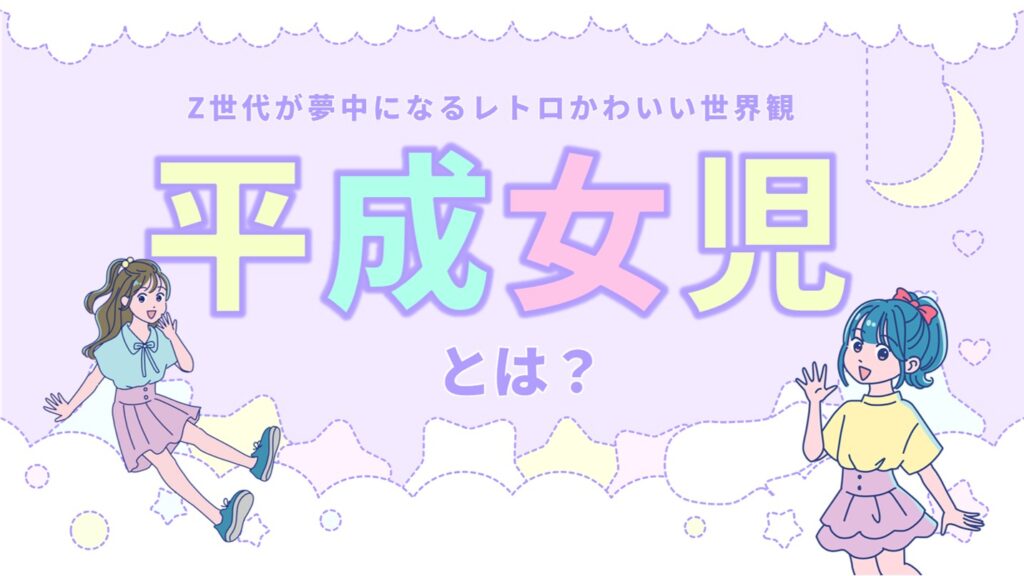
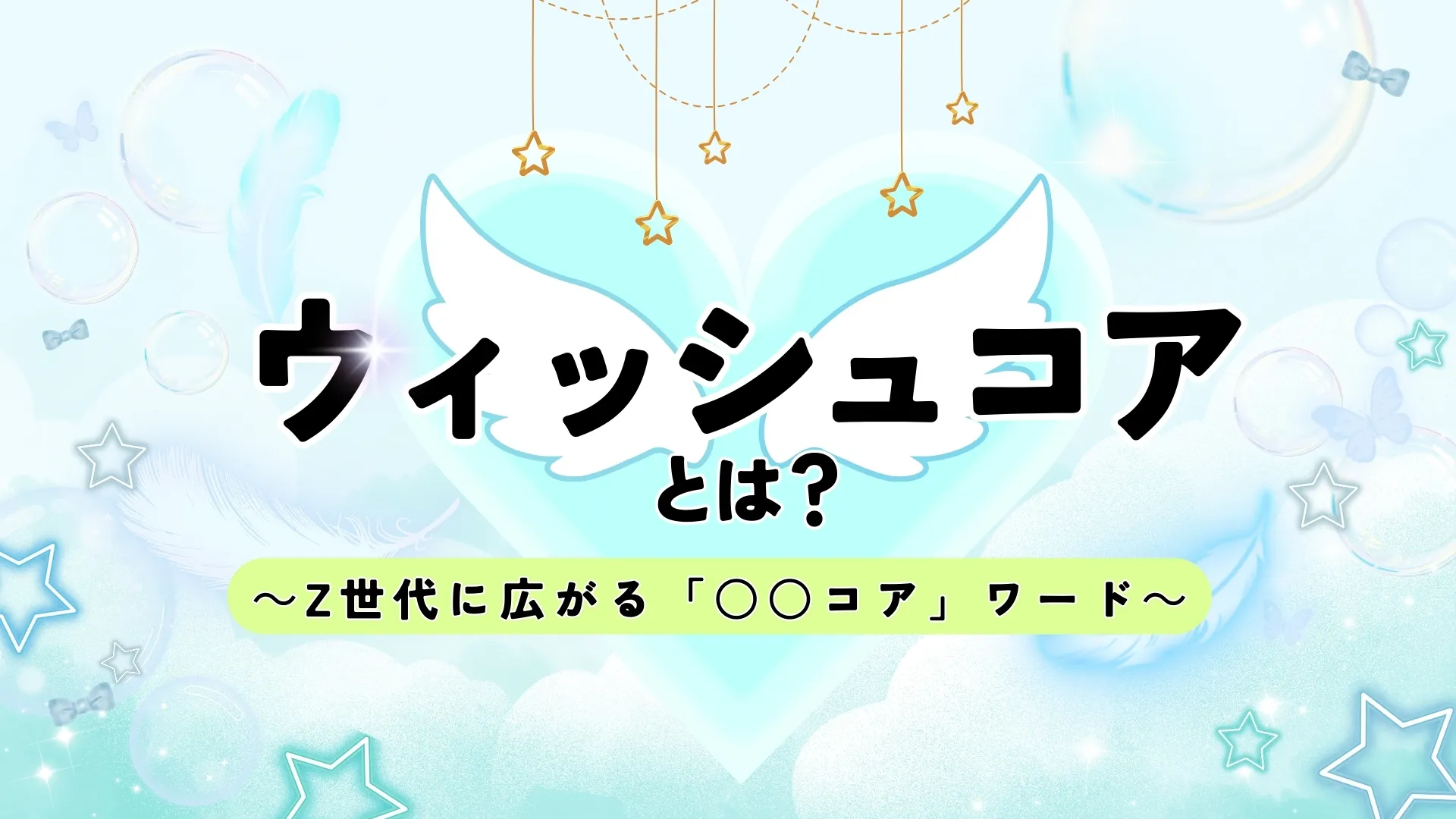
Wishcore is considered a style that spread triggered by the world view of the Korean K-POP boy group NCT WISH. The themes are "wishes," "dreams," and "prayer," and it is characterized by motifs such as pastel colors, stars, clovers, angel wings, dot patterns, and clouds. When you search for "#Wishcore" on Instagram, many posts with large angel wing smartphone cases and pale color tones line up. Overall, it has the impression of having a soft, slightly fantastic tone in common.
What is the "core" in Wishcore?
Wishcore is a style themed around "wishes," "dreams," and "prayers." The "wish" in the first half of the name points directly to wish. So, what is the "core" in the second half?
The "core" used here is the English word "core". Originally meaning "center" or "nucleus", it is increasingly used in recent years in the context of fashion and culture as a word that collectively refers to a certain worldview or set of values.
In terms of sensation, it might be used in a way similar to the Japanese suffix "-kei" (meaning "type" or "category"). (It has a nuance slightly similar to the term "-kaiwai" (meaning "circle" or "scene"), which is often heard in Japan now.)
The "core" in "-core" is like a label for roughly sharing a style or worldview. Rather than having detailed rules or correct answers, it's more like an image of a term that collectively refers to an atmosphere, like "this type of mood" or "this feeling."
These "-cores" are not just limited to Wishcore. Looking back at 2025, there were many "-core" terms that became trend words among Gen Z.
Beyond Wishcore! The increasing "-core" words I noticed
For example, Balletcore. It features a light and delicate world view reminiscent of ballerina-style costumes and practice clothes. It began to attract attention around 2022 and popularity continues in 2025. Sparked by the styling incorporated by popular K-POP girl group BLACKPINK's JENNIE, the topic spread mainly in South Korea. Items such as tulle skirts, lace, ribbons, tights, and pale colors are often used.
Angelcore is one of them. It is a style characterized by a more fantastic, soft mood, centered on motifs such as angels, wings, pearls, and lace.
----
These "-core" words are also picked up in trend rankings. In the "2025 Annual Trend Ranking" published by the WE LABO [People, Things, Objects, Places] Laboratory operated by WEGO, in the fashion category,
・"Wishcore" is in the JK (high school girl) and Korean trend circles ・"Angelcore" is in the 2D geek circle ・"Balletcore" is in the Korean trend circle
Wishcore, Balletcore, Angelcore. When you line them up like this, some people might feel, "Aren't these almost the same?"
Pale colors, soft, and a little fantastic. If you only look at posts and styling, there are times when it feels like the appearance doesn't change that much, only the names do.
(Furthermore, there are also "Clovercore," which specializes in clover motifs, and "Fairycore," which is themed around fairies, so honestly, it can feel a bit confusing.)
It seems best to first understand that "-core" trends that express similar worldviews are just "different terms based on how motifs and worldviews are captured," without needing to strictly distinguish everything.
Where did "Wishcore" and "-core" come from?
In the first place, the very way of saying "-core" is an expression that has been used in overseas internet culture and fashion culture. For example, "Barbiecore," which became a topic of conversation after the release of the movie "Barbie," and "Normcore," which was born in European and American fashion/culture in the early 2010s, have been used for some time as words that collectively refer to a worldview or set of values.
On the other hand, looking back at the "-core" words that spread among Gen Z in 2025, it seems that many of them have spread via Korean fashion and K-POP culture.
A point that cannot be overlooked as a feature of K-POP is that the world view (concept) is clearly designed for each song and artist. Including costumes, visuals, artwork, and how to show on SNS, a different concept is presented for each single song or activity, and shared one after another along with its atmosphere.
As these expressions reach Generation Z through K-POP and Korean trends, it may be that the term "-core" is being used as a trending word in Japan more often.
▼ Please also check this article regarding the Gen Z Korean trend boom.
Against the background of such flows, beyond the framework of fashion and SNS, efforts themed on "○○core" have come to be seen among sales promotion and promotions by Japanese companies.
Case 1.
Nitori Deco Home "Balletcore Style" new autumn products
Nitori Deco Home's new autumn series released from mid-September 2025 has "Balletcore" as the theme. Products reflecting "Balletcore" elements, such as items with ribbons and tulle material motifs, were developed.
The dessert buffet offered by Hilton Fukuoka Sea Hawk from January 2026 is titled "Strawberry Heaven ~Angel in Love with Strawberries~" and features an "Angelcore" aesthetic expressed through motifs like angels and wings.
Case 3.
Art Hotel Osaka Bay Tower "Wishcore" Themed Venue Decor
At Art Hotel Osaka Bay Tower, restaurant decorations themed around the worldview of "Wishcore" started in January 2026. A spatial production is performed with the image of "a glittering party venue opened by angels resting their wings."
In this way, "-core" is beginning to spread as a hint for sharing worldviews in corporate promotions and spatial production.
What will happen to "-core" in 2026?
When looking at the trend forecasts chosen by Gen Z for 2026, I noticed that, surprisingly, not a single "-core" term was ranked.
Given that various "-core" trends, starting with "Wishcore," were the talk of the town in the first half of 2025, this change is something to be curious about.
However, this does not seem to be a story that can simply be concluded as "the trend of -core has ended."
In fact, when looking at the 2026 trend forecast, words such as "Magical Girl Circle" and "Shoujo Manga Circle" are ranked in, and it feels as if similar nuanced world views and moods themselves continue to be spoken about under different names.
Even if the way they are called changes, the worldview itself that Gen Z finds "cute" and is attracted to might not have changed significantly.
Looking at the worldviews Gen Z is attracted to rather than trend names
When looking at Gen Z trends, it feels as if new words are being born and updated one after another.
"Wishcore," "Balletcore," "Angelcore," etc., have been named in detail for each worldview, but when you look at the mood behind them, you can see many common sensibilities. While words continue to change, it feels as if the preferred worldview and atmosphere itself continues, while changing its name.
That is precisely why, while keeping an eye on the atmosphere and worldview behind the trend words themselves, I wonder where Gen Z's sensibilities are headed. At Retail Voice, we would like to continue exploring from that perspective.
◇◇◇
At BEEATS CO.,LTD., we help shape such worldviews and moods into real-life experiences through exhibitions, pop-up stores, spatial design, and promotional planning.
"What kind of atmosphere will be conveyed now?" "How to express it in a way that is unique to this brand?"
Instead of chasing trends, we read the worldview and drop it into an experience. When you want to think about promotions from that perspective, please take a look at the BEEATS website.
Q1. What are the characteristics of Wishcore style?
A1. A style themed around "wishes," "dreams," and "prayers," characterized by motifs such as pastel colors, stars, clovers, and angel wings. It spread starting from the worldview of the K-POP group "NCT WISH," and has a pale color palette and a soft, fantastic tone.
Q2. What is the meaning of "core" in the term "-core"?
A2. It derives from the English "core" and is used as a term to refer collectively to a specific "world view" or "values" in fashion and culture. With a nuance close to "○○ type" or "○○ circle," it plays the role of a label for sharing the overall atmosphere and sense of air.
Q3. Aside from "Wishcore," what other "-core" trends are there?
A3. There is "Balletcore," which is reminiscent of ballerina-style costumes, and "Angelcore," which expresses a fantastic mood with motifs such as angels and wings. There are also other variations like "Clovercore," which specializes in clovers, and "Fairycore," which is themed around fairies.
Q4. Where did the trend term "○○core" spread from?
A4. It is an expression originally used in overseas internet and fashion culture, but many of those that spread in 2025 spread via Korean fashion and K-POP culture. The world view clearly designed for each K-POP-specific song reached Generation Z, and it is said that it has permeated in Japan as well.