Nostalgia Toys refer to a trend of toys that can be enjoyed across generations, combining the sense of nostalgia familiar to children of the Showa and Heisei eras with the sense of freshness they hold for children of the Reiwa era.
In recent years, the toy market has bounced back from the headwinds of the declining birthrate and is expanding to an unprecedented scale while involving the adult layer. One of the trends attracting attention in that growth is this "Nostalgia Toy." In this article, we will explain the definition of Nostalgia Toys, the difference from the related term "Kidult," specific product examples, and the overall picture of the latest toy trends in 2026. Furthermore, we will also introduce hints for specific measures on how to utilize this trend for corporate sales promotion and promotional activities. Persons in charge of product planning, marketing, and in-store sales promotion should make use of it for next-generation promotion design.
Nostalgia Toys are not merely "reprints" (re-releases) of toys that were hits in the past (Showa and Heisei eras). It is a general term for toys that fuse "newness"—adapted to modern lifestyles and values—while basing themselves on the "nostalgia" of that time.
This term was listed as one of the notable trends for 2026 by the Japan Toy Association at the press conference for "TOKYO TOY SHOW 2026" (held on the same day as the Japan Toy Awards 2026 ceremony).
The biggest strength of Nostalgia Toys is that they reach two layers simultaneously. For the adult generation who used to play, it strongly stimulates nostalgia (homesickness), and for the young generation of Generation Z and children of the α (Alpha) generation who do not know the toys of that time, it is accepted as "fresh and retro-cute new toys."
In other words, it is characterized by having a strong aspect as an "All-Age (for all ages) product" that functions as a communication tool across generations.
2. Why Nostalgia Toys are attracting attention now
The background to why Nostalgia Toys have emerged at the forefront of trends involves three intertwined factors: changes in social structure, the spread of social media, and the overall growth of the toy market.
Reason 1
Continuous expansion of the toy market
According to a survey by the Japan Toy Association, the domestic toy market size in fiscal year 2025 reached 1.1664 trillion yen*, a 106.3% increase from the previous fiscal year, setting a new record high. One of the backgrounds for market expansion, even as the birthrate declines, is the spread of toys that adults can also enjoy. Nostalgia toys, which capture the hearts of the adult generation with purchasing power, are attracting attention as one of the contents supporting this market expansion.
The "nostalgic generation" has become the parent generation (purchasing layer)
The millennial generation (born between the 1980s and 1990s), who were absorbed in Tamagotchi, Mini 4WD, and various analog games from the early to mid-Heisei period, are now the main demographic for child-rearing. This parent generation has a desire to let their own children experience the "things they enjoyed playing with as children," and Nostalgia Toys evolved as a "Reiwa version" match this desire. It is stimulating "two-generation consumption"—nostalgic for parents and new for children.
Mechanism of "empathy" and "diffusion" on social media
On social media such as TikTok and Instagram, content including keywords such as "retro" and "emotional" tends to have higher engagement. Nostalgia Toys are a genre that easily invites empathy such as "nostalgic!" and "emotional!" on social media, just like Y2K (2000s) fashion and the pure cafe boom. Therefore, it creates a cycle of being diffused and consumed among the young generation, centered on Generation Z.
A term often spoken along with Nostalgia Toys is "Kidult." It is a word that combines "Kids" and "Adult," and while it is also a trend in the market for adults, it is important to grasp the difference between the two.
These two can be considered to differ along the following axes.
Kidult (adult self-consumption): Mainly focused on "adults purchasing for themselves." It is characterized by a strong tendency to be completed as an adult hobby, such as high-priced hobbies.
Nostalgia Toys (Spreading Across Generations): The axis of "nostalgia" has been added to the adult market. It is characterized by its ability to appeal across generations because it appears as a nostalgic memory to the adult generation who knew those times, and as a retro yet fresh experience to Gen Z and the children's generation.
Compared to Kidults, which are easy to complete with adult personal consumption, Nostalgia Toys have a marketing difference in that they can involve multiple generations with a dual structure of "nostalgic for parents, new for children."
4. Specific examples of Nostalgia Toys and the trend of "Reiwa evolution version"
As an example of Nostalgia Toys embodying this "spillover across generations," we will introduce the following three. All have in common the point of connecting the charm of that time to the way of enjoying it in Reiwa.
It is a "Reiwa evolution version" of the competitive puzzle game that was released in 1981 and was loved as a masterpiece toy representing the Showa era (MegaHouse, released in April 2026). The basic rule of sliding panels to connect the path of the approaching alarm clock character "Tick Tock" remains the same. Added to that are goal parts and circular panels, and in addition to the conventional "competitive mode," a "cooperative mode" that can be played alone has been added. It is a product where the parent generation who knows the time of release can taste nostalgia, and children can taste the fresh fun unique to face-to-face analog games.
It is a series that develops the Western version "Digimon Original" of the first "Digital Monster" released in 1997 with a stylish body design (Bandai, released in March 2026). It contains Digimon, etc., that appeared in the first "Digital Monster Ver. 1-5," and you can enjoy raising, evolving, and battling just like at that time. The text display in the game is an English overseas localization specification, and the design is printed on the front of the body, which is also characterized by being able to carry it around as a fashion item.
Born in 2008, it is an IP that gathered support from girls through anime broadcasts (2009–2015). The generation that was playing at that time is now Generation Z, and there is a movement to re-evaluate those memories as "emotional" fashion and culture.
5. 2026 Overall toy trend picture
Let's take a bird's-eye view of the entire picture of the latest toy trends as of 2026, including Nostalgia Toys. The Japan Toy Association lists "toys reflecting social trends," "Nostalgia Toys," and "Kidult Toys" as notable trends for 2026. The modern toy market strongly reflects social trends as a whole.
Toys reflecting social trends (learning society while playing)
Toys that incorporate social concerns such as sustainability and investment. For example, "Investment Ranking" (MegaHouse), which won the Grand Prize in the Game & Puzzle category of the Japan Toy Awards 2026, gathered attention as a game themed on investment.
Nostalgia Toys (tools connecting generations)
As mentioned above, it is a trend that fuses the nostalgia of the Showa and Heisei eras with the newness of Reiwa, involving two generations of parents and children and Generation Z.
Kidult Toys (adult self-expression and healing)
Toy groups for "healing" and "self-expression" that target adults' disposable income and time, such as bonsai series of Lego blocks that can be displayed as interior decorations and high-definition miniature figures.
Other notable trends: Closed package toys (blind box/capsule toys)
Product groups that provide the excitement of "not knowing what will come out." The unit price is affordable and it is easy to capture inbound demand, and specialty store openings are following one after another in station buildings and commercial facilities.
What these trends have in common is that the fixed idea that "toys = only for children" is changing significantly. Toys are now being redefined as all-age entertainment.
6. How to utilize Nostalgia Toys for sales promotion and promotion
The "Nostalgia Toy" trend is not just for toy manufacturers. It is also an effective approach to move consumer hearts in retail store promotions, brand marketing, and event customer attraction. Here are four specific utilization ideas.
Proposal ①
Development of pop-up stores themed on "nostalgia"
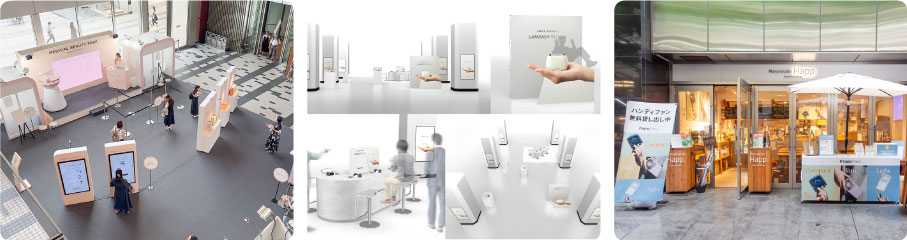
We will develop pop-up stores using event spaces in commercial facilities and station buildings that reproduce the world view of Nostalgia Toys. For example, by creating an interior that imitates a Showa-era pure cafe or a game center from the early Heisei era, we sell limited products arranged in a modern version. If you set up a photo spot, you can aim for social media diffusion (creation of UGC) by Generation Z and store visits by the adult generation at the same time.
Proposal 2
Experiential events targeting two generations of parents and children
We will hold experiential events (real events) where people can actually touch and play with Nostalgia Toys at shopping mall squares, etc. Because communication where parents teach children how to play is born, it encourages long-term stays of family layers. It is also effective as a customer attraction measure for holidays.
Proposal ③
Retro-pop sales floor creation (VMD deployment)
Incorporating elements of nostalgia toys into VMD (Visual Merchandising) is also effective in clothing, general merchandise, and cosmetic sales areas. If you produce display shelves and fixtures that pay homage to the package designs of nostalgic toys, you can create an "emo" atmosphere throughout the sales area. It also increases the eye-catching effect that stops customers passing by.
Proposal 4
Reissue/collaboration with different industries
Collaboration measures where restaurant chains adopt Nostalgia Toys as giveaway toys, or apparel brands develop T-shirts featuring Reiwa-version designs of nostalgic characters. It becomes a trigger to send customers not only existing brand fans but also new customer layers holding nostalgia for that toy to the store.
Summary
Nostalgia Toys are content that captures the hearts of a wide range of generations from children to adults by multiplying "past memories (nostalgia)" with "current value (innovation)." Against the backdrop of changes in consumer behavior such as the spread of toys that adults can enjoy, they will likely become a trend that influences not only the toy market but also the retail and promotion industry as a whole from 2026 onwards.
If you are thinking of incorporating this trend into your company's promotion or store attraction, please consult BEEATS, a professional in event planning and space production. We will propose the optimal pop-up store or experiential event that enhances brand value and generates empathy and diffusion among target layers.
A. A trend of toys where the nostalgia of the Showa/Heisei era and the freshness for Reiwa children coexist. It is characterized not by being a mere reissue, but by being updated in a modern style. The Japan Toy Association lists it as one of the notable trends for 2026.
Q.What is the difference between Kidults and Nostalgia Toys?
A. In terms of being "toys that adults enjoy," the two are closely intertwined. However, while Kidult-oriented products tend to conclude primarily on the axis of being "for adults," Nostalgia Toys differ in that they add an axis of "nostalgia," allowing them to appeal to multiple generations.
Q.Why are nostalgia toys popular?
A. There are three main backgrounds. The expansion of the entire toy market (FY2025 hit a record high), the generation that was playing with toys at the time becoming the parent generation with purchasing power, and the element of "retro and emotional" being easily sympathized with and diffused on social media, especially by Generation Z.
Q.How can it be applied to corporate sales promotions and marketing?
A. It can be applied to the development of pop-up stores themed on nostalgia, holding experiential events that can be participated in by two generations of parents and children, creating sales floors that incorporate retro-pop elements, and reissue/collaboration projects with different industries. It can be used to create triggers for visitors, experiences, and social media diffusion across a wide range of generations.