"Sales Promotion (SP)" is a set of initiatives to directly convey the appeal of products to consumers and encourage purchase behavior. It is often confused with advertising and marketing, but SP is an initiative that generates the "desire to buy" and provides that final push. For example, suppose a new sneaker is released. Stylish coordinates are spread on social media, and as the number of interested people increases, what happens if a campaign is held such as "10% off for a limited time & original shoe cleaner included!"? Because of this campaign, even people who were hesitating to buy may feel "It might be a loss if I don't buy it now!" and the possibility of leading to an actual purchase increases.
In this way, SP plays an important role in increasing consumer desire to purchase and supporting decision-making.
At BEEATS, we have supported corporate sales promotion strategies for 48 years and have worked on numerous sales promotions. In this article, we explain the basics of sales promotion, keys to success, and the latest trends in detail. We have summarized the content so it is easy to understand, even for those in charge of SP for the first time, whether BtoC or BtoB. Please read until the end!
Sales promotion is an initiative that directly encourages the purchasing behavior of consumers and companies. While advertising plays the role of increasing brand awareness, the greatest characteristic of SP is that it pushes for the "decision to purchase."
For example, have you ever bought something on impulse after seeing store POP for a campaign like "10% off for a limited time only" or "Present for all purchasers"? This is exactly the role of SP.
◆◆◆
Differences from Advertising and Marketing
Sales promotion (SP) is part of a marketing strategy, but as mentioned above, it has a different role than advertising. The roles of advertising, marketing, and SP are summarized briefly below.
●Advertising: Expanding awareness of the brand or product through TV CMs or SNS advertising. ●Marketing: Designing the entire business such as product target setting, pricing strategy, and distribution strategy. ●SP: Implementing measures to support consumer purchasing at the final stage of sales.
When launching a new product into the market, first, we design the entire business in the marketing strategy, such as "which layer to sell to," "what to make the price range," and "what are the sales channels?" Next, using advertising, we let many people know, "This product has been released!" And then, utilizing sales promotion (SP), we implement measures such as "Free sample included for a limited time!" to create opportunities for people to actually pick it up.
◆◆◆
Purpose and effects of SP
To repeat, the main purpose of sales promotion (SP) is to increase consumer desire to purchase and connect it to actual purchase. As concrete effects, the following can be cited.
1. Lowering the hurdle to purchase
By providing coupons or trial products, we create triggers for purchase like "let's try it" or "let's buy it now".
2.Brand Awareness Improvement
Leave a strong brand impression through store POP and SNS campaigns.
3. Acquiring repeaters
Encouraging continuous purchases by utilizing point cards and exclusive benefits.
4. Differentiation from competitors
Differentiating from competitors by using special campaigns or unique promotion methods.
Differences between BtoB and BtoC Sales Promotion
Sales promotion (SP) approaches differ significantly depending on the target. Since BtoB (for companies) and BtoC (for consumers) have different purchasing processes and speeds of decision-making, it is important to develop the optimal measures for each.
[BtoC]
General consumer sales promotion
BtoC SP aims at promoting purchase behavior in a short period and often uses methods that appeal to consumer emotions.
・Coupon and discount campaign: Creating a "reason to buy now" with limited-time discount or point return measures. ・Trial products and sampling: Increasing purchasing desire by having customers actually try the product. ・SNS campaign: Aiming for awareness expansion with plans where benefits are obtained by sharing or following.
[BtoB]
Sales Promotion for Companies
BtoB SP aims to build relationships and foster trust with companies rather than promoting short-term purchases. Since purchasing decisions are made by multiple stakeholders, more logical appeals are required.
・ exhibition • Holding a seminar : To communicate the value of the product while providing specialized knowledge. ・ White papers and case studies : Provide concrete examples of how it can be used to help solve the challenges faced by companies. ・ Free trial/demo We provide opportunities for customers to actually try out the product, lowering the barrier to adoption.
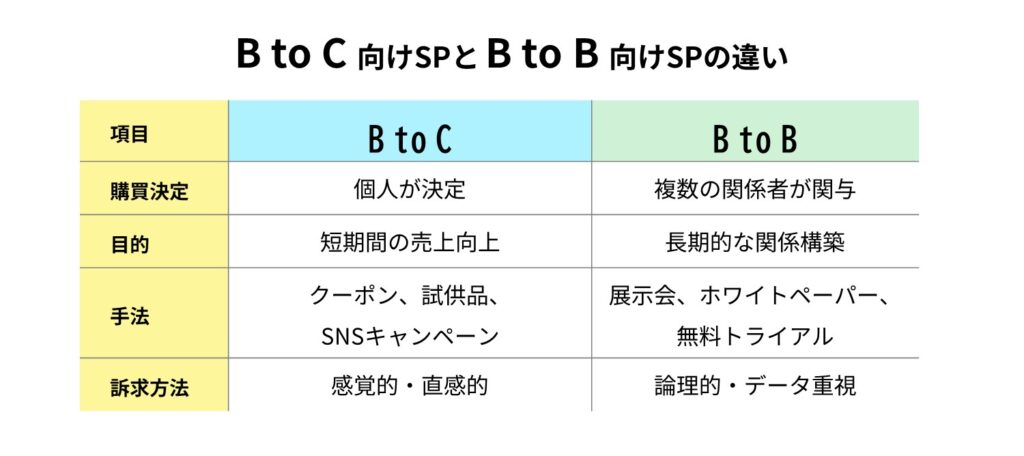
The commonalities and differences between BtoB and BtoC sales promotions can be briefly summarized as follows. (This is just an example as it varies by case, so please use it as a reference.)
As shown above, while the methods used for BtoB and BtoC sales promotion differ, the objective of "promoting the target's purchasing behavior" is common to both.
Types and methods of sales promotion
There are various methods for sales promotion, and it is important to use them selectively based on the objective and target. Here are some typical types and specific application examples.
【1】
Price promotion
Price promotion is the most common method used to increase sales in a short period of time.
<Representative Methods> ・Discount campaigns: Lowering prices for a limited time to lower the hurdle for purchase (e.g., "20% off for a limited time"). ・Coupon distribution: Providing paper or digital coupons to strengthen purchase motivation. ・Cashback: Encouraging the purchase of high-ticket items by refunding a certain amount after purchase.
【2】
In-store promotion (In-store sales promotion)
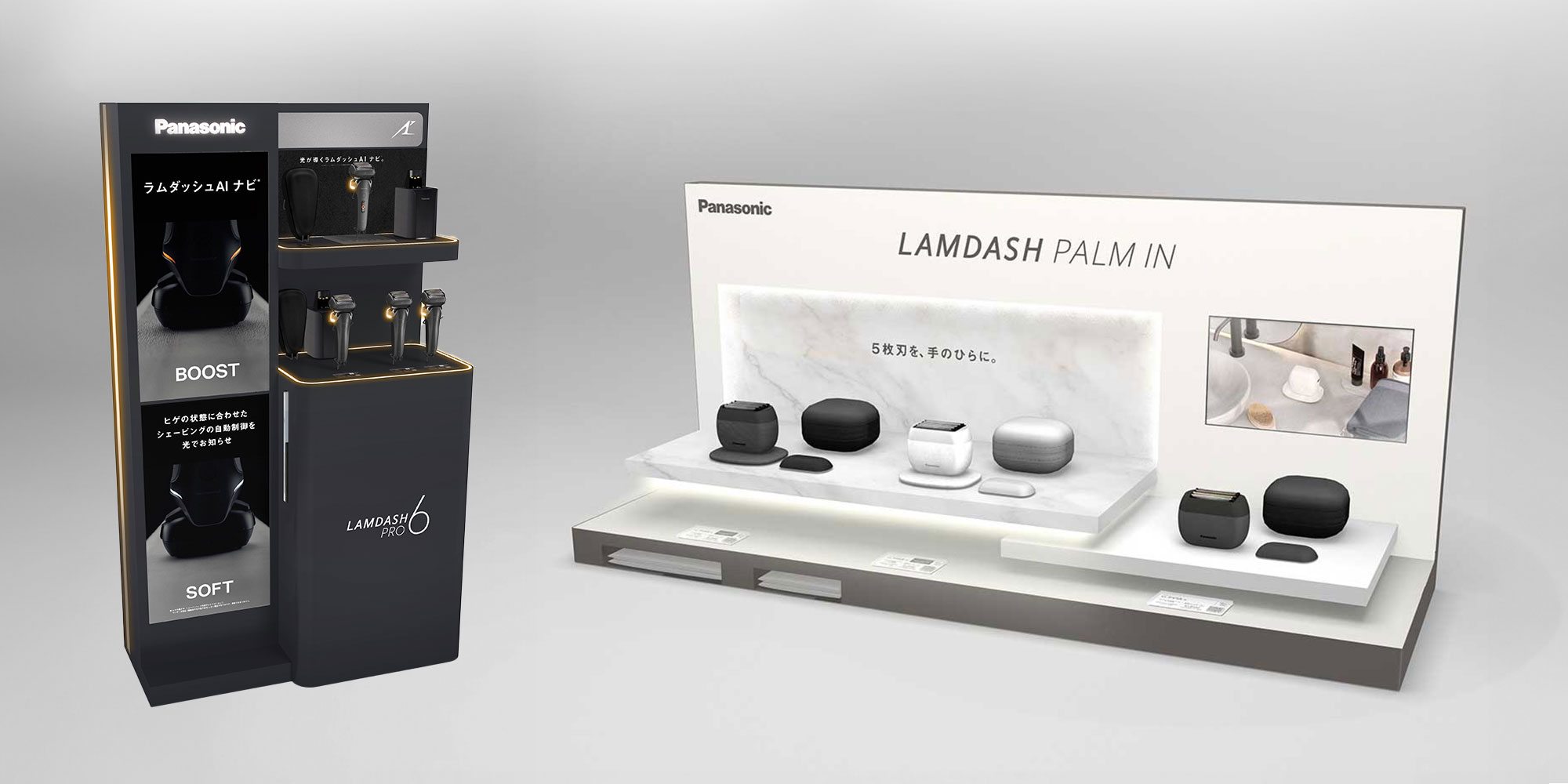
Sales promotions conducted in physical stores are a method that heightens purchase intent among visitors and directly impacts sales.
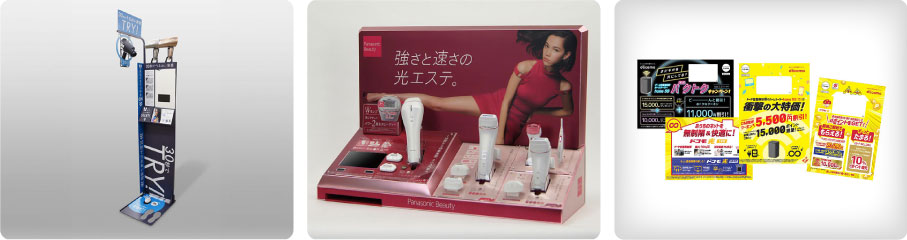
<Representative Methods> ・End-cap display: Placing products in front of the register or at the end of the aisle to make them stand out and encourage purchase. ・Store display (fixtures): Utilizing dedicated display shelves and POP to emphasize the product's appeal. ・Tasting/Demonstration sales: Providing opportunities to actually try products to intuitively convey their quality.
【3】
Experiential Promotion
This is a method that allows consumers to actually try a product, thereby gaining a sense of satisfaction and leading to a purchase.
<Representative Methods> ・Sampling/Tasting sales: Providing free samples at stores or events to have customers actually experience them. ・Demonstration sales: Conducting sales demonstrations that realistically convey the feeling of using home appliances, cosmetics, etc. ・Pop-up store: Opening a limited-time store to provide a space where customers can experience the brand's worldview.
▼We also explain about pop-up stores in this article! Please take a look.
【4】
Seasonal Promotion
Sales promotions tailored to seasons or specific events are carried out by targeting times when consumer interest is high. Buying intent is heightened by conducting time-limited initiatives.
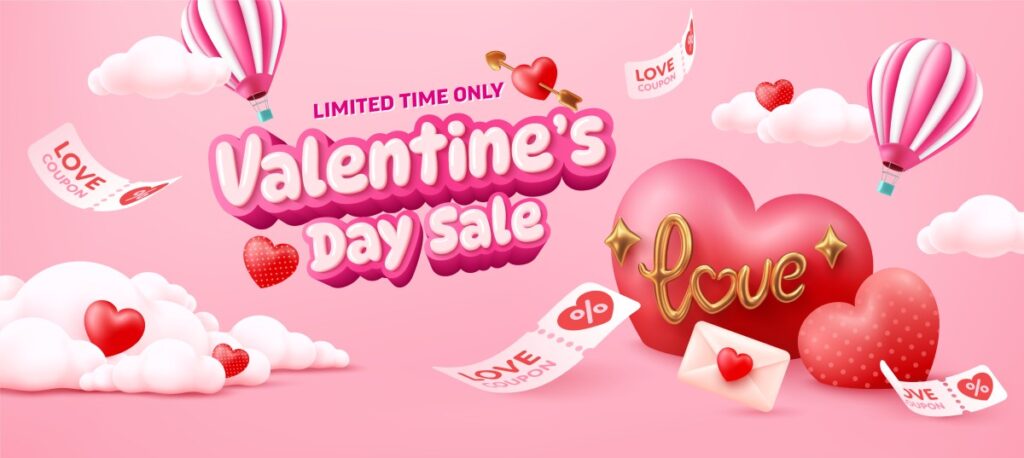
<Representative Methods> ・Valentine's Day/White Day campaigns: Developing limited-edition packages and products with bonuses in anticipation of gift demand. ・New Life Support Sale: Conducting discount campaigns for home appliances and furniture to match the moving season. ・Summer/Winter Bonus Sales: Promoting the purchase of high-ticket items (home appliances, cars, luxury fashion, etc.). ・Black Friday: Deploying large-scale discount campaigns.
【5】
Loyalty Program
It is an initiative aimed not only at acquiring new customers but also at maintaining existing customers and increasing repeaters.
<Representative Methods> ・Point program: Granting points for each purchase to encourage return visits. ・Member-only benefits: Enhancing brand loyalty with special discounts and pre-sales for members. ・Subscription model: Setting up a regular purchase plan to ensure continuous sales.
Besides these five types, there are various methods for sales promotion, but by combining them appropriately according to purpose and target, you can obtain higher effects.
As consumer purchasing behavior changes, sales promotion (SP) is also evolving. Particularly with the advancement of digital technology, the shift toward "promotions optimized for each target" is accelerating.
① Evolution of personalization using data There is an accelerating trend of using consumer data to provide optimal promotions for each individual. AI coupon delivery: Providing personalized benefits based on purchase history and behavioral data. Real-time price fluctuation (Dynamic Pricing): Automatically adjusting prices based on demand. Integration of advertising and purchase data: Using data from e-commerce sites and physical stores to implement an optimal approach for the target.
②Expansion of experiential promotion There is an increase in measures where consumers deepen their purchasing experience while trying products. Virtual trials/experience: Utilizing AR to provide an in-store-like try-on experience even in e-commerce. Utilization of UGC (User Generated Content): Using posts from influencers and general users for sales promotion.
③Fusion of online and offline (OMO) Linkage between EC and physical stores is progressing, and an environment where consumers can purchase seamlessly is demanded. ・QR code utilization: Setting QR codes on store POPs or packages to provide benefits or product information via smartphone ・Mutual customer attraction between store and EC: Distributing coupons on EC to promote usage at physical stores ・Live commerce: Interactive sales promotion through real-time distribution
As shown, SP is evolving with the times, and by incorporating new technologies and methods, it is possible to implement more effective measures. So, how do you actually design SP and lead it to success? In the next section, we will consider that concrete process.
Steps to ensure successful sales promotion
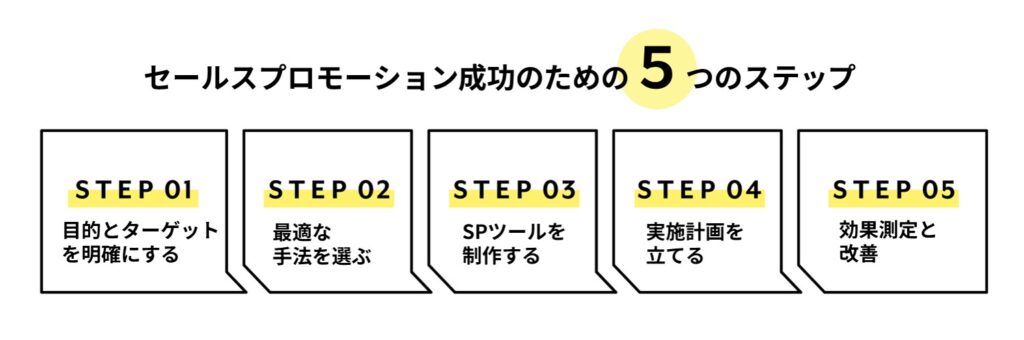
To implement sales promotion (SP) effectively, planned design and operation and production of appropriate tools are indispensable. From here, we introduce the basic steps to lead SP to success!
◆Step 1. Clarify objectives and targets Before conducting a sales promotion, clarify what you want to achieve and who you are targeting. By clarifying your objectives and target, you can determine which methods to use, enabling you to execute effective promotions.
◆Step 2. Choose the optimal promotion method Select the most effective SP method or combination thereof tailored to your objective and target. For example, by simultaneously deploying in-store POP + social media campaigns + coupons, you can approach consumers at both online and offline touchpoints.
◆Step 3. Production of sales promotion tools To maximize sales promotion effects, it is necessary to produce appropriate tools and make a design that reaches the target firmly. Please design the design and copy by clarifying what kind of tools are necessary such as POP, fixtures, leaflets, posters, event booths, and customer service tools, and "who to convey what to and what kind of action to promote".
Step 4. Create an implementation plan (schedule/budget management) Timing is crucial for increasing the effectiveness of sales promotion. Deploying initiatives at the right time is expected to yield higher results. It is important to grasp the campaign timing of competitors and market trends in advance to adjust your own measures so they don't get buried. Also, planning promotions tailored to seasons or events makes it easier to capture consumer interest. Furthermore, how you use your budget is an important point. Plan to achieve maximum results within a limited budget while considering the cost-effectiveness of each measure.
Step 5. Effectiveness measurement and improvement Sales promotion does not end once it is executed; it is important to measure its effectiveness and apply the results to the next initiative. We will explain in detail how to measure sales promotion effectiveness in the next chapter.
Effect Measurement and Improvement of Sales Promotion
Sales promotion (SP) leads to results not only by implementing it, but by measuring its effects and repeating improvements. Let's grasp the results of measures with data such as "Did sales really increase even though we implemented a discount campaign?" or "How many people actually purchased after distributing trial products?" and utilize them for the next promotion.
◆◆◆
Why is effect measurement important?
SP measures do not necessarily produce results as expected. Even if you carry out a campaign blindly, there is a possibility that you will not obtain the expected results and it will end up just increasing costs. In order to make future measures more effective, it is important to analyze the results firmly.
【Reasons for measuring effectiveness】 ・To objectively judge the success or failure of initiatives ・To reduce wasted costs and design more effective initiatives ・To apply findings to future promotions and repeat improvements
For example, even if you think, "Sales increased after installing a new store POP!", in reality, other factors (seasonal fluctuations, competitor movements, advertising influence) may be involved. Analysis based on data is essential for improving the accuracy of SP.
◆◆◆
What should be measured?
To measure SP effects, it is important to set suitable indicators (KPIs) for each measure.
Type of measure⇒Example of indicator to measure
①Discount/coupon measure⇒Coupon usage rate, sales increase rate, number of new customers acquired ②Trial product distribution⇒Number of trial products received, purchase rate after receipt, repeat rate ③SNS campaign⇒Number of posts, engagement rate, conversion rate ④Demonstration sales event⇒Number of visitors, in-store purchase rate, average spending per customer ⑤BtoB exhibition⇒Number of business cards exchanged, business negotiation rate, contract rate
For example, just saying "It was a hit with the SNS campaign!" cannot be called a correct evaluation of an initiative's success. It is important to clarify which factors influenced the sales increase. By analyzing whether awareness improvements from the campaign directly led to purchasing behavior, or if it was due to synergistic effects with other measures like in-store promotions or coupon initiatives, based on KPIs, you can design future promotion measures more effectively. Use KPIs to visualize data and lead to improvements in your initiatives.
◆◆◆
How to analyze effectiveness and lead to improvement
After measuring the effectiveness of SP, analyze which parts worked well and where improvements should be made.
① Strengthen successful initiatives If "coupon usage rate was higher than expected and new customers increased" → Review the coupon distribution channels and period, and expand reach to engage more consumers.
② Identify the cause of failure If "samples were distributed but the subsequent purchase rate was low" → Since the product's benefits may not have been conveyed through the sample alone, add videos that show the actual feeling of use or strengthen follow-up measures for those who received samples.
③ Turn the improvement cycle quickly SP measures should not end after one implementation; let's repeatedly make improvements flexibly while watching market changes and consumer reactions.
[Case Study] Sales promotion supported by BEEATS
Case 1
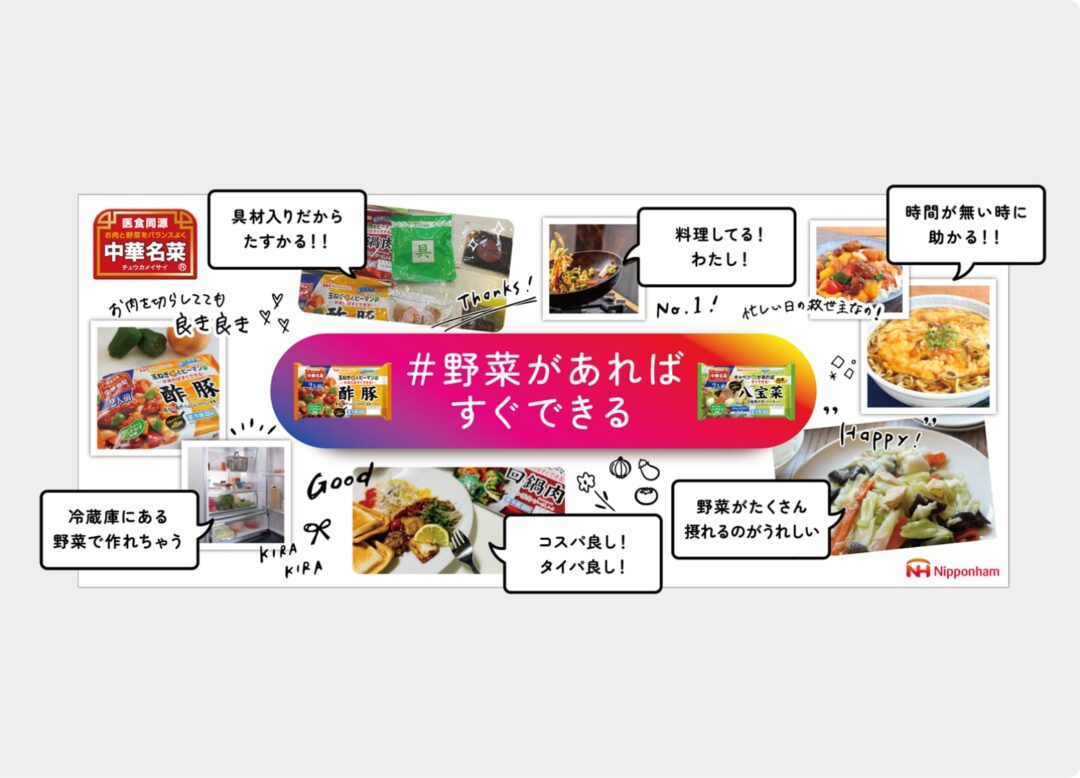
Nipponham's Purchase Promotion with UGC x Store Promotion
For Nippon Ham's "Chuka Meisai" series, we developed initiatives to enhance purchase intent by leveraging real consumer voices. First, we sampled the product to gourmet-focused users and encouraged Instagram posts (UGC). The gathered photos and comments were then used for in-store POP to create a sales floor that resonates with shoppers. Furthermore, by linking in-store campaigns with social media initiatives, we generated a synergistic effect that expanded awareness and promoted purchases.
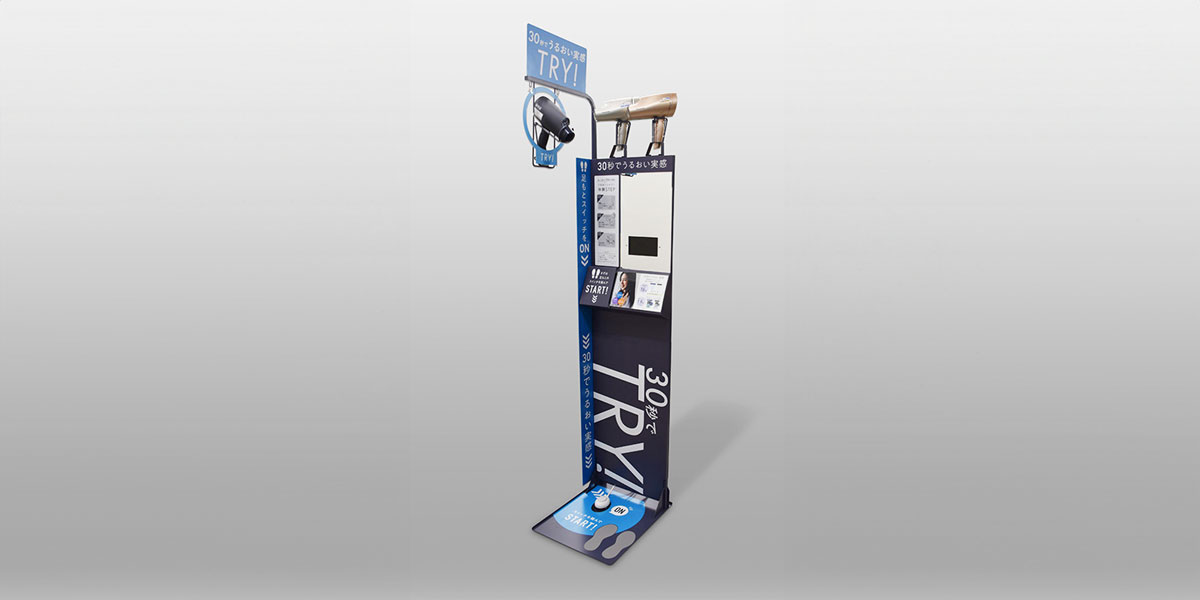
Panasonic: Development of "Feel it in 30 seconds" hair dryer experience unit
In stores such as home electronics mass retailers, consumers actually trying and realizing the product's value can be the deciding factor for purchase. BEEATS utilized the product feature that hair moisture can be realized even in a short time, and developed an experience fixture. This fixture adopts a design that allows the concept of "Experience in 30 seconds" to be conveyed at a glance, and is equipped with a foot switch that turns the hair dryer ON just by stepping on it, enabling a specification that allows experience without touching the main unit directly, providing a hygienic and secure environment for testing even during the COVID-19 pandemic. By improving the ease of in-store experience, we created a flow where consumers actually feel the product's charm, leading to purchase decision-making.
Sales promotion is an important measure that creates the trigger for consumers to think, "I want to buy it." It is not just about implementing a campaign; thinking about who to approach and in what way is the point of success. Also, experiential promotion is attracting attention recently, and by creating opportunities to actually try products, you can convey the product's goodness directly. What is important is not to stop after doing it, but to look back firmly and connect it to the next step. While reviewing which measures were effective and what kind of ingenuity was necessary, let's create better promotions!
Consult BEEATS, the sales promotion pro, about sales promotion!
To succeed in sales promotion, you need to clear issues such as "what method should I choose?", "what kind of plan is effective?", and "how should I design promotional tools?". However, preparing and executing the optimal measures on your own is not easy.
BEEATS is a professional that has supported various sales promotions for companies for over 48 years. We correspond to a wide range of measures such as in-store promotion, digital promotion, and experiential promotion, and support you one-stop from planning and design to mass production and delivery of effective promotional tools. If you are thinking, "I want to think about SP measures that lead to sales" or "I want to request the production of promotional tools," please consult BEEATS. We will propose the optimal promotion and optimal promotional tools according to your issues and goals, and run alongside you as a partner toward solving issues!
A1. Sales promotion (SP) is an initiative that directly encourages the purchasing behavior of consumers and companies. While advertising plays the role of increasing brand awareness, SP plays the role of pushing for the "decision to purchase" through in-store campaigns, coupons, etc., and leading to actual purchase.
Q2. What are the differences between BtoC and BtoB sales promotion?
A2. For BtoC, measures aiming at promoting purchasing behavior in a short period such as coupons and sampling are often used, which appeal to consumer emotions. On the other hand, for BtoB, building relationships and fostering trust with companies through exhibitions and free trials are the goals, requiring more logical appeals.
Q3. What types of sales promotion are there?
A3. There are various methods for sales promotion. As representative ones, there are "price promotion" using discounts and coupons, "in-store promotion" using store POP, "experiential promotion" where products can be actually tried, "seasonal promotion" targeting specific times, and "loyalty programs" such as point awarding.
Q4. What are the steps to make sales promotion successful?
A4. The five steps to success are as follows: ① Clarify objectives and targets, ② Choose the optimal promotion method, ③ Create SP tools, ④ Create an implementation plan for schedule and budget, ⑤ Measure effectiveness and improve after implementation.