A somewhat unexpected result is attracting attention in the youth trends for the first half of 2026. In the "Alpha Gen Z Trend Ranking for the First Half of 2026" announced by the AlphaZ Research Institute, "Tamagotchi" ranked 1st in the newly established character category. This was followed by "Puppet Sun-Sun" in 2nd place and "Monchhichi" in 3rd. Of the top 10 characters in the ranking, many were born in the Showa and Heisei eras.
Tamagotchi was released in 1996 and is one of the characters representing the Heisei era, which will celebrate its 30th anniversary in 2026. Monchhichi was released in 1974 and is a character born in the Showa era that celebrated its 50th anniversary in 2024. Why are characters born in the Showa and Heisei eras supported by today's Gen Z? This time, taking the renewed attention to Tamagotchi and Monchhichi as a starting point, we will think about the reasons why Gen Z is drawn to Showa and Heisei characters and hints for utilizing them in corporate promotions.
Showa and Heisei characters feel fresh precisely because they were not experienced in real-time
Tamagotchi and Monchhichi might be existences that evoke nostalgia for the parent generation or generations slightly older. I think there are many people who have memories of playing with them back then or who associate their own memories with the characters themselves. On the other hand, for many in Gen Z, Tamagotchi and Monchhichi are not characters whose boom they experienced in real-time. Since Gen Z generally refers to the generation born between the late 1990s and early 2010s, many were just born or not yet born when Tamagotchi was released. That is precisely why their slightly retro designs, forms, and analog-feeling worldview, coupled with the recent "Heisei retro" boom, appear as a fresh form of cuteness. The "nostalgia" for the older generation becomes "the cuteness of an era they don't know" for Gen Z. This difference in perception is considered one of the reasons why Showa and Heisei characters are attracting attention again now.
Characters from "things to see" to "portable self-expression"
In the background to Showa and Heisei characters being accepted by Gen Z, there is also a change in the way of interacting with characters. In the past, characters were familiar as entities to "see" and "play with" on television, in games, magazines, and toy stores. That role still exists, but in recent years, the way of enjoying incorporating characters into daily life has spread.
・Attach to a bag ・Sandwich between a smartphone and case ・Take a picture ・Line them up with friends and take a photo ・Post on social media
Characters are not just for viewing or collecting, but have become items that express one's "love."
For example, regarding Puppet Sun-Sun, which came in 2nd in this ranking, comments such as "Many people had it attached to their backpacks" were introduced. The act of wearing or carrying a character around is an essential point when considering the current popularity of characters.
This sense is close to the spread of nuikatsu (plushie activities) and oshi-katsu (fandom activities). Carrying your favorite character around is not just about owning merchandise. It is also an act of subtly expressing feelings such as, "I love this worldview," "This laid-back vibe is cute," or "I like who I am when I choose this character" in your daily life.
Not as assertive as fashion or makeup, yet capable of conveying one's true self. This "just right" quality may be what leads to the high compatibility between Gen Z and characters.
Characters are no longer confined to screens or store shelves. While entering consumers' bags, smartphone charms, daily miscellaneous goods and stationery, photos, and social media posts, they have become existences that convey what that person "loves."
The reason why the Heisei-born "Tamagotchi" is experiencing a boom again
At the time of its release in 1996, Tamagotchi caused a major boom with a new way of playing: raising a digital pet in the palm of your hand. The experience of feeding, caring for, watching over its growth, and continuing to interact with the character inside a small device was fresh for children and young people at the time. The background to Tamagotchi receiving attention again in the Reiwa era is the spread of the Heisei retro and Heisei girl boom.
For the generation that played with Tamagotchi back then, it is an existence that brings back memories along with nostalgia. On the other hand, for Gen Z who did not experience it in real-time, the fun of raising, the portable size, and the retro, cute design feel fresh. Furthermore, coupled with the buzz of its 30th anniversary and the spread of social media posts, Tamagotchi is increasing its presence once again as a character that reaches today's young generation.
Also, Tamagotchi is showing expansion as an IP within K-POP culture as well. In 2022, the pre-order sale of "TinyTAN Tamagotchi," which is based on the BTS character "TinyTAN," was announced. Furthermore, in 2025, collaboration products with Stray Kids' official character "SKZOO" also appeared. Regarding a collaboration with BLACKPINK, the pre-sale of "BLACKPINK Original Tamagotchi" was reported in December 2025, and it is introduced as a pre-launch product for an official collaboration scheduled for release in 2026. From these developments, it can be seen that Tamagotchi is not limited to the domestic Heisei retro context, but is increasing its presence again as an item that reaches today's young generation while connecting with the global Y2K boom and K-POP culture.
The reason why the Showa-born "Monchhichi" is being rediscovered
Monchhichi is a character born in the Showa era, released by Sekiguchi in 1974. With its unique design combining a soft vinyl face, hands, and feet with a plush body, as well as its thumb-sucking pose and freckled expression, it caused a major boom from the time it was released. Exports overseas began the following year, and it has since been rolled out in over 30 countries.
In the background to Monchhichi receiving attention again in recent years, there is not just the nostalgia boom within Japan but re-evaluation overseas. A particularly major trigger was the spread in Thailand around the summer of 2024. Triggered by posts from Thai actors and influencers, the number of people attaching Monchhichi to their bags and posting on SNS increased, which is said to have boosted its popularity locally. After that, posts by Korean idols and influencers also increased, and the attention spread in Korea as well. Furthermore, the fact that BLACKPINK's LISA published on Instagram how she bought Monchhichi in Harajuku is also introduced as one of the triggers spreading to the young generation. In other words, this Monchhichi popularity can be seen as a "reverse import type" boom where the trend re-evaluated overseas first reached the young generation in Japan, rather than naturally reigniting as a "nostalgic character" in Japan.
To that was added the milestone of its 50th anniversary in 2024. Because product development, collaborations, and media exposure increased with the anniversary as an opportunity, it has become easier to catch the eyes of not only the generation that has known it for a long time but also the young generation who perceive Monchhichi as a fresh character.
Furthermore, in 2025, "Labubu" became a big topic, centered on Gen Z, and attention also gathered on the style of attaching plushies and character charms to bags. Amidst such trends, Monchhichi, which has a retro presence and slightly quirky cuteness, may also be being discovered again as a character that naturally fits the sensibilities of today's Gen Z.
Unlike new characters like Labubu, Monchhichi is a character born in the Showa era with a long history. That is exactly why, for Gen Z, it has a retro cuteness that feels new yet familiar, while for the generation that knew it back then, it also carries a sense of nostalgia.
Overseas re-evaluation, the buzz of its 50th anniversary, and bag charm demand. With multiple triggers overlapping, isn't Monchhichi being rediscovered by today's young generation as a "character I want to carry around"?
How character popularity is spreading, as seen from the Top 10
Looking at the characters that ranked in this time, even if you call them "Showa/Heisei characters," there is not just one trigger for their popularity. Things that were re-focused on amidst the Heisei retro/Heisei girl boom, like Tamagotchi and Narumiya Characters. Things that were rediscovered on social media from memories Gen Z had contact with as children, like Corocho and Keroro Gunso. Things that have penetrated daily life through social media and collaborations, like Puppet Sun-Sun and the Korean-born Esther Bunny. Things that spread triggered by overseas re-evaluation and bag charm demand, like Monchhichi. And things like Hello Kitty, which is a classic IP but continues to create new touchpoints for each era.
Even if the triggers are different, what they have in common is that characters are being re-encountered in a form that fits the behavior of today's consumers.
Attach it to a bag and carry it around. Take pictures of it. Share it on social media. Use it as a conversation starter with friends. Incorporate it as an item that expresses what you "love". Characters are no longer confined to screens or store shelves; they have expanded into existences that lift your mood in daily life or serve as conversation starters with others. They are not being chosen because they were popular in the past, but are being discovered once again in a way that fits the behavior of today's consumers. The interest in this current character trend lies in that very point.
How to connect the power of IP to current experiences
Characters that have been loved for a long time, such as Tamagotchi, Monchhichi, and Hello Kitty, have strength as IP.
A worldview that is conveyed the moment you see it. An image that comes to mind when you hear the name. Memories and familiarity shared across generations.
Such accumulation is a value that cannot be easily created for new characters. On the other hand, IP awareness alone does not guarantee reaching today's consumers. Especially in promotions aimed at Gen Z, it is important to consider not whether they will "react because it's a character they know," but whether they will feel it "fits their current sensibilities," "want to take pictures," "want to carry it around," or "want to share it with friends." That is exactly why it is important not just to display the character as a visual, but to consider what kind of experience the world view of that IP can deliver.
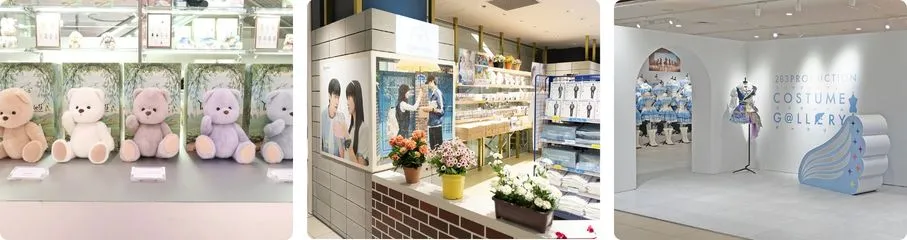
For example, in the case of a store or pop-up store, creating a space where people want to take pictures. In the case of a novelty, a design that makes people want to take it home for daily use. In the case of a campaign, gimmicks that make people want to collect, or participative elements that make them want to share on social media.
By converting the recognition and world view that IP possesses into a form that leads to the actions of the life-planner, characters become not just decoration but an existence that creates a touchpoint with the brand.
Showa/Heisei characters reaching today's younger generation is not supported solely by past popularity. By walking around, taking pictures, sharing, and using them as conversation starters, they connect to today's experiences, and their value as IP is being drawn out once again. When companies utilize characters, it is important to think not only about "which IP to use" but also what kind of experience to convert that IP's charm into.
Summary | Showa and Heisei characters are being chosen again as experiences
There are reasons that cannot be explained by mere nostalgia alone for why Showa and Heisei-born characters like Tamagotchi and Monchhichi are supported by Gen Z. The fact that they appear as fresh cuteness precisely because they did not experience them in real-time. The fact that they are easy to attach to bags, take photos of, and share on social media. And the fact that the power as IP that has been loved for a long time is being drawn out again in a form that fits the behavior of today's consumers. The renewed attention to Showa and Heisei characters is not a phenomenon where past booms have simply returned, but can be said to be a phenomenon where they are being re-encountered to match the sensibilities and lifestyles of today's young generation. When companies consider promotions using characters, it is important not only "which IP to use," but what kind of experience they can deliver the worldview that the IP possesses. Spaces where people want to take pictures, goods they want to take home, gimmicks they want to collect, and projects they want to share on social media. Through such experience design, characters become not just visuals, but contact points connecting brands and consumers.
Bringing the world of characters and brands to real-life experiences
At BEEATS, we support creating touchpoints where brands and consumers meet in real life, such as pop-up stores, in-store promotions, and novelty production. We develop the worldview of character IP and brands into spaces, fixtures, goods, and campaigns, and connect them to experiences that make people want to take pictures, take them home, and share with someone, rather than just "looking and finishing." When considering measures to deliver a brand's worldview in a real-life venue, please also take a look at our pop-up store case studies and BEEATS' case introductions.
We also support POPUP measures that allow users to experience the world view of works and brands in real spaces, such as dramas, anime, and character content.
Q1. Why are Showa and Heisei characters popular with Gen Z?
A1. It is because for a generation that did not experience them in real-time, the retro design and analog feel appear as fresh cuteness. Additionally, re-evaluation overseas (Monchhichi, etc.) and connections with K-POP and Y2K culture (Tamagotchi, etc.) are boosting their renewed attention.
Q2. How has the way Gen Z interacts with characters changed?
A2. It has shifted from being an object to simply "look at or play with" to a form of "portable self-expression" used by attaching them to bags or posting them on social media. They are being adopted as a means (part of nuikatsu or oshi-katsu) to convey one's personality or what one "loves" without being as assertive as fashion or makeup.
Q3. What are the key points when utilizing characters (IP) in corporate promotions?
A3. It is important not to rely solely on IP recognition but to convert it into an "experience" that fits the sensibilities of today's Gen Z. Real-life touchpoints that lead to consumer behavior are required, such as spatial design that makes people want to take pictures, novelties that make them want to take them home, and plans that encourage social media sharing.