Open campaigns and closed-type campaigns, so-called consumer prize competitions, are indispensable methods for sales promotion. Many campaigns are being conducted in the world, such as commemorating the launch of new products or sales promotions tailored to seasonal events.
In closed-type campaigns, which are often used when you specifically want to increase sales of a product through a promotion, we often hear feedback that traditional methods are uninteresting, do not lead to the expected sales results, or are burdensome to prepare.
Also, there is a challenge where consumers simply won't participate in closed-type campaigns because of feelings like: "Even if there are wonderful prizes, I probably won't win anyway" or "It's troublesome to go out of my way to buy and apply."
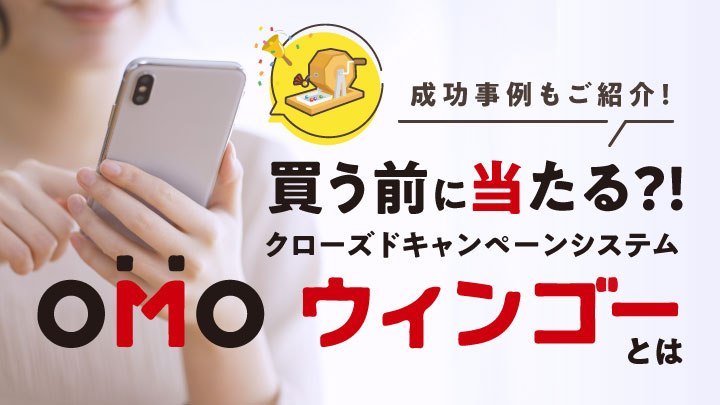
As sales promotion and marketing personnel, we are often asked about the "meaning" and "change" of closed-type campaigns, and it is a headache to deal with everything from new ideas and naming development that evokes interest to cost reduction. For those people, we will introduce a new campaign method that is novel and can produce results!? "Pre-purchase lottery campaign system 'WINGO'".
"WINGO" is truly a campaign based on reverse thinking!
Win before you buy! Closed-type campaigns are easy to operate.
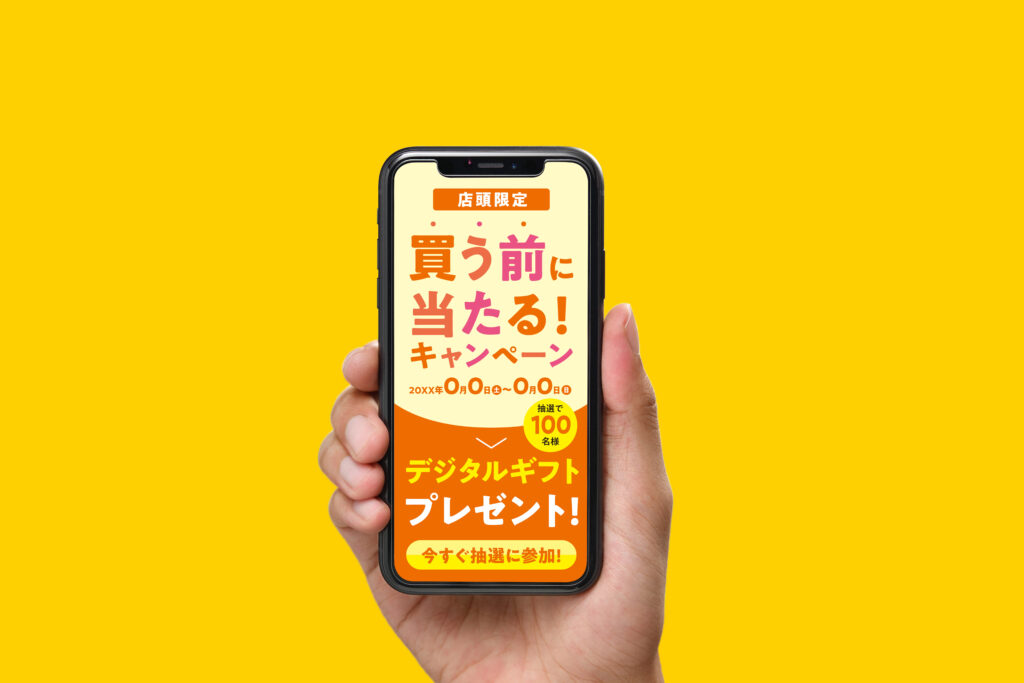
The "WINGO" campaign system is a web campaign system that supports receipt entries. By participating in a lottery before purchase and finding out the results in advance, it increases purchasing motivation and links directly to sales.
【 2 】
Difference from a regular closed-type campaign
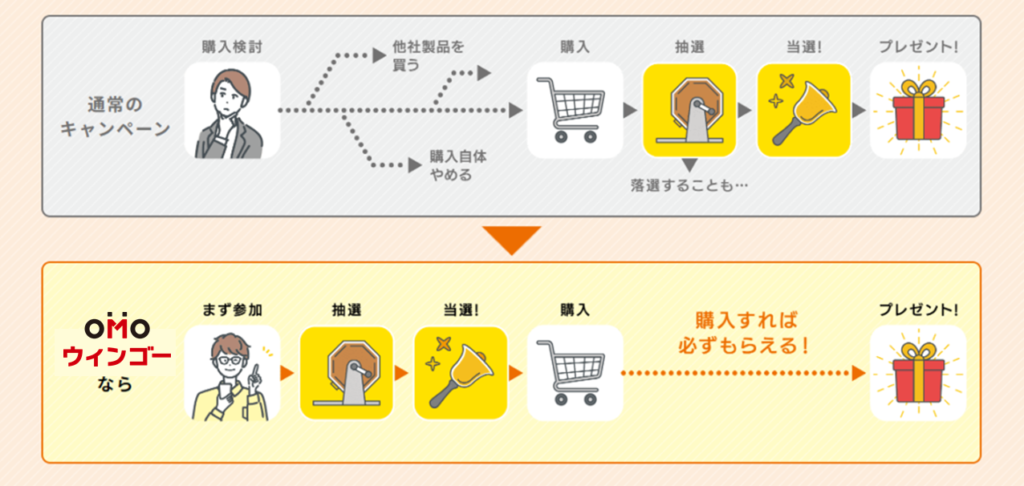
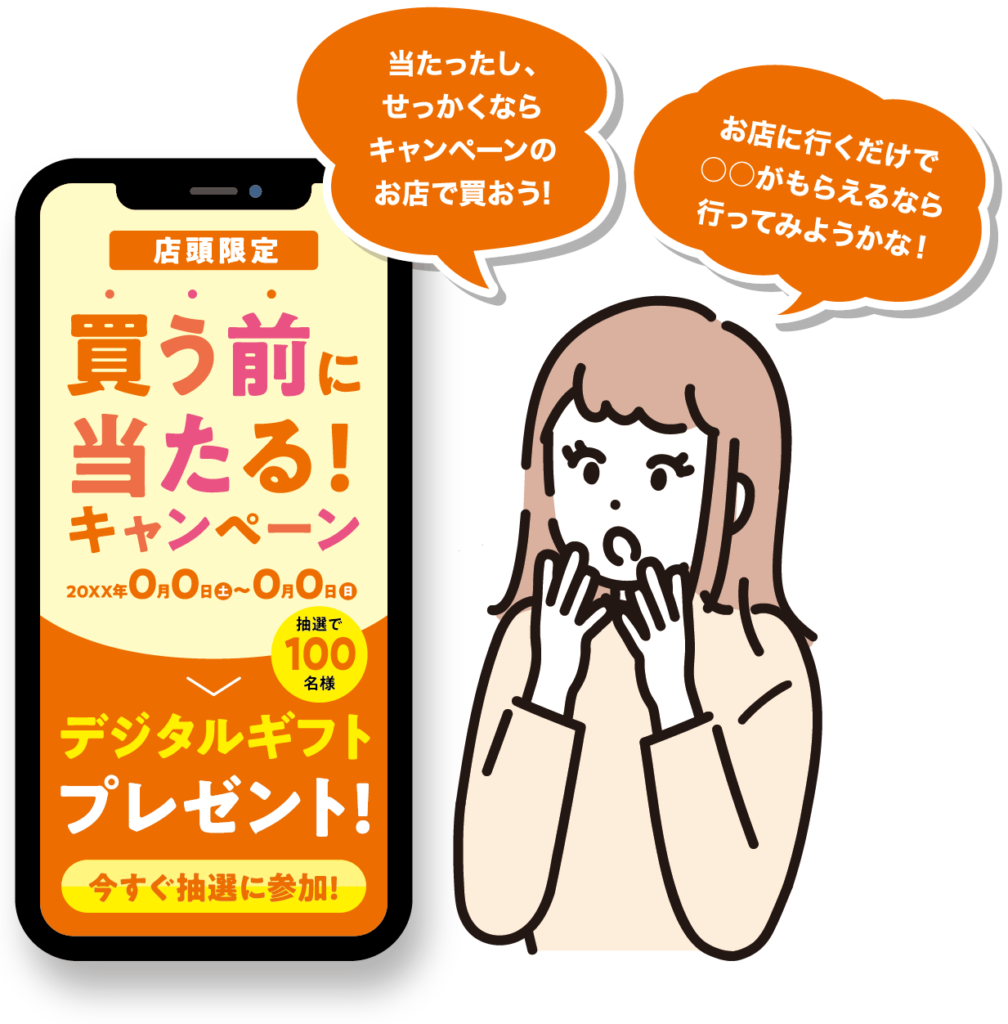
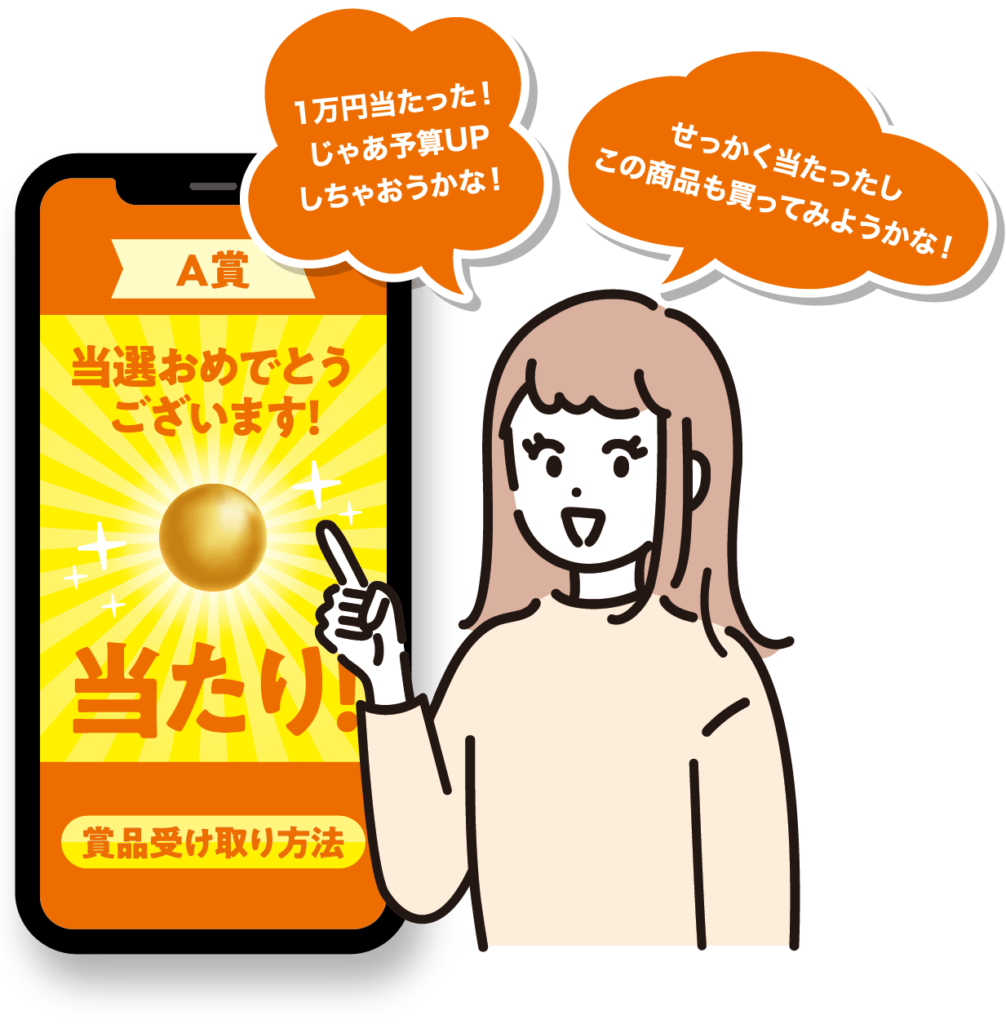
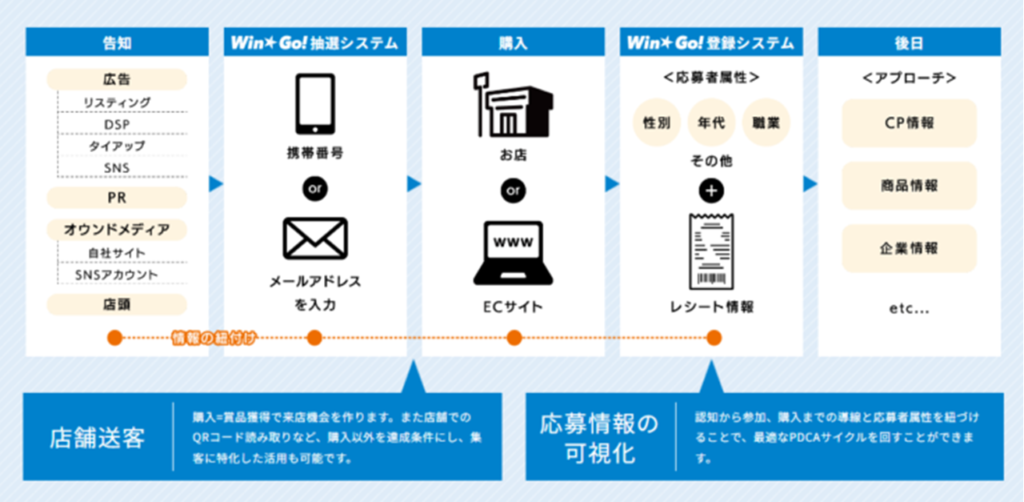
The difference from a regular closed-type campaign is that before customers purchase the product, they first participate in a lottery. If they win, they gain the "right to a gift," and then by purchasing the target product, they are guaranteed to receive the prize.
First, please take a look at the figure below.
Successful case studies of this "reverse thinking" closed-type campaign, "WINGO," are increasing one after another!
For those who are interested but wonder if it will really produce results,
We will introduce successful case studies of companies that have utilized "WINGO."
3. Introduction of Successful Case Studies
■Successful Case Study 1: Electronics Manufacturer A
Closed-type campaigns that had become routine are now revitalized! About 2,500 people applied in one month, and about 30% of winners made a purchase!
Deployed the WINGO campaign on the web and in stores for the purpose of broad awareness.
Although it was a compact one-month deployment, we received many entries, and in the final week, there were days when we received over 100 entries per day.
As a result, about 30% of the winners actually made a purchase, resulting in a successful case study that led to a high purchase rate.
■Successful Case Study 2: Home Appliance Manufacturer B
Specialized in boosting purchases with in-store only deployment. High reaction: about 38% of winners made a purchase, with a same-day purchase rate of about 74%!
As a closed-type campaign for a major home appliance manufacturer, we conducted a WINGO campaign limited to stores in specific sales channels. We were entrusted with the entire plan, including the prizes for the closed-type campaign, and handled system development, tool production, prize arrangement, and campaign office operations.
By creating a closed campaign limited to physical stores, we maximized purchase incentives, resulting in approximately 38% of winning customers actually making a purchase. Additionally, with about 74% of customers making their purchase on the day they won, this became a success story that drove post-purchase behavior.
4. Factors for WINGO Campaign Success
We introduced two successful case studies, and now we will explain 【Why results were achieved】 through the benefits of the WINGO campaign system.
Factor 1
Because you win "in advance," it became a motivation to visit & purchase!
Knowing the result in advance increases motivation to visit and purchase. In our case study, the purchase rate of winners was high at approximately 30.7%※, and we can expect improved cost-effectiveness. Another benefit is that you can link the prize budget to sales without waste.
※In-house research. Calculated from the results when campaign awareness was promoted by strengthening in-store exposure notifications. This does not guarantee the purchase rate for every campaign.
Factor 2
"In-store only" campaigns can boost same-day purchases!
When conducted as a store-exclusive closed campaign (excluding web purchases), the same-day purchase rate for winners is 71.1%.※
Winning also has the effect of encouraging an increase in purchase unit price or additional purchases.
※In-house research. Calculated from the results when a campaign was conducted as a store-exclusive project. This does not guarantee the same-day purchase rate for every campaign.
Factor 3
Operable at low cost!
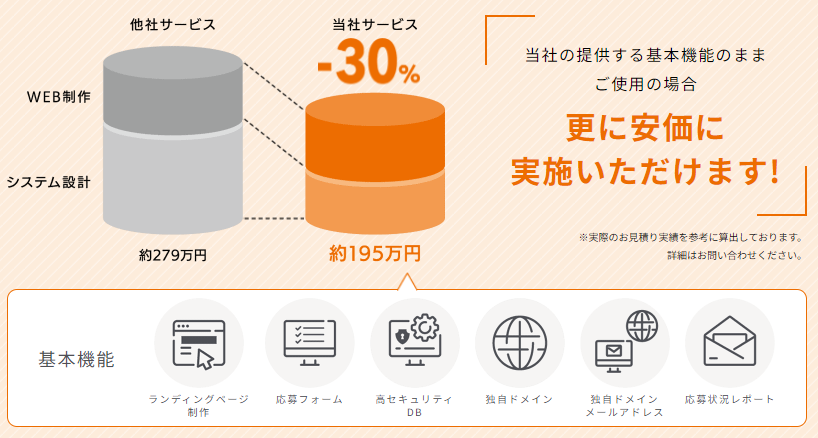
Compared to building a new system, you can realize a 30% cost reduction and implement it at a low cost.
Factor 4
One-stop service from notice/POP production to office operations!
At BEEATS, we provide a one-stop service, not just providing the WINGO system, but also accompanying you through campaign planning, landing page creation, in-store promotional tool production, and office operations. We can also provide SNS ads to boost notice of closed-type campaigns as a set.
5. WINGO Also Allows Analysis and Effectiveness Verification
●I want to analyze the customer journey leading up to purchase
●I just want to create an opportunity for people to visit the store
●I want to measure the effectiveness of closed-type campaigns and web ads
WINGO can solve these problems too!
By linking the flow from awareness to participation and purchase with applicant attributes, you can visualize the entry status,
You can cycle through PDCA with a clear understanding of your purpose, leading to optimal campaigns.
The flow from implementation to verification using WINGO is as follows.
6. If you are having trouble planning a closed-type campaign, leave it to BEEATS!
We have provided solutions tailored to our customers' issues in the past, from campaign planning and production to office operations. We are utilizing that knowledge as we proceed with the development of new campaign systems that meet today's needs.
Whether you are interested, looking for new ideas, questioning the purpose of closed-type campaigns, or wondering about cost-effectiveness, please feel free to contact us. Our staff will explain things carefully and prepare a proposal perfect for your company.
▼Download materials for the pre-purchase lottery campaign system "WINGO" here. !
7. A Must-See for Campaign Beginners! Basic Explanation of Campaign Methods
At BEEATS, in addition to the pre-purchase lottery campaign system, we assist with a wide variety of campaigns. We will introduce campaign methods in an easy-to-understand way for those who are in charge of advertising, sales promotion, and campaigns for the first time. Please use this as a reference to understand and organize types of campaigns!
●Open Campaigns
This is a campaign where applicants are widely recruited via TV or web, and prizes are presented in a lottery format through quizzes or surveys.
Since the goal is not based on transactions such as product purchase, service usage, estimates, or store visits, anyone can easily apply via the application site or postcards, and a key feature is that there is no practical upper limit on the prize amount.
It is often seen being developed for the purpose of expanding awareness of new products or services.
While it can spread awareness widely, the response tends to be sluggish, so at BEEATS, we propose ideas for announcement methods, prize settings, and campaign operations tailored to your target and products.
●Closed-type Campaigns
A campaign that makes an action accompanying a transaction, such as a product purchase or store visit, a condition is called a closed-type campaign.
Under the Act against Unjustifiable Premiums and Misleading Representations, closed-type campaigns are classified into three types: "general prize competitions," "joint prize competitions," and "general gift premiums," each with different conditions such as unit price caps and total prize values.
The purpose can be product purchase or service use, and it is possible to plan widely for prize deployment methods, such as "instant win" where you access via QR code and know whether you win or lose on the spot, later lotteries, or if you win rock-paper-scissors.
Based on our extensive experience with a wide variety of clients, BEEATS handles everything from campaign planning and tool creation to prize proposals, operations like shipping, and reporting.
●WEB Campaigns
This is a campaign where announcements and application reception are conducted on a website.
It is characterized by being able to appeal to a wide range of targets and can be induced in combination with various advertisements. Since entry status is registered in a database, it differs from analog campaigns in that it can be checked in real-time. At BEEATS, we can provide responses tailored to your needs, from launching external sites to building within your company's site.
●SNS Campaigns
This is a campaign deployed within various social media such as X (formerly Twitter), Instagram, Facebook, TikTok, and LINE. The deployment is mainly aimed at promoting the transformation of corporate social media accounts into fans and internal diffusion within the target attribute group. At BEEATS, we will handle not only campaign idea development and operation tailored to the timing and products, but also the operation of official social media accounts themselves.
●Event-Limited Campaigns
This is a campaign deployed at event venues, etc. It is deployed when you want to achieve intensive results within a short period, such as lottery events, rock-paper-scissors tournaments, or weekend-only presents. At BEEATS, we can provide proposals starting from personnel arrangements for the event and creation of shop decoration kits.
●Mileage Campaigns
This is a campaign where you record the purchase of specific products and present prizes, like a stamp card. Since the transaction amount becomes large, you can set attractive products even for low-unit-price products. At BEEATS, we can support mileage not only with analog stamp cards but also by building a web system. We will also make proposals incorporated into the "WinGo" campaign system.
●Bulk Purchase Campaigns
Similar to mileage campaigns, this campaign requires the purchase of multiple products. You can expand the range of purchases, for example, by targeting all products of a specific brand. To encourage bulk purchases, it is important to create a corner in the store, on the sales floor, or on the website that promotes bulk buying.
These are just a few of the campaign methods available.
At BEEATS, we can provide a wide range of proposals, from various campaign planning to in-store VMD, tailored to our customers' issues.
Q1. What is WINGO (pre-purchase lottery campaign system)?
A1. WINGO is a web campaign system that supports receipt entries. By participating in a lottery before purchase and finding out the results in advance, it increases purchasing motivation. After winning the "right to a gift," you are guaranteed to receive the prize by purchasing the specified product.
Q2. What are the benefits of introducing WINGO?
A2. Since you can know if you won in advance, it becomes a strong motivation for customers to visit and purchase, and a high purchase rate can be expected. In the case study, about 30% of winners actually made a purchase, and you can link the prize budget to sales without waste. Furthermore, it has the merit of being operable at a lower cost than building a new system.
Q3. Please tell me about successful case studies of campaigns using WINGO.
A3. In the case study of the electronics manufacturer, there were about 2,500 entries in one month, and about 30% of the winners purchased the product. Also, in an in-store-only project conducted by a home appliance manufacturer, about 38% of winners made a purchase, and about 74% of them made the purchase on the day of winning, serving as a powerful push for purchases.
Q4. What is the difference between a closed-type campaign and an open campaign?
A4. A closed campaign is a campaign where the conditions for entry are based on actions accompanying a transaction, such as purchasing a product or visiting a store. On the other hand, an open campaign is a format that does not require a product purchase or similar as a condition, and anyone can easily enter; these are mainly implemented for the purpose of expanding awareness of new products or services.