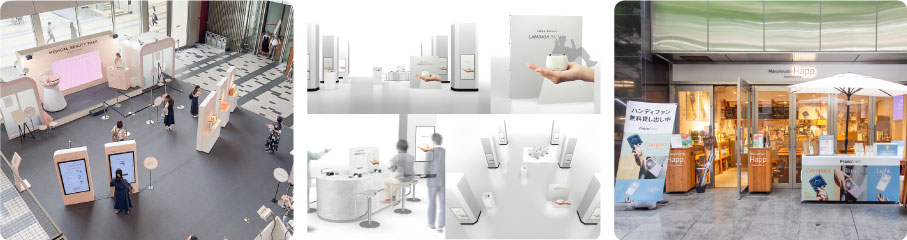
A popup event is a special promotional event held for a limited time.
As a venue for brands and companies to establish new points of contact with customers, many popup events are held every day. In this article, we explain the differences between popup events and popup stores—which are often confused—as well as the features, types, and key points of holding popup events. Furthermore, we will introduce services that support the planning and operation of popup events. Please read to the end!
A popup event refers to an event held for a limited time. Most are held by temporarily using event spaces in commercial facilities or rental spaces such as stations. Because they are held for a limited time, they easily give participants a sense of "limited time only" exclusivity, and are characterized by their ability to capture interest and attention easily.
Furthermore, popup events generally tend to prioritize entertainment and experiential elements. For example, by providing hands-on product trials, workshops, or interactive gaming experiences, they are organized with the goal of improving brand image and acquiring new customers by offering an experience that stays in the visitor's memory.
Differences from a popup store
Popup stores are often confused with popup events. While they share many similarities, there are some differences.
■ Similarities
・Held for a limited time ・Deployed in rental spaces, etc. ・Provides special customer experiences ・Expresses the brand's worldview
■ Differences
Popup store: Focused mainly on product sales Popup event: May include broader planning beyond sales, such as exhibitions, experiences, and food and drink
As such, the difference is in the point of whether "sales" is the main objective.While there are cases where sales are conducted at popup events, it is easy to understand if you keep in mind that sales are not the primary objective.
For example, if you think about cases where cosmetic brands hold their own...
・Popup store: Deployed mainly for the sale of limited-set products or special products during the Christmas season
・Popup event: Deployed with an emphasis on impressively conveying the appeal of products, such as makeup experiences using products or drinks inspired by the product concept.
And so, the content becomes different. Corporate personnel planning a popup should clarify whether they are holding an "event" or a "store" before proceeding with the plan.
*In some cases, events held at pop-up stores are referred to as pop-up events.
Main types of popup events and case studies
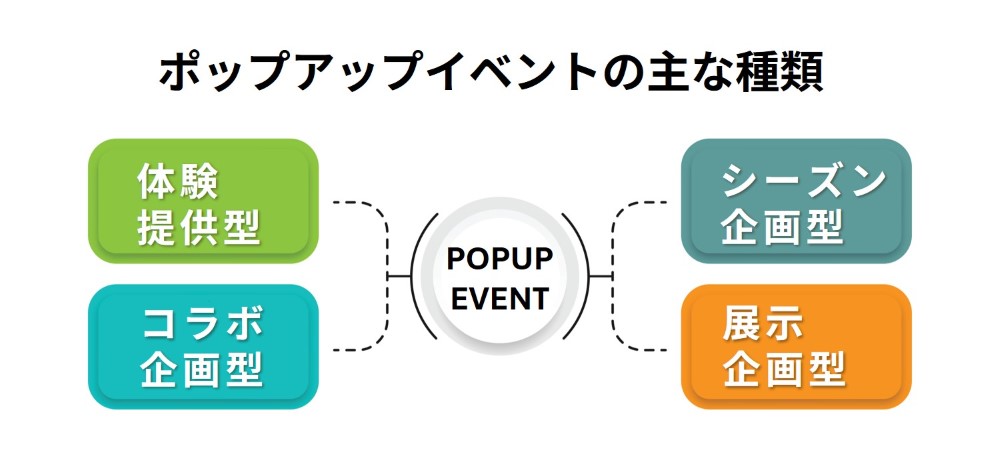
Popup events are held in various formats depending on the purpose and target. Below, we will introduce the main types and their features, along with corporate case studies.
type1
Experience-provision type
This is an event where consumers can touch products or services directly and experience their appeal. For example, it includes not only plans where people can directly experience products—such as "trying out new beauty appliances in person" or "receiving free samples of new beverage products"—but also content where visitors can enjoy an experience that visualizes the appeal of the product. By actually experiencing the product or enjoying the experience itself,it has the effect of directly conveying the appeal while increasing interest in the brand.
■ Case Study: I-ne Co., Ltd. "NIGHT BEAUTY LABO ~YOLU~"
A popup event held in September 2024 providing an experience of the first body care series released by the night care beauty brand "YOLU." In addition to a foot bath corner featuring the new "Dreaming Bath Tablet" product, visitors were able to compare product scents and participate in touch-up experiences with body soap and body milk.
type2
Collaboration project type
This is an event held with collaborations with multiple brands and creators, or collaborations with influencers as the main project. By collaborating with brands in different fields or influencers with high audience-drawing power, the point is that you can reach new customer segments.
■ Case Study: aespa × Android "Android Kakotte PARK"
This is a collaboration popup event between aespa and Android held at SHIBUYA TSUTAYA in October 2024. In this event, content was designed to allow visitors to experience the "Circle to Search" feature of Android using photos and videos of aespa within the venue, boosting awareness and engagement with the feature through the collaboration.
type3
Seasonal planning type
These events are held to coincide with seasonal occasions such as New Year's, Valentine's Day, Tanabata, Halloween, and Christmas. By incorporating seasonal elements, they generate significant buzz, and special content—such as displays that emphasize a specific worldview or the installation of photo booths—attracts many participants. This is particularly effective when aiming for viral reach on social media.
■ Case Study: Dior "Garden of Dreams"
Held in December 2023 at Roppongi Hills Arena and Mohri Garden, this holiday limited-time event, "Garden of Dreams," was inspired by the Tuileries Garden in Paris, which Christian Dior loved. A space was created that projected the worldview of the campaign video, including a sparkling carousel.
type4
Exhibition project type
Exhibition-style popup events are a format where special exhibitions are held based on a brand or product theme. Not only can you visually communicate the appeal of products or services, but you can also convey the brand's worldview and story to visitors through the exhibition. For example, exhibitions are conducted using various ideas, such as introducing the manufacturing process, displaying the product's history, or fusing art with the exhibition.
■ Case Study: Thermos K.K. "Create the Next Comfort. THERMOS 120th Anniversary Event"
Held at Roppongi Hills in October 2024 to commemorate the 120th anniversary of the Thermos brand, the popup event "Create the Next Comfort. THERMOS 120th Anniversary Event" featured a "120th Anniversary Wall" displaying approximately 120 Thermos products, making it an event where visitors could look back on the history of Thermos.
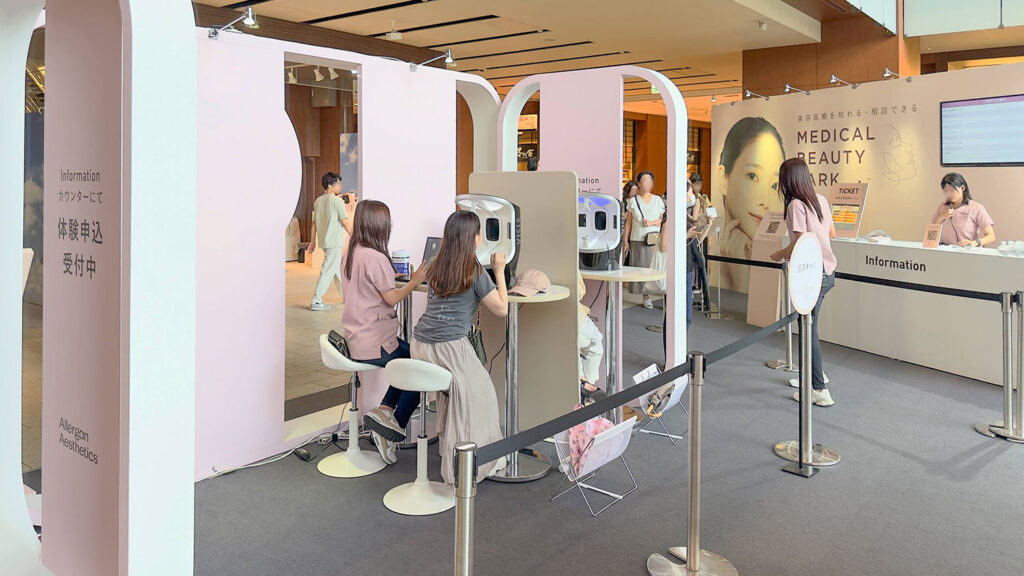
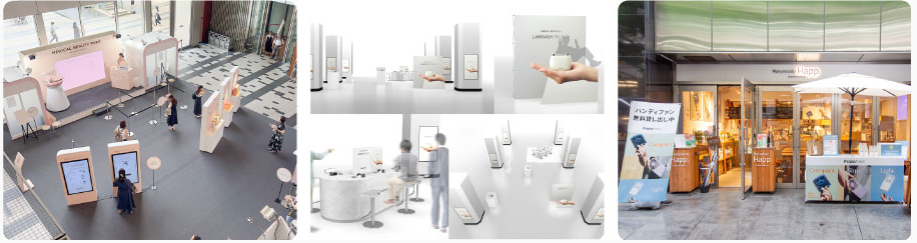
Allergan Aesthetics "MEDICAL BEAUTY PARK" Event | Tokyo Midtown (Roppongi)
[Reference] Types of events other than popup events
Besides pop-up events, there are various formats of promotional events that companies utilize. Here are some representative promotional events. I hope this serves as a reference when considering what kind of promotional event to implement.
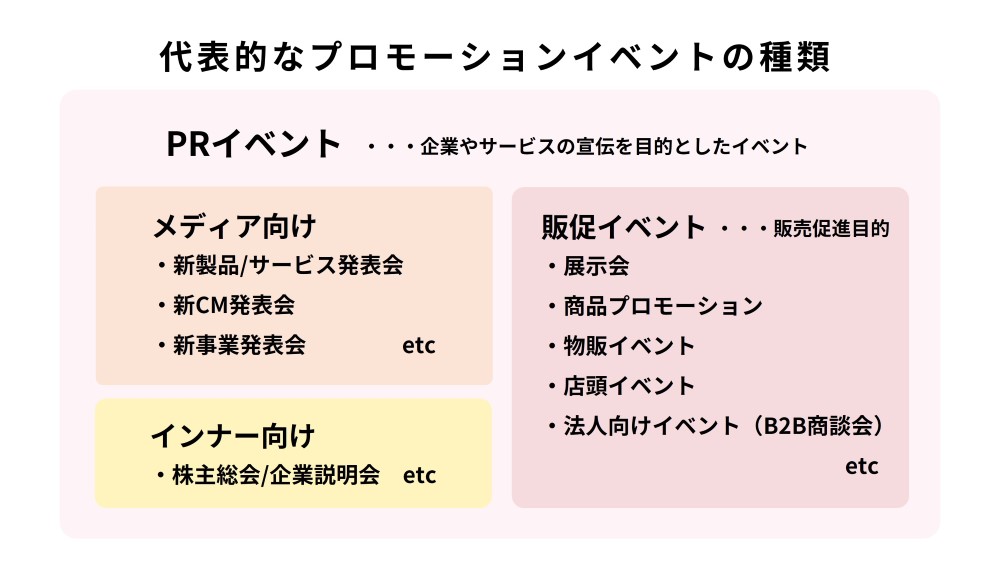
While precise definitions can be difficult, broadly speaking, an event aimed at promoting a company or service is called a PR event. If you categorize the types of PR events into three major groups, they are divided as follows. The popup events explained in this article belong to the category of sales promotion events.
① For media: New product launches, new CM announcements, etc.
This is an event to introduce new products or services to the media and customers. It targets media exposure and enhances buzz.
② For internal use: Shareholders' meetings, etc.
This is an event held to disseminate information to specific stakeholders, such as shareholders' meetings. It is primarily held with the purpose of strengthening the relationship between the company and attendees.
③ Sales promotion events: Exhibitions, product promotions, sales events, etc.
• exhibition This is a venue where companies introduce their products and services and conduct business negotiations with customers. • Product Promotion This is an event designed to allow consumers to experience new products and services. (Pop-up events are also included in product promotion.) • Merchandise sales event These are events where products are actually sold, and include demonstrations and sales at supermarkets and shopping malls. (Pop-up stores are also included in merchandise sales events.)
※This classification is a reference example by the Retail Voice editorial department. The usage of terms may vary.
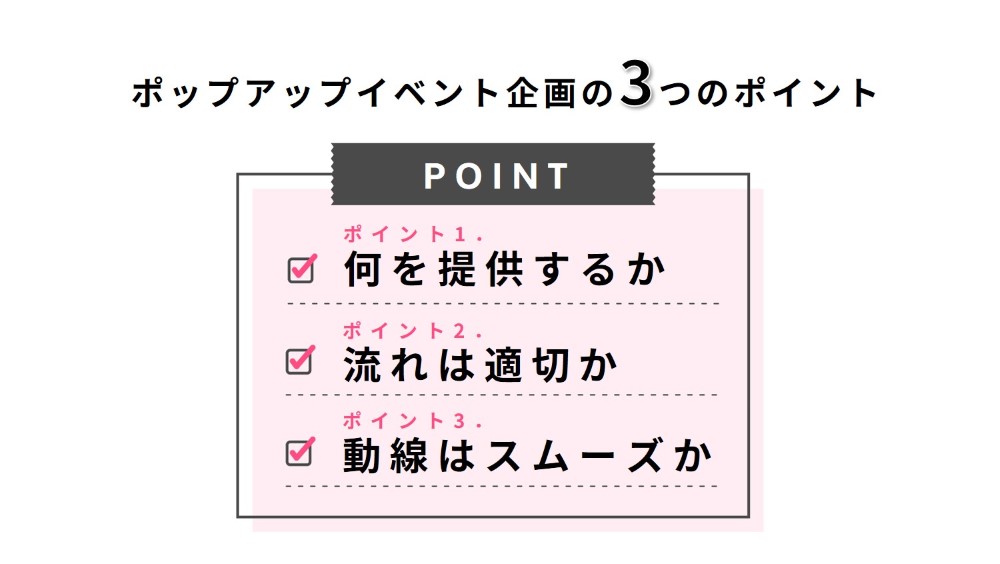
Three key points for planning a popup event
Point 1. What to provide
While we have introduced four representative types so far, these plans are not independent of each other; in many cases, they are held by combining multiple elements. Based on information such as the event's purpose, product characteristics, and target audience, it is key to combine the plans and put ideas together so that the overall concept of the popup event is unified and does not feel disjointed.
Point 2. Is the event flow appropriate?
In a popup event, it is important to carefully consider the flow of the experience from the moment the visitor enters the venue until they leave. Building an event flow plays an important role in helping visitors understand the product or brand more deeply and increasing favorability. So that when visitors leave the event venue, they think "That was fun," "I became interested in the product," or "I came to like the brand," you need to design what content they should experience and in what order, as well as each experience and performance.
Point 3. Is the traffic flow smooth?
In a popup event, it is necessary to provide multiple types of content—such as exhibitions, paths to photo booths, experiences, and sample distribution—within a limited space, so you must create a layout with a proper flow for the event space. Assuming that many customers will visit, you need to construct the entire event space with consideration for what kind of flow design will alleviate congestion and allow visitors to experience the event smoothly.
Thus, when planning to hold a popup event, let's proceed with a plan based on these three key points: "content, flow, and traffic flow."
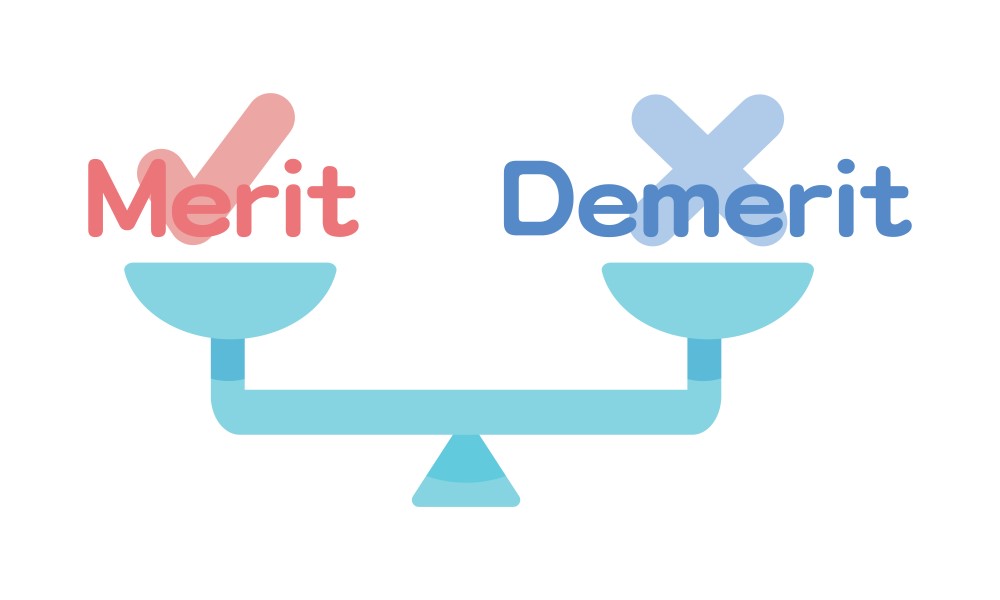
While popup events have many advantages, they also have disadvantages. Please use these details as a hint when thinking about whether a popup event is a good idea, whether another type of event would be better, or whether you should consider a different form of promotion that isn't an event.
◇◇◇
Merits
◇ High Customer Attraction Effect Holding an event for a limited time creates a sense of exclusivity, capturing consumer interest.
◇ Improved Brand Awareness By providing a space to experience products or services, you can effectively communicate the brand's appeal and leave a deep impression on consumers. ◇ Promotional Effect through SNS Unique experiences and designs are posted by participants on social media, leading to increased recognition.
◇ Flexible Theme Setting Events can be executed in line with seasonal trends, allowing for flexible adaptation to market movements.
◇ Possible Approach to New Customers By preparing content tailored to specific target groups, you can develop new customer segments.
◇◇◇
Demerits
◇ Unpredictable Attendance There is a risk that you may not reach your planned number of visitors if information does not reach the public adequately, or due to weather and other uncertainties, especially for outdoor events.
◇ Burden of Operating Costs Limited-time events can incur relatively high costs for setup and teardown, as well as higher labor costs for operational staff.
◇ Dependence on Location If a suitable venue cannot be secured, the impact on attendance and brand awareness may be significantly reduced.
◇ Risk of Being Just a Short-Term Trend Without appropriate follow-up after the event ends, the impact may remain purely temporary.
◇ Time and Effort in Preparation To achieve maximum results with a popup store held for a limited period, careful preparation is required, which may increase the burden on stakeholders.
Leave your popup event to BEEATS
BEEATS provides total support for popup events!
Please leave the planning and management of your popup event to BEEATS. We provide total support, from designing an attractive concept that resonates with your target audience to spatial design, construction, and on-site operations.
Because BEEATS has abundant experience, we bring out the brand's charm to the maximum and provide an unforgettable experience for visitors. If you have challenges regarding popup events or are considering holding one, please feel free to consult with BEEATS!
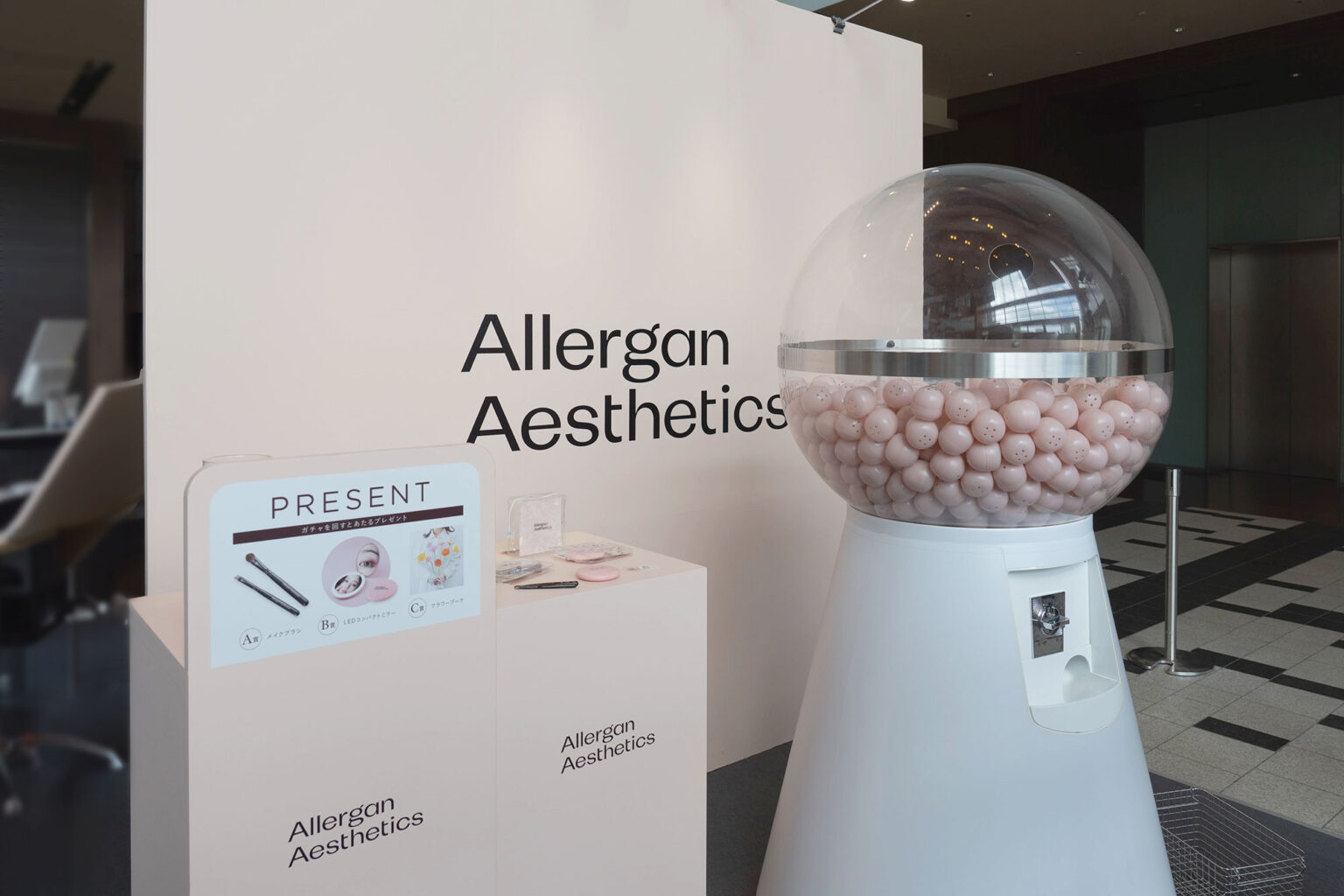
We also support the production of original gacha and original games!
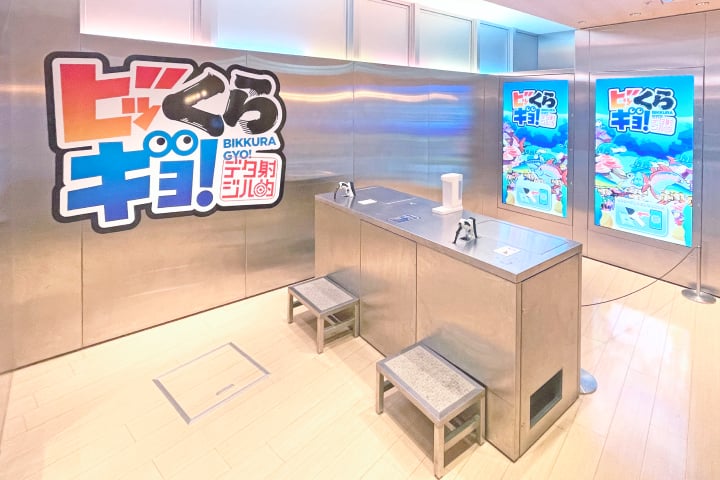
An idea often used in popup events is the "original gacha." Gacha not only draws visitor interest as an experiential content that can be enjoyed on the spot, but it also has the excitement of "you never know what you'll win," and is used for distributing novelties or product samples. Meanwhile, original games allow for performances that stick in the visitor's memory by incorporating elements where they can experience the brand's worldview or themes related to the product.
BEEATS also has a track record of producing original gachas and games!
A1. A popup event is a promotional event held for a limited time using venues such as commercial facilities or rental spaces. By creating a sense of exclusivity with "only now," it captures the interest of participants, and aims to improve brand image or acquire new customers by providing entertainment elements such as product trials or workshops.
Q2. What is the difference between a popup event and a popup store?
A2. While popup stores focus mainly on the "sale" of products, popup events prioritize plans that impressively convey the appeal of products—such as exhibitions, experiences, and food and drink—and the major difference is that sales are not the primary purpose.
Q3. What kind of types are there for popup events?
A3. Popup events are mainly divided into four types depending on the purpose and target. They are "Experience-provision type" where you can actually try out products, "Collaboration project type" where you collaborate with brands or influencers, "Seasonal event type" tailored to seasonal occasions, and "Exhibition project type" that conveys the brand's worldview and story.
Q4. What are the key points to consider when planning a popup event?
A4. There are three key points for planning a popup event. Unifying the overall concept to clarify "what to provide," creating an "event flow" so that visitors enjoy themselves and come to like the brand, and designing an "appropriate traffic flow" that alleviates congestion and enables smooth experiences.