"I want to make it buzz on social media, but how?" "What is the difference between ads that become a topic and those that don't?" Aren't there many marketing managers holding such worries? Now, we have entered an era where buzz is not left to chance but is "strategically designed." Various buzzes are occurring on social media, but the trigger for them is often actually a "real experience." In this article, from the perspective of BEEATS CO.,LTD. which "co-creates customer experiences,"I will explain the basics of buzz marketing, examples of OOH (transit advertising), and design points for creating buzz!
What is buzz marketing? Let's start with the basics
Buzz marketing is a method that generates buzz in a short period through SNS or word of mouth and raises the awareness of brands or products at once. The key is to create mechanisms that make users "want to spread it themselves."
◆Merits ・Explosive information spread can be expected ・Messages with high empathy spread as real word-of-mouth ・Can promote brand understanding through UGC (User Generated Content) ・Possibility of obtaining significant effects while keeping advertising costs down
◆Demerits ・There is also a risk that misunderstandings or complaints will spread ・If it becomes a controversy, it will take time to subside
In other words, rather than aiming only to "stand out," it is important how you can create a story or gimmick that users "want to talk about."
The starting point of buzz is not just online
You may have a strong image of "Buzz = SNS," but in reality, there are many cases where real-life experiences lead to social media posts and shares.
For example, unique advertisements seen in town or impressive experiences at events can be posted and spread on social media as photos or videos. In this modern age where the boundary between online and offline is becoming blurred, strategies that combine both are effective. By moving user emotions through real experiences and having them share those experiences online, you can expect natural spread.
Examples of OOH advertising that actually created buzz
These are OOH advertising cases that have become topics in recent years. We will pay attention to how there were gimmicks for experiences that moved user emotions.
Case 1
Black Thunder | Flash Advertisement of a President Struck by Lightning (September 2024)
One of the "30 Rakurai" projects planned to commemorate the 30th anniversary. A transportation advertisement was deployed with a mechanism where the visual of being struck by lightning emerges with a flash photo. The production that it emerges when photographed was content that encouraged an experience where you "unintentionally want to take a picture yourself."
Case 2
Ebara Yakiniku no Tare | Train Hijack Advertisement (August 2024)
To promote the new product "Somi Yakiniku no Tare Nidaime," they hijacked a train with hanging posters that simply and largely wrote the names of meat cuts such as "Karubi," "Sirloin," "Liver," and "Zabuton." On SNS, this impactful advertisement was shared many times with impressions like "I did a double-take" and "I feel like I'm going to be brainwashed."
Case 3
Real Gold × Kingdom | Giant Lip Object (May 2024)
As part of a collaboration project with the TV animation "Kingdom," to coincide with the WEB mystery-solving event "Mystery Solving! Liberation from the Muddle Army," we deployed a 3D advertisement as the first question of the mystery: "Who are these big squishy lips!?" The giant lip-only advertisement, which focused on texture and gloss, induced people to search and post, "What is this?"
Why OOH advertising becomes a starting point for buzz
Why is offline advertising, especially transportation advertising, attracting attention as a starting point for buzz? The three main reasons are as follows.
1. Experientiality that can stimulate the five senses There is a real "surprise" in texture, size, and spatial presentation. 2. Can be reached during relaxed times like commuting to work or school It is easy to leave an impression in a form that catches the eye, rather than just on a smartphone. 3. Design that makes people "want to take pictures" & "want to share" is possible Unique appearances and gimmicks can encourage natural SNS posting.
OOH is a medium that is highly compatible with buzz marketing as a contact point for "real × sharing culture." Based on these characteristics, you might think, "Perhaps there is some common point in advertising that is buzzing?" Next, we will look at buzz advertising from that perspective.
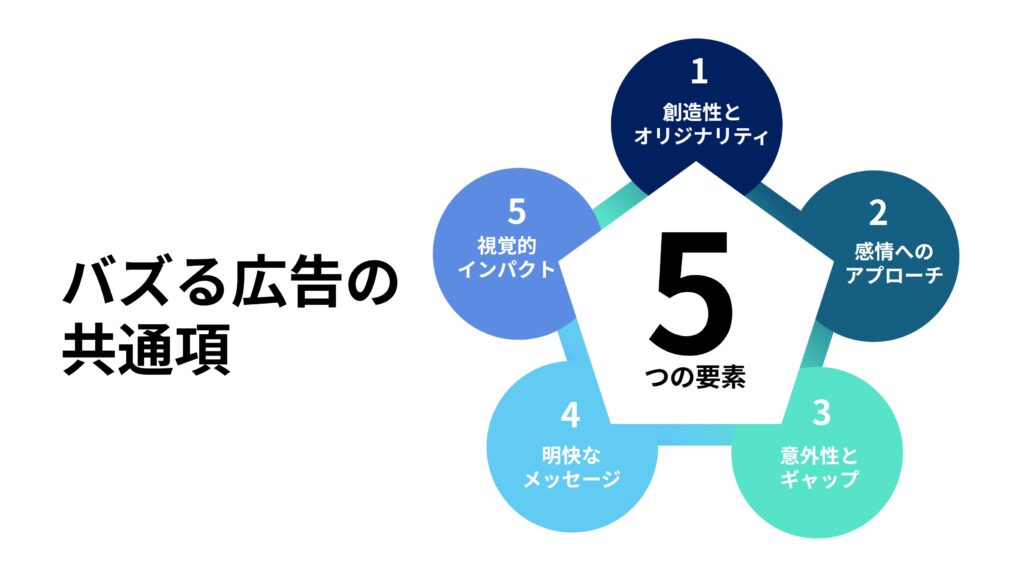
5 elements common to buzz advertisements
Looking at OOH advertising that actually produced buzz, you will notice that there is a common "gimmick" or "air feel" there. It is not that everything is the same method, but some common points can be seen.
1. Creativity and Originality Ideas and expressions never seen before are eye-catching. Anything with the power to make people think, "I want to show this to someone! I want to tell them!" can be a trigger for sharing on its own. 2. Approach to Emotions Makes you laugh unintentionally, or touches your heart. Experiences that move emotions are easy to remember and people naturally want to talk about them. 3. Surprise and Gap The extraordinary in the ordinary. Performances that betray expectations and gaps with the location make it a "matter of interest." 4. Clear Message Too complex expressions are hard to convey. The simpler and easier to understand the message is, the easier it is to be reached and spread instantly. 5. Visual Impact Visuals and gimmicks that make you want to take pictures. The strength that appeals to the visual sense plays a major role as a starting point for diffusion.
In this way, buzz is something that can be caused by a "mechanism" rather than coincidence. However, if the design is wrong, it can have the opposite effect, so next, we will look at NG patterns to be careful about.
NG patterns that invite reverse effects: NG patterns that cause the opposite effect
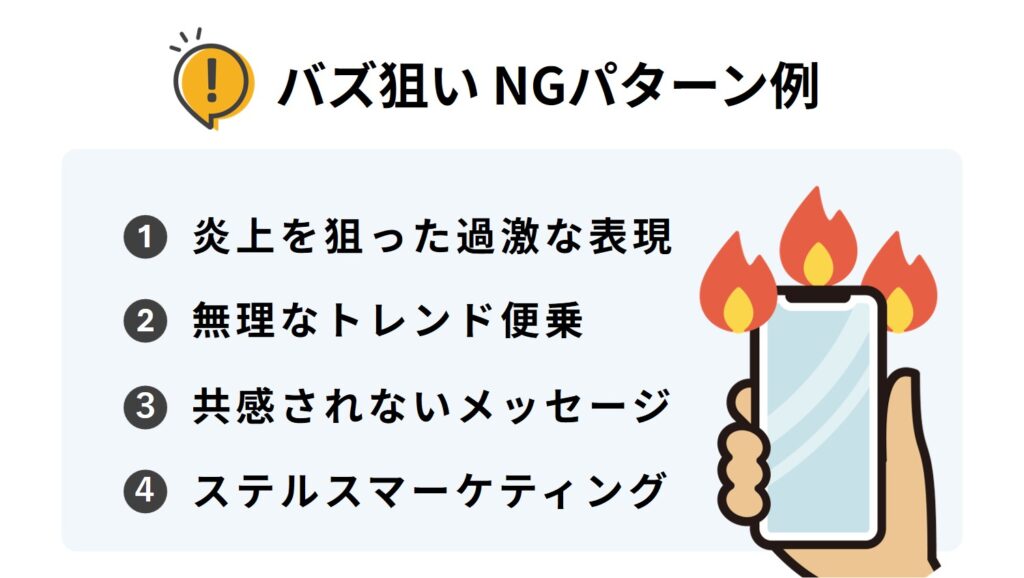
While it is possible to design buzz, not everything will go well. If you prioritize only the topicality, you may invite unexpected backlash. Here, we have summarized 4 NG patterns to be especially careful about.
1. Extreme Expressions Aimed at Creating Controversy Driven by the desire to "just get attention," one might be tempted to use highly provocative expressions. However, excessive staging carries the risk of damaging trust in the brand. Even if a controversy creates temporary buzz, it is likely to leave lasting damage in the long term.
2. Forced Incorporation of Trends Be careful about using trendy words or topics just because you think you "should include them for now." If the connection to the brand is not visible, a sense of "jumping on the bandwagon" will be conveyed to users. It is important to have a natural context that connects them.
3. Messages that do not resonate Content that is self-indulgent or pushes only what you want to convey will not reach the hearts of the recipients. Advertisements without empathy are highly likely to be ignored in the first place.
4. Stealth Marketing Methods that hide the fact that it is an advertisement and make it look like a "natural post" carry significant risks in this day and age. If you lose the trust of users, it is not easy to get it back. Sincere communication is the point that will be supported for a long time as a result.
While aiming for buzz is by no means bad, we want to remember that it is something that spreads only when there is a relationship of trust with the user.
Examples of experience design handled by BEEATS
So far, we have looked at the elements and precautions for creating buzz, but actually making an "experience that people want to share" is quite a difficult theme. Here, based on promotion examples handled by BEEATS CO.,LTD., which specializes in experience design, I will introduce "gimmick ingenuity" that draws out user interest and action.
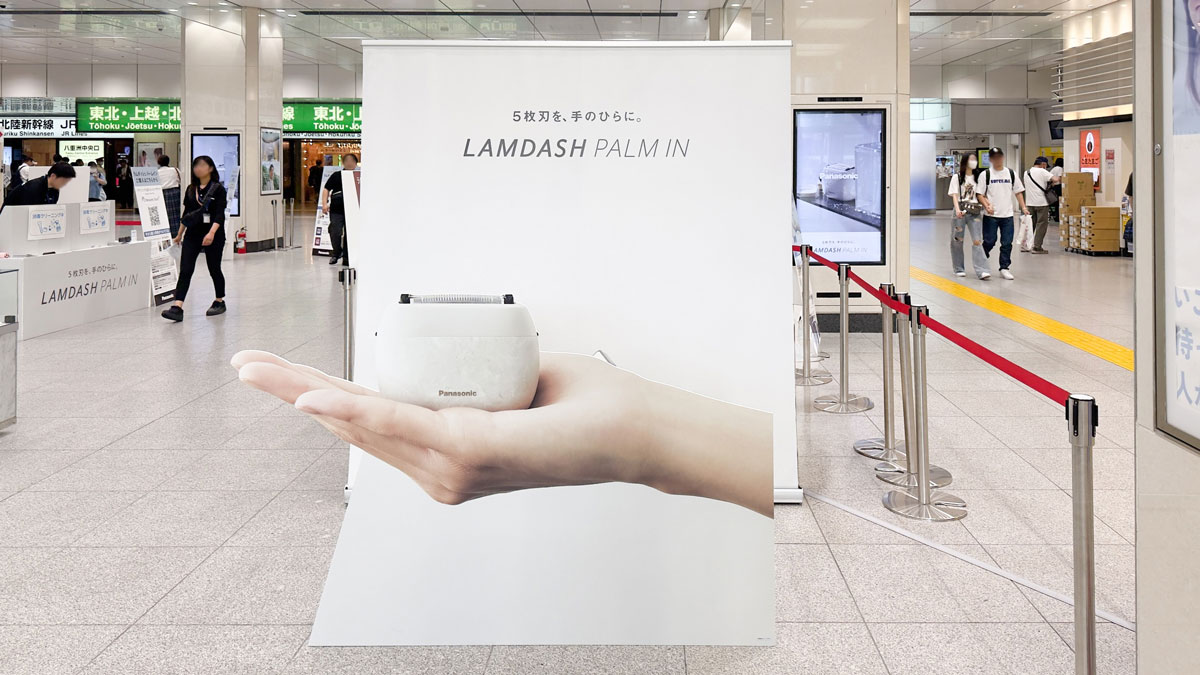
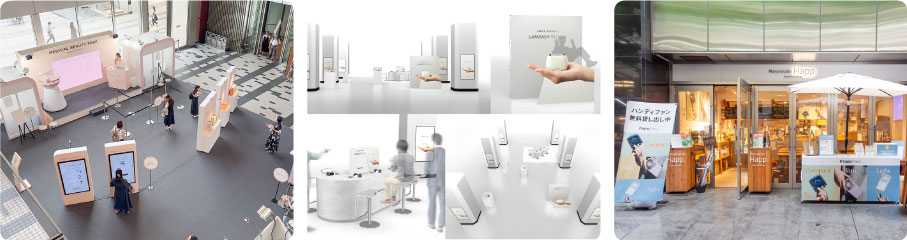
At the new product experiential event held in Yaesu, Tokyo Station, we installed a photo booth that "looks like it's sitting on your palm" to appeal to the compactness of the shaver. It became a production that not only impressed the product's features but also made people want to take pictures.
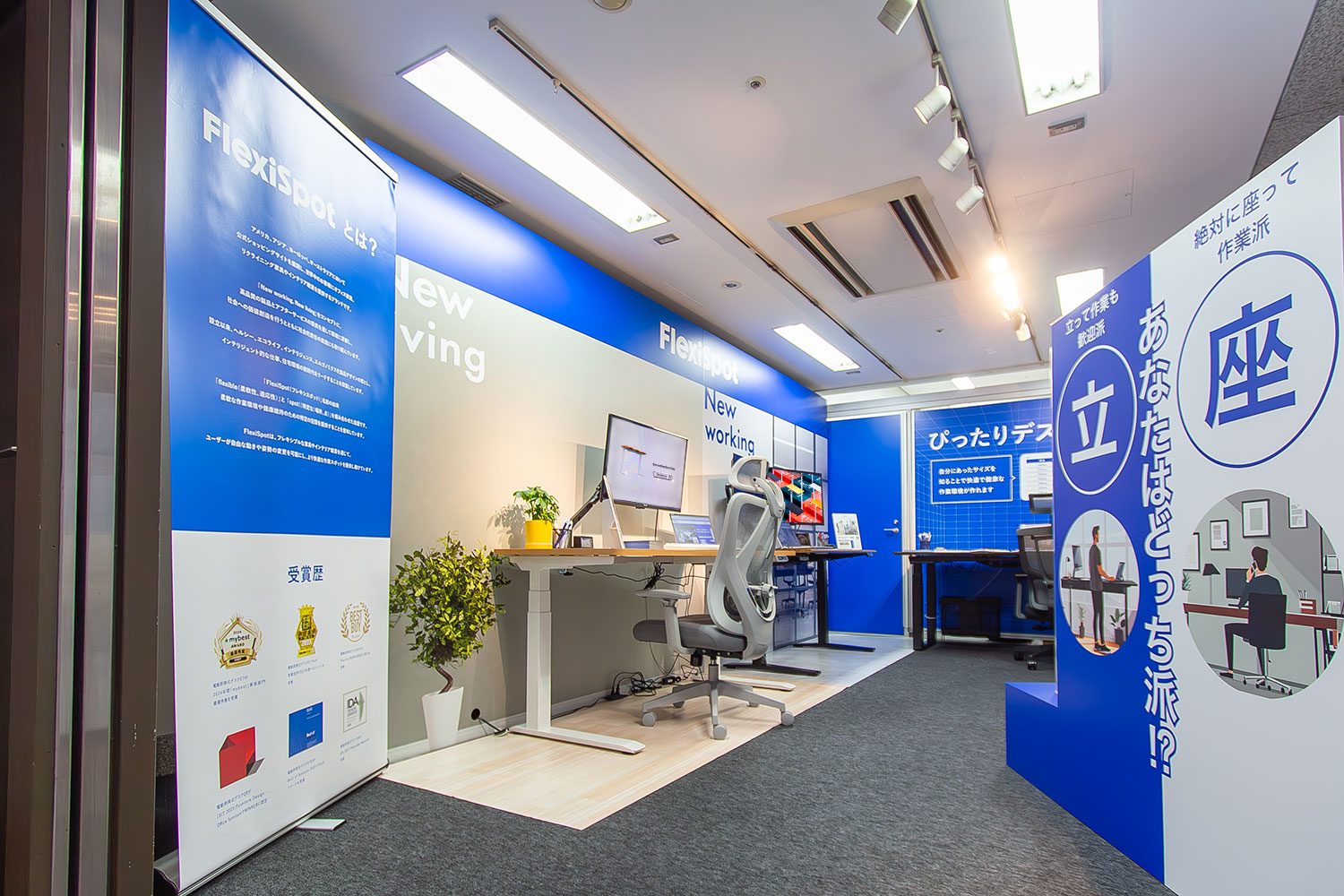
FlexiSpot "Standing Desk Experience Event" (March to April 2025)
At this event held in the underground passageway of Tokyo Station, many participatory gimmicks were deployed, such as "Perfect Desk Diagnosis" and "Standing vs. Sitting Vote Planning.". By making the design easy to "internalize," we scattered tricks and plans not just to "look at it" but to "want to try it a little" and "want to post it," creating a flow from real experience to spread.
In this way, even if you are not necessarily aiming for "buzz," mechanisms that move user emotions or actions can lead to spread as a result. Designing how people experience things is one of the important perspectives in promotion in this day and age.
Summary: You can create buzz. But before that, there is an "experience."
As we have seen so far, buzz does not happen just by accident or luck. What often triggers it is an "experience" that moved someone's heart.
If that experience is something people want to talk about, people will want to take photos of it, want to share it on social media, and as a result, it will naturally spread to many people—such a flow is born naturally.
That is why, when you want to create buzz, what you want to think about first is the perspective of "What kind of experience would make people want to tell someone about it?"
Shall we design an "experience that makes people want to share" together?
BEEATS, as a "professional in offline customer experience design," carefully captures the emotional movements and triggers for action in real settings, and co-creates mechanisms that make people want to tell others about their experience. Panasonic's "LAMDASH PALM IN" and FlexiSpot's "Standing Desk Experience Event," etc., are some of the experience cases designed starting from real touchpoints with users.
"I want to incorporate more 'experiences' into promotion" "I'm worried about creating opportunities to be shared" In such a case, please feel free to consult with BEEATS.
In addition, there are many examples of experience plans that could not be introduced in this article. Depending on the consultation content, it is possible to introduce examples that match your issues and objectives, so if you are interested, please feel free to contact us!
FAQ. Frequently Asked Questions
Q1. What is buzz marketing?
A1. Buzz marketing is a method that generates buzz in a short period through social media and word of mouth, raising brand or product awareness all at once. While explosive spread can be expected with reduced advertising costs, the key to success is creating a story or gimmick that makes users "want to spread it themselves."
Q2. Why is OOH advertising (transportation advertising) likely to be a starting point for buzz?
A2. The reason why OOH advertising is easily a starting point for buzz is because it has an experientiality that stimulates the five senses unique to reality. It can be contacted during relaxed times such as commuting to work or school, and has features that make it easy to encourage natural SNS posting or sharing by users through unique appearances and gimmicks.
Q3. What are the common elements of advertising that creates buzz?
A3. The five elements common to ads that buzz are creativity and originality, approach to emotions, surprise and gap, clear message, and visual impact. By incorporating these elements, you can create a mechanism that moves users' hearts and makes them want to share.
Q4. What are the NG patterns to avoid when aiming for buzz?
A4. The four NG patterns to avoid when aiming for buzz are extreme expressions aiming for controversy, forced incorporation of trends, self-indulgent messages that do not resonate, and stealth marketing that hides the fact that it is an advertisement. If you prioritize only topicality, there is a risk of significantly damaging trust in the brand.