As a trend report that resonates with the sensibility of Gen Z, delivered by Retail Voice, this time we focus on the "Cancel Kaiwai."
"Bath Cancel Kaiwai" has been known for some time, but recently we have started to see terms like "Konro (Stove) Cancel Kaiwai" and "Zangyo (Overtime) Cancel Kaiwai" on social media and news sites. Familiar "choices to quit" are becoming hot topics one after another, and many people are likely curious about the background behind this.
In this article, we organize the background and reasons why the Cancel Kaiwai is showing such a spread. Furthermore, we introduce how companies are utilizing it for promotions and think about what kind of approach is required in an era where "quitting" creates empathy. If you are interested in the "XX Cancel Kaiwai," please read to the end.
Cancel Kaiwai is an expression used when daring to put into words and share that one has "quit" a plan or habit.
By putting a name to the behavior of "I quit today," it becomes easier for people who have had the same experience to empathize. Since the "Bath Cancel Kaiwai" became a hot topic, various "XX Cancel Kaiwai" terms have been born, and for example, here are some variations.
・Bath Cancel Kaiwai: Too tired to bathe, so I sleep ・Stove Cancel Kaiwai: Quit cooking with fire and use a microwave or store-bought food ・Outing Cancel Kaiwai: Quit the plan to go out and spend time at home ・Meal Cancel Kaiwai: Spend time without eating ・Health Cancel Kaiwai: Step away from health-consciousness and enjoy junk food or high-calorie meals ・Overtime Cancel Kaiwai: Go home at the scheduled time without working overtime
Although it was originally a collection of individual tweets, because "Kaiwai" became the common language of Gen Z and it was expressed as "XX Cancel Kaiwai," it became easier to find posts with the same actions and thoughts, and empathetic reactions were easily spread.
Why does the "Cancel Kaiwai" gather empathy?
There are three main reasons why Cancel Kaiwai has spread this far.
1.Became easier to visualize and share on social media Posts like "I quit bathing" or "I went home on time" easily gather empathy even with a short tweet, and are accepted positively by getting likes and replies. Actions that were once completed within individuals can now be shared as words on social media, making people feel like they "have peers."
2. The era where the "choice to quit" is affirmed The "choice to quit," which was often viewed as "lazy" or "not trying hard enough" in the past, is now spoken about positively due to the emphasis on work-life balance and the rise in self-esteem. Gen Z, in particular, values efficiency and their own pace, and accepts choosing not to do something as a judgment of their own.
3. Shift in social values We have shifted from old values such as "overtime = working hard" to an era where work-style reform and the importance of rest are valued. This change is supporting the spread of terms like "Overtime Cancel Kaiwai."
How did the "Cancel Kaiwai" spread?
The first representative example of the Cancel Kaiwai that attracted significant attention was the "Bath Cancel Kaiwai."
Starting around the spring of 2024, personal tweets triggered the occurrence of the word "Bath Cancel Kaiwai," which then trended. On social media, posts reporting that they were skipping bathing due to fatigue or hassle, such as "I'm going to bath-cancel today" and "I want to sleep already, I'm joining the Bath Cancel Kaiwai," appeared one after another, gathering empathy. This boom was introduced by multiple media outlets, including news sites and television, and became recognized not only by Gen Z but by a wide range of generations.
Triggered by this phenomenon, the term "XX Cancel Kaiwai" and related posts have spread to other life activities such as meal cancellation, health cancellation, sleep cancellation, and outing cancellation. This expansion is still continuing, and "XX Cancel Kaiwai" was ranked 3rd in the Buzzword category of the "Simeji First Half Trend Ranking" for Gen Z, announced by Baidu, Inc. in June 2025.
This phenomenon was pushed forward by these elements.
・Short and concrete posts It is easy to catch the eye on the timeline because the situation can be conveyed in a single word. ・A mechanism where empathy gathers in real time Because you can immediately post your mood or actions of the day, you get responses of "I feel you!" at the same timing. ・Humor boosts diffusion A slightly humorous self-deprecating tone lowers the hurdle for posting and spreads even further through reposts and screenshots.
Thus, the Cancel Kaiwai grew beyond mere individual tweets into a meme that is diffused while being empathized with (a subject or expression shared and imitated in SNS and Internet culture).
"Cancel Kaiwai" and Kaiwai Consumption
The "Cancel Kaiwai" does not stop at mere wordplay, but also affects actual consumer behavior. There are people who choose dry shampoo or body wipes on days when they quit bathing, and cases of utilizing frozen foods, side dishes, or delivery services on days when they don't use the stove are also conspicuous. On days when they quit "health," they may make and enjoy junk food with a sense of guilt; there are many instances where the choice to quit leads to new consumption.
In line with these movements, companies are also increasing products and projects premised on the "choice to quit," such as meal kits, foods specifically for microwave cooking, and bathtubs made of cloth that can be folded and removed. The Cancel Kaiwai is a phenomenon that is becoming a trigger for new purchasing behavior while simultaneously being a place for empathy.
The "Cancel Kaiwai" perspective adopted by companies
The spread of the Cancel Kaiwai is also affecting companies' promotions and product planning. Measures that positively replace the "choice to quit" and stay close to the feelings of those in daily life are appearing one after another.
Case 1
Shiseido x MatsukiyoCocokara & Co. "Hada Gummy"
"Hada Gumi," which was sold in limited quantities as a joint product of the two companies in September 2025, is a gummy-type facial cleanser that removes dirt just by stroking the skin, requiring no lathering. Focusing on the data that about half of women aged 15 to 29 are part of the "facial wash cancel kaiwai" who do not use facial cleanser in the morning, it proposed a "new habit" for those who feel that morning face washing is a burden.
Case 2
Japanese restaurant "Gochisou-mura" Cooking Cancel Kaiwai Coupon
For a limited time during summer vacation, they launched a campaign to support the "choice to daringly quit" self-catering. Customers who came to the store with an apron and declared "Self-catering Cancel Kaiwai" when ordering were distributed a "Self-catering Cancel Ticket" usable next time and an easy recipe devised by the head chef. It became a playful, participatory project.
Case 3
DELISH KITCHEN "No-Fire Recipe Feature"
In a special feature released in July 2025, numerous menus that can be made with a microwave or rice cooker, and non-heated recipes were introduced. It is a project aimed at the "Stove Cancel Kaiwai" in response to the summer cooking struggle of "it's too hot to use a stove."
Case 4
SALONIA "#Hair Dryer Cancel Kaiwai Support Campaign"
I-ne Co., Ltd. conducted a follow-and-repost campaign on their official X in February 2025, targeting those who find using a hair dryer after bathing to be a hassle. They used the term "Hair Dryer Cancel Kaiwai" to appeal for the product while inviting empathy.
Summary: Cancel Kaiwai = Toward marketing that resonates with the choice to quit
The Cancel Kaiwai is gathering empathy not as slacking off, but as a "choice to cherish oneself." Now that more people are resonating with values such as not overdoing it, living efficiently, and acting according to how they feel, companies are required to have an attitude that does not blame the "choice to quit" but rather proposes alternative options. Here are two points that marketers should be conscious of.
◆Message design that creates an environment where you can think "It's okay to quit" ◆Brand experiences that prepare products and experiences you can choose after quitting
By grasping these two points, you can evoke empathy from consumers and create opportunities for purchasing or experiencing.
Tips for planning using the Cancel Kaiwai (from BEEATS)
At BEEATS, while involved in the promotion and space design of various companies every day, we place great importance on grasping the changes in the values of people's lives. Now that choices like the Cancel Kaiwai—"don't overdo it" or "I'll quit today"—are being discussed positively, experience designs that are easy to drop by even for a short time and mechanisms where information can be received at one's own pace seem to be becoming increasingly important. Please use these perspectives as hints when thinking about planning or store measures.
Please feel free to contact us if you have any questions regarding exhibition booths, pop-up stores, or promotional planning.
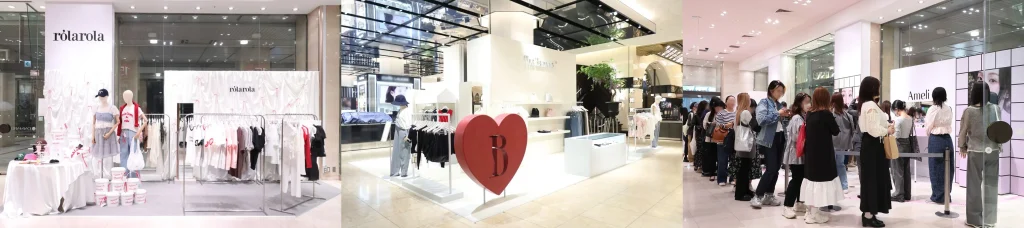
At BEEATS CO.,LTD., we handle numerous brand experience creations in real spaces, such as sales promotions, exhibitions, and pop-up stores for various companies. Recently, we have also been in charge of pop-up stores themed around Korean brands and characters popular with Gen Z, creating spaces that attendees can enjoy with "instantly photo-worthy" gimmicks and productions that make them want to share on social media.
Please feel free to contact us if you have any questions regarding exhibition booths, pop-up stores, or promotional planning.
A1. Cancel Kaiwai is an expression used when one dares to put into words and share on social media or elsewhere that one has "quit" a plan or habit. By verbalizing actions like "Bath Cancel Kaiwai" or "Stove Cancel Kaiwai," it has the characteristic of making it easier for people who have had the same experience to get empathy and reactions from one another.
Q2. Why does the Cancel Kaiwai gather empathy on social media?
A2. There are three reasons why it gathers empathy. The first is that it has become easier to visualize and share on social media, allowing people to feel a sense of camaraderie; the second is that the "choice to quit" has become affirmed, centering on Gen Z who value efficiency and their own pace; and the third is that social values have shifted toward work-style reform and an emphasis on rest.
Q3. How are companies utilizing the "Cancel Kaiwai" trend?
A3. Companies take the "choice to quit" positively and develop products and promotions that resonate with the feelings of consumers. For example, it is utilized in the release of gummy-like facial cleansers for those who find face washing burdensome, "no-fire recipe features" that save cooking time, and social media campaigns.
Q4. How is the Cancel Kaiwai affecting consumer behavior?
A4. The Cancel Kaiwai is acting as a catalyst for new consumer behavior. It is leading to the use of alternative products and services based on the "choice to quit," such as using dry shampoo on days when one quits bathing, or using frozen foods or delivery services on days when one quits cooking.