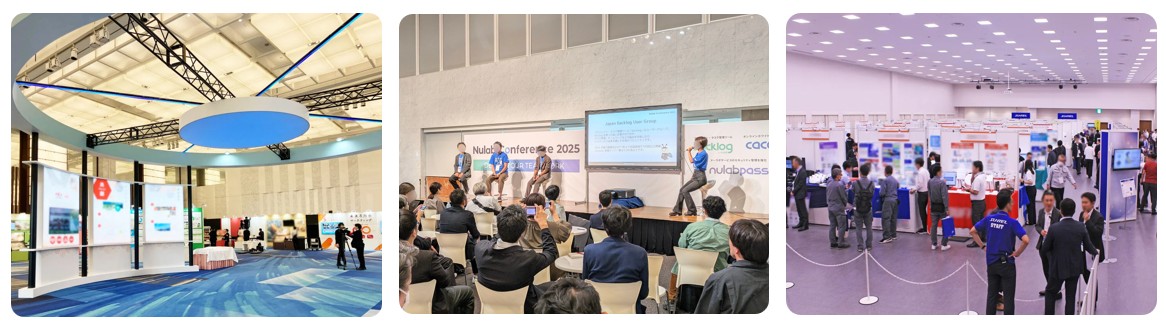
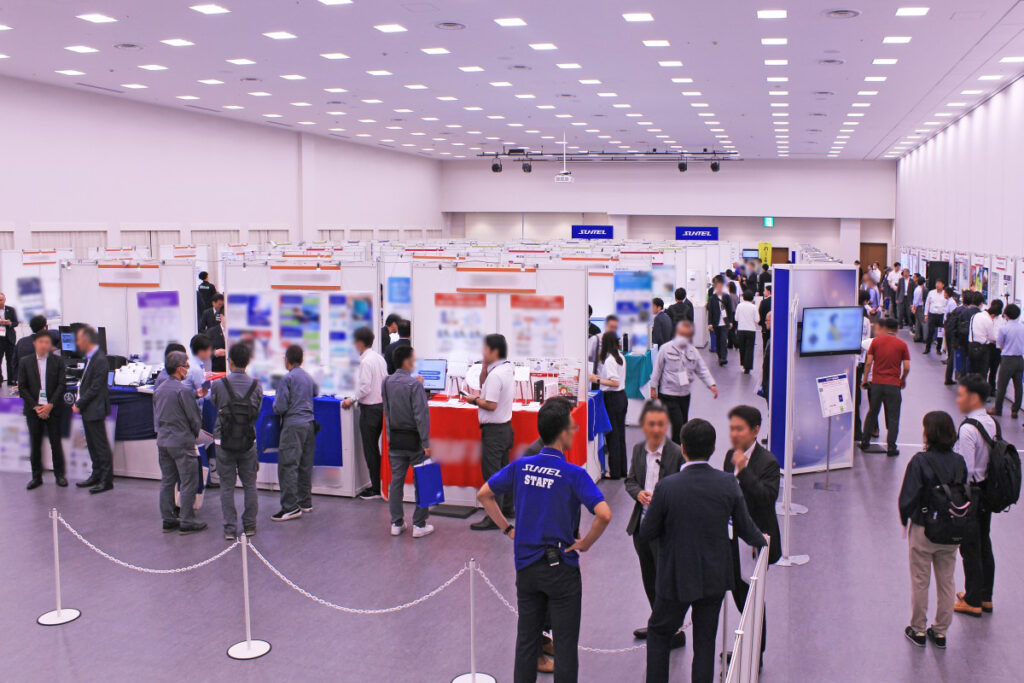
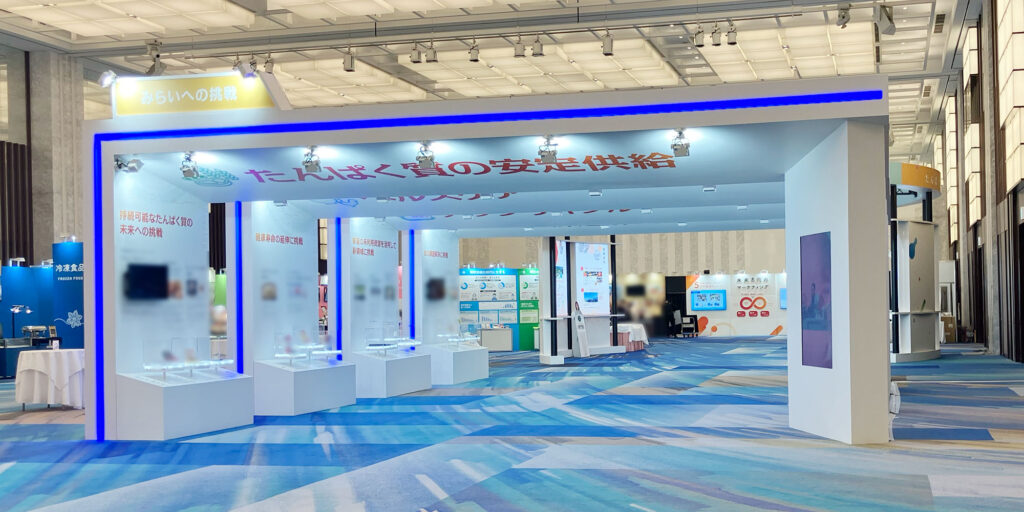
While business digitization is accelerating, the value of real-world experiences is being valued more than ever before. Amidst this, many B2B companies are focusing on "proprietary exhibitions (private shows)".
As a method for building deep customer engagement and creating high-probability business opportunities, which was difficult with only exhibiting at traditional large-scale joint trade shows, proprietary exhibitions are a very powerful marketing weapon.
In this article, we comprehensively explain everything from the significance of holding proprietary exhibitions and private shows, the definitive differences from joint trade shows, to visitor attraction and management strategies to maximize ROI.
Why B2B companies are now choosing proprietary exhibitions (private shows)
Why are more companies holding "private exhibitions (private shows)" on their own?
The biggest reason is the "quality" and "exclusivity" of information. In an era where information can be easily compared on the Internet, customers are seeking "concrete experiences that solve their own problems" rather than "general information." In a joint exhibition where hundreds to thousands of exhibiting companies crowd, the visitor's stay time is only a few minutes per company, and there is a limit to obtaining a deep understanding of the brand.
On the other hand, in a private exhibition, the entire venue becomes a space just for your company's products and services. You can eliminate the noise of being compared with other companies and welcome target customers with a spirit of hospitality, allowing you to raise the heat of leads (prospective customers) all at once.
Three strategic benefits of holding a private exhibition
Holding a private exhibition, also known as a private show, has three major strategic benefits that joint exhibitions do not have.
① "Exclusive negotiation environment" without competitors Only your company's solutions exist in the venue. Visitors will concentrate on your company's proposals without having their eyes stolen by competitor booths. With this, processes that usually require several visits, from deep problem hearing to confirmation of concrete budget sense and consultation of introduction schedule, can be completed in 1 day.
② 100% expression of your brand world view At joint trade shows, you are bound by the organizer's decoration rules and booth layout, but at proprietary exhibitions, you can perfectly embody your brand identity in everything from venue selection to spatial design, lighting, BGM, and even the details of customer service. The potential of private shows is immense for fostering a sense of trust (brand equity) that makes customers feel, "I can entrust this company with anything."
③ Improving existing customer loyalty and creating "lateral expansion" Private exhibitions are effective not only for new development but also for deepening relationships with existing customers. By providing advance releases of new products, technical seminars by technical staff, and individual consultation meetings, you can provide a "special feeling." Also, there are many cases where existing customers bring staff from other departments within the company, making it a perfect opportunity to induce lateral expansion (cross-selling) within the organization.
Criteria for deciding to shift from joint trade shows to proprietary exhibitions (private shows)
Many in charge are worried, "I'm interested in a private exhibition, but isn't a joint exhibition enough?" There are clear criteria for when to shift to or use a private exhibition/private show in combination.
The "quality" of acquired leads is declining If even though business card exchanges increase at joint exhibitions, the subsequent effective negotiation conversion rate is decreasing, you should steer toward a private exhibition that narrows down the targets.
Products are "high unit price, complex, and experience-based" For products whose value is difficult to convey with catalog specs alone, or systems and large equipment that require careful explanation while actually showing the operation screen, a private show will shorten the distance to a contract.
Utilization of house lists is stagnating If you have accumulated thousands of business cards and newsletter subscribers in the past, that list is a "treasure mountain." Rather than going to a joint exhibition for new customer attraction, it is more efficient to invite the existing list to a private exhibition and lead them to a business negotiation.
Not ending with "just existing customers." Attraction strategy for calling in new customers
The biggest obstacle to a private exhibition (private show) is the "customer attraction" that the organizer must do themselves. If you do nothing, only existing customers and cooperating companies will gather, and it will not lead to results. We explain strategic approaches to reliably attract new customers.
Expansion of attraction range through co-hosting (partnership) If there is a limit to customer attraction by one's own company, hold a private exhibition jointly with partner companies in non-competing adjacent areas. By utilizing each other's house lists, you can approach potential layers that could not be reached by your company alone, and cost dispersion such as venue expenses also becomes possible.
Content design with "problem solving" as the main axis New customers will not visit with just the signboard of "New Product Announcement." Place "seminars" or "conferences" that solve problems the target is facing, such as "solutions to the 2026 problem" or "cost reduction cases through DX," at the center. A private exhibition should be a place that answers customer worries before it is a place to show products.
<Multifaceted notification combining digital and analog>
Personalized DM For important VIP clients, we send special invitations with handwritten messages.
Targeted SNS Ads We run ads on LinkedIn and Facebook, narrowing down by job title, industry, and region. It is also effective to target companies near the venue of the proprietary exhibition.
Inside Sales Calling After sending newsletters, we follow up by phone with those who opened them to encourage booking visits.
5 steps for private exhibition operation to ensure no failures
To succeed in a private exhibition (private show), not only day-of operation but also meticulous design from six months prior is necessary.
STEP.1
Setting objectives (KGI/KPI)
Clear what is defined as success, such as "expected order amount," "number of effective negotiations," and "number of new leads."
STEP.2
Venue selection and spatial design
We select a venue that is easy for targets to access and matches the brand image. In a private show, the "surprise" and "comfort" of the moment you enter are important.
STEP.3
Customer service flow training
All staff repeat role-playing so they can provide appropriate guidance according to the visitor's attributes.
STEP.4
Real-time business negotiation records
We use a tablet or similar to input the hearing content into the CRM (customer management system) on the spot.
STEP.5
Thank-you follow-up and continuous inside sales
We will make a thank-you contact within 24 hours after the end, and for leads of B rank or higher, we will immediately suggest an appointment for the next time.
ROI (cost-effectiveness) measurement and getting internal approval
Private exhibitions are often seen as having a large cost burden per company. To get internal approval and hold them continuously, you need to calculate and present ROI correctly.
Comparison of effective negotiation unit price Compare not by "business card acquisition cost" at a joint exhibition, but by "cost connected to a business negotiation" in the end. Since private exhibitions have a high negotiation conversion rate, there are many cases where they are efficient as a result.
Effect of shortening lead time Quantify how much the period until an order was shortened by directly dialogue with engineers and decision-makers at the private show.
Contribution to LTV (Customer Lifetime Value) Incorporate the decrease in the churn rate of existing customers and the increase in unit price due to upselling/cross-selling into the ROI indicators.
It is essential to present a pipeline simulation as an "investment to create sales," not just "event expenses."
Summary: Making a private exhibition the strongest tool for "creating business negotiations"
A private exhibition, and a private show, is one of the effective methods for connecting "deeply and intensely" with customers in modern BtoB marketing. While it is also important to spread awareness broadly at joint exhibitions, if you are aiming for more certain contracts and the construction of a solid fan base, the choice of a company-led private show is also effective. By combining strategic customer attraction and dense operation design, a private exhibition should be a great force to fundamentally change your company's sales activities.
Consult BEEATS for your private show implementation!
Companies and persons in charge who are interested in private shows must surely have experience in exhibition operation. Regarding choosing a partner, have you felt dissatisfaction or boredom like "they only do what I told them," "the response is too slow," or "they can only do construction"?
BEEATS deeply understands your company, products, and services, designs the optimal booth, and supports you totally from construction to personnel arrangement, video, pamphlets, and novelties.
We will also listen to worries and issues that are hard to say within the company and respond sincerely.
Q. What is a private exhibition (private show)? A. A private exhibition (private show) refers to an exhibition held solely by one's own company, where the entire venue becomes a space just for the company's products and services. Unlike a joint exhibition where hundreds to thousands of companies exhibit, it is characterized by eliminating the noise of being compared with other companies and increasing the heat of leads (prospective customers) by welcoming them into the company's own world view.
Q. What is the difference between a private exhibition and a joint exhibition? A. The biggest difference is in the "quality" and "exclusivity" of information. At a joint exhibition, the visitor's stay time per company is limited to a few minutes, and you are also bound by decoration rules and booth assignments. On the other hand, at a private exhibition, you can create an exclusive negotiation environment without competitors, and you can express your brand identity in every detail from venue selection to space design and customer service. Processes that usually require several visits can be completed in 1 day, from deep problem hearing to consultation of budget and introduction schedule.
Q. Are there criteria for judging when to switch to a private exhibition? A. There are mainly 3 criteria. If the effective negotiation conversion rate is decreasing even if business cards increase at joint exhibitions, if the product is high unit price/complex/experience-based and the value is difficult to convey with just a catalog, and if a house list such as business cards and newsletter subscribers exchanged in the past is accumulated on the scale of thousands and its utilization is stagnant. If these apply, shifting to or combining with a targeted private exhibition is effective.
Q. How should I gather new customers for a private exhibition? A. The biggest obstacle to a private exhibition is the "customer attraction" that the organizer must do themselves. Since it tends to focus on existing customers and cooperating companies if nothing is done, expanding the list through co-hosting with partners in non-competing adjacent areas or designing seminars/conferences with "problem solving" as the main axis is effective. In addition, multifaceted notification combining digital and analog, such as special invitations to VIP customers, SNS advertising narrowing down by job type/industry/region, and calls by inside sales, is effective.
Q. How should I measure the return on investment (ROI) of a private exhibition? A. Private exhibitions are often seen as having a large cost burden per company, but when compared not by the cost of acquiring business cards but by the "cost connected to a business negotiation (effective negotiation unit price)," there are many cases where they are efficient due to the high rate of business negotiation. In addition, it is good to incorporate the effect of shortening the order lead time through direct dialogue with decision-makers, and the contribution to LTV (customer lifetime value) due to the decrease in the churn rate and upsell of existing customers into the indicators. It is important to treat it as an investment to create sales, not just as event expenses.