A private show is a type of in-house exhibition hosted by a company. It is an event held for specific target audiences or business partners without being open to the general public. Normally, industry professionals, customers, business partners, and important partner companies are invited, and it follows a format where only limited participants can join. In this article, I would like to introduce the advantages of private shows and key points for their preparation and holding.
▶출전을 성공으로 이끄는 '전시회 출전의 기본' 매뉴얼 전시회의 지원 실적 풍부한 BEEATS 가, 이것만은 누르고 싶은 “8개의 준비”에 대해 소개! 첫 출전에서도 성공한다! 「전시회 출전의 기본」매뉴얼 꼭 봐 주세요.
Three classifications of exhibitions
There are various types of exhibitions, which can be categorized into business shows, public shows, and private shows.
Part 1
Business show
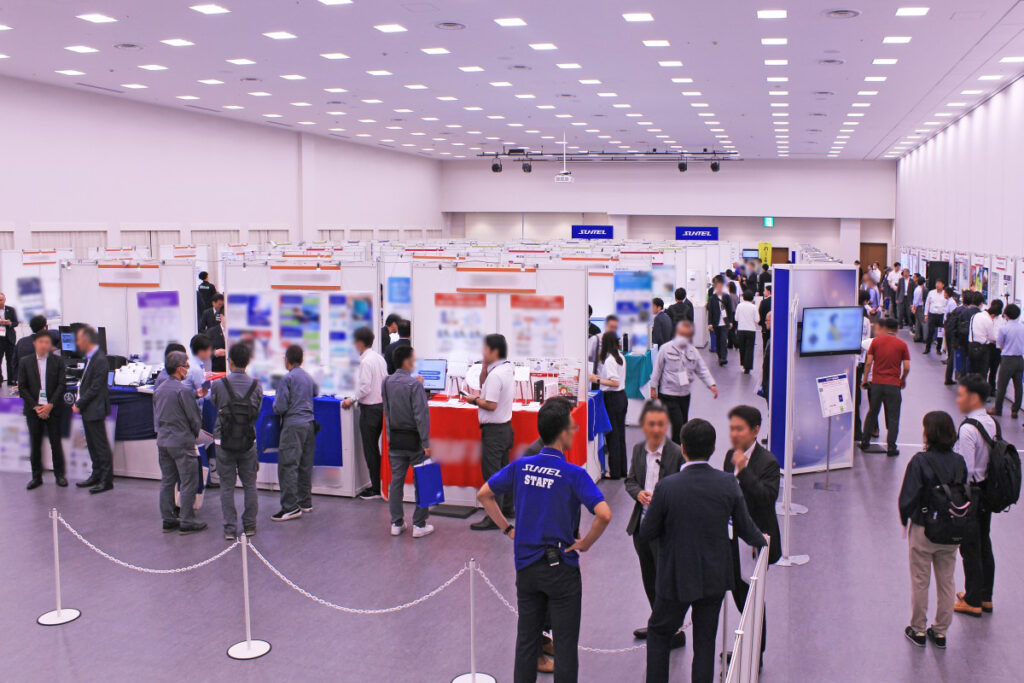
This is an exhibition also known as a business meeting or joint exhibition. It is a B to B (Business to Business) exhibition targeting business professionals, where hundreds or thousands of companies exhibit together at a large exhibition venue. A feature is that the number of visitors reaches tens of thousands. Because you can propose products or services to many highly interested business professionals in line with the exhibition theme, it is conducted for the purpose of acquiring new customers.
Part 2
Public show
B to C (Business to Consumer) is common, and many general consumers visit. While the purpose of a business show is negotiation, public shows focus on expanding product awareness and building future fans. Some exhibitions are set up with the first day as a business show and the latter half as a public show, incorporating both aspects.
Part 3
Private show
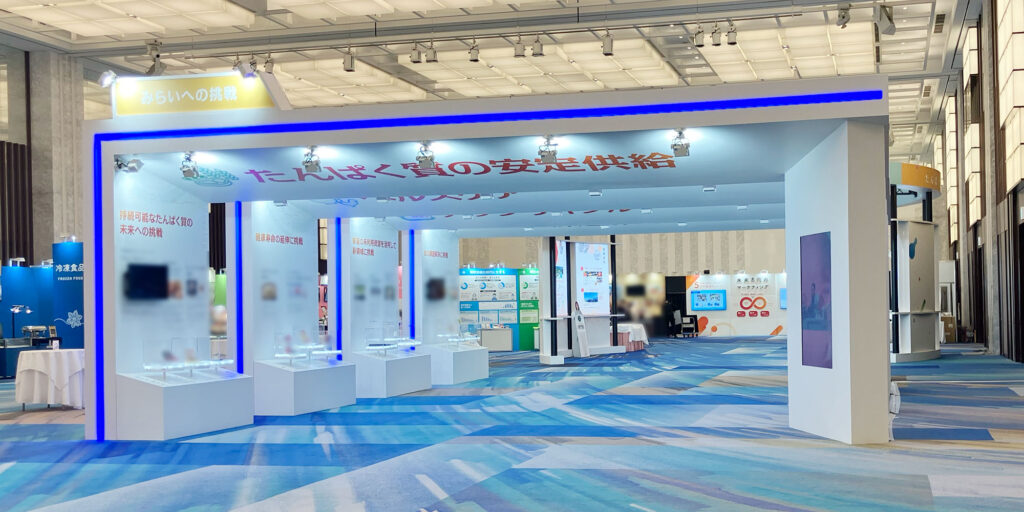
Now, regarding the topic of this time, the private show, whereas business shows and public shows have multiple companies exhibiting, they are held by only a single company or group. Because of this, they are also called organized exhibitions or in-house exhibitions. They are basically invitation-only, and the goal is to strengthen relationships with existing customers and stakeholders. While product/service proposals are necessary, direction such as greetings to guests, release announcements, and entertainment to host customers are also important elements.
Who Are Private Show Visitors?
Compared to business shows or public shows, private shows have distinctive features in the lineup of visitors. They mainly consist of existing client companies, and you will see many attendees from management and executive levels involved in decision-making, not just the sales window. This is the perfect opportunity to explain in detail to key persons who consider whether to introduce products or services. Furthermore, you can invite media relations such as television or newspapers to widely broadcast your company's initiatives, or use it as a place for interaction aimed at building relationships with local government officials and various industry organizations. Additionally, there are cases where shareholders interested in the company's management are invited as an opportunity to deepen their understanding of its activities. In this way, a private show plays a role as a strategic communication venue for building trust and strengthening relationships, rather than just an exhibition.
Purpose of holding a private show
The main purposes for companies hosting a private show are as follows.
◆◆◆
Announcement of new products and services
Have participants understand products and services through the exhibition and announcement of new products and latest technologies.
◆◆◆
Introduction of corporate initiatives
Introduce corporate initiatives such as quality assurance for safety and security, as well as SDGs, in addition to products and services.
◆◆◆
Strengthening business relationships
Provide an opportunity to deepen relationships with important partners and customers, and build a relationship of trust.
◆◆◆
Strengthening the brand
Utilize it as a place to enhance your company's brand value and image.
Although the purpose itself often remains the same as other exhibitions like business shows, private exhibitions have the following advantages.
Merit 1
Identification of targets
Because you can concentrate on delivering information to a specific target audience, highly accurate and effective marketing is possible. You can directly invite key decision-makers from your customer list or invite those responsible for sustainability, environment, etc., whom you might not normally meet during business negotiations, to introduce your initiatives.
Merit 2
Gaining a competitive advantage
Because you can decide the period and venue yourself, you can exhibit and introduce products and services earlier or at a more effective timing than your competitors.
Benefit 3
Delivering exclusive information
Because it is a closed exhibition, competitors cannot enter, and a certain degree of confidentiality is maintained. Therefore, there is an advantage to conducting in-depth product introductions and business negotiations.
Merit 4
Improving participant satisfaction
Since it is held by only one company, you have flexibility with space constraints and can create a venue freely, allowing you to provide participants with a more special experience. You can construct a story that leads to visitor satisfaction, from the greeting after entering the venue to product presentations, events, and business hospitality. Through an exhibition with high satisfaction, you can expect to build deeper relationships.
Private exhibitions also have disadvantages that are two sides of the same coin with their advantages.
Disadvantage 1
Difficult to lead to new acquisitions
Private exhibitions are generally invitation-only based on an existing list, so access for the general public and new customers is limited.
Disadvantage 2
Need to attract visitors in-house
In business shows and public shows, an organizer in charge of the entire event handles announcements and customer attraction using various media. Just having many exhibitors gathered under the same theme can lead to significant customer attraction. However, for a private show, you must handle both announcements and customer attraction entirely on your own.
Disadvantage 3
Increase in costs and resources
Private exhibitions require significant costs to hold because the host and exhibitors are within the same company. Since the company must cover everything from venue costs to security and staff every position, issues with resources and personnel costs also arise.
You need to carefully consider the purpose and expected outcomes when deciding whether to exhibit at a business show or hold a private show.
Key points for preparation and holding of private shows
The following steps are common for proceeding with a private show.
Preparation 1
Setting goals and objectives
Clarify the purpose and results of the event and proceed with preparations. This includes deciding whether to make it a business negotiation meeting as a private show for business purposes, or to consider relationship building and even introduce the company's attitude and initiatives outside of business.
Preparation 2
Determination of venue and exhibition period
The timing of the event is often set before sales battles, such as the trading season for new products, but there are points to keep in mind. If it overlaps with business shows of competing companies or the same industry, it will hinder your ability to attract visitors, so gathering information in advance is important. Venue selection is also decided while considering the number of products to be exhibited, the number of visitors, business negotiation space, waiting areas, and storage areas for materials. Treating the venue side with care and building a good relationship is also an important point in exhibition management. Also, since easily accessible venues with high drawing power are often booked, it is necessary to secure them early or discuss plans years in advance.
Preparation 3
Internal approval and budget determination
Once the purpose, goals, and schedule of the event are decided, internal approval is necessary. Since a large budget, time, and human resources are invested, achieving internal consensus is extremely important.
Preparation 4
Deciding on an Operation Partner
It can be said that operating a private show, which involves a wide range of tasks from venue determination to visitor attraction and setup, is impossible to do in-house alone. You will be working with companies that take on exhibitions for operation, and their selection is particularly important. It is customary to hold a competition while looking at the advantages and disadvantages of each, from exhibition-specialized construction companies to advertising agencies, marketing companies, and design companies.
Preparation 5
Construction of invitation/entry system
Clarify the target and invitees according to the goals and objectives, and send out invitations. For important invitees, you may bring the invitations in person. In recent years, an increasing number of companies have introduced invitation systems to manage everything from invitation to entry.
Preparation 6
Refinement of exhibition content
At a private show, you need to manage two different aspects: the organizer's planning, such as the overall theme and venue layout, and the planning for product/service displays and proposals at each booth. Therefore, the preparation period requires a more generous schedule. Since overall planning and booth planning are usually handled by different people, coordination between them is very important to prevent confusion at the venue on the day of the event.
Implementation 1
Moving in and setup
Before the exhibition, exhibition materials and products are moved in to build the venue. Since many people and items will be moving around, a detailed plan for the moving-in schedule and people flow is necessary. Additionally, because moving in and construction involve many risks, it is necessary to set rules for safety and thoroughly alert everyone to potential hazards.
Implementation 2
Visitor management
Once a private show begins, visitor management becomes a major task. You will be extremely busy handling matters such as ensuring guests are not kept waiting, verifying that staff are attending to them, and deciding how to handle those who do not have an invitation.
Implementation 3
Presentation
At the product booth, you provide information to visitors by presenting new products or services. During this time, you can engage in dialogue and demonstrations with participants to gain a deeper understanding and lead to business negotiations. Also, being able to introduce corporate initiatives other than products is something unique to private shows.
Follow-up 1
Collection of feedback
Collect various opinions from participants as feedback and use them to improve products, services, and the exhibition itself.
Follow-up 2
Deepening relationship building
Actions to maintain and deepen the relationships gained at a private show include follow-up appointments and business negotiation thank-you meetings after the exhibition.
Follow-up 3
Virtual private show
In recent years, it has become increasingly common to record the event for those who could not attend, allowing them to view products and panels in magnified detail on a computer, link to product websites, or view them virtually. Since a private show has fewer restrictions on things like filming, it is a method that is relatively inexpensive and one you should definitely consider adopting.
Summary | Choosing the right partner is crucial for advancing a private show
A private show is a valuable opportunity to interact directly with important stakeholders and announce new products or services. It is a special experience for participants and can be said to be an important event that contributes to brand enhancement and building business relationships for companies.
On the other hand, it requires more cost and effort than business shows or public shows where the organizer handles the arrangements.
In that respect, when promoting a private show, choosing a partner seems to become even more important than for a business show.
Consult BEEATS for your private show implementation!
Companies and persons in charge who are interested in private shows have likely experienced exhibition management in the past. Regarding partner selection, do you have any frustrations or feelings of monotony, such as "they only do what they're told," "their response is too slow," or "they can only do construction"?
At BEEATS, we thoroughly understand your company, products, and services to design the optimal booth and provide total support, from construction to staff arrangements, videos, brochures, and novelties.
We listen to your unspoken worries and complaints and respond with genuine care.
A1. A private show is a type of in-house exhibition hosted by a company. It is not open to the general public but is held by inviting specific target audiences, business partners, and customers. It is conducted for purposes such as strengthening relationships with existing customers and stakeholders, and announcing new products.
Q2. What are the benefits of holding a private show?
A2. The main advantage is the ability to concentrate on delivering information to a specific target audience. Also, because you can deliver highly confidential information at your own timing without interference from competitors, and because a free venue layout can improve visitor satisfaction, deeper relationship building can be expected.
Q3. Are there any disadvantages or points of caution regarding private shows?
A3. Points of caution include the fact that since it is invitation-only, it is unlikely to lead to acquiring new customers. Additionally, you need to be aware that you must perform all announcements and visitor attraction in-house, and that the burden of costs and resources for holding the event—such as securing the venue and assigning personnel—is greater than in a regular exhibition.
Q4. What are the key points for a successful private show preparation?
A4. The key to success is selecting a reliable operating partner. Since a private show involves a wide range of tasks—from venue arrangements, customer attraction, and setup to visitor management on the day—it is difficult to handle everything in-house. Choosing a partner that can provide total support, from planning to construction and operation, is crucial.