The 2025 Osaka-Kansai Expo is not just an exhibition of future technology, but a place to gain much learning for corporate marketing strategies and brand expression. Points that marketers should pay attention to are diverse, such as future consumer behavior, building a brand’s worldview, the fusion of real and digital, trends in the global market, and SDGs initiatives. For thinking about future marketing strategies, the Expo is a treasure trove of new perspectives; why not experience the latest trends and designs on-site and apply them to your future strategies?
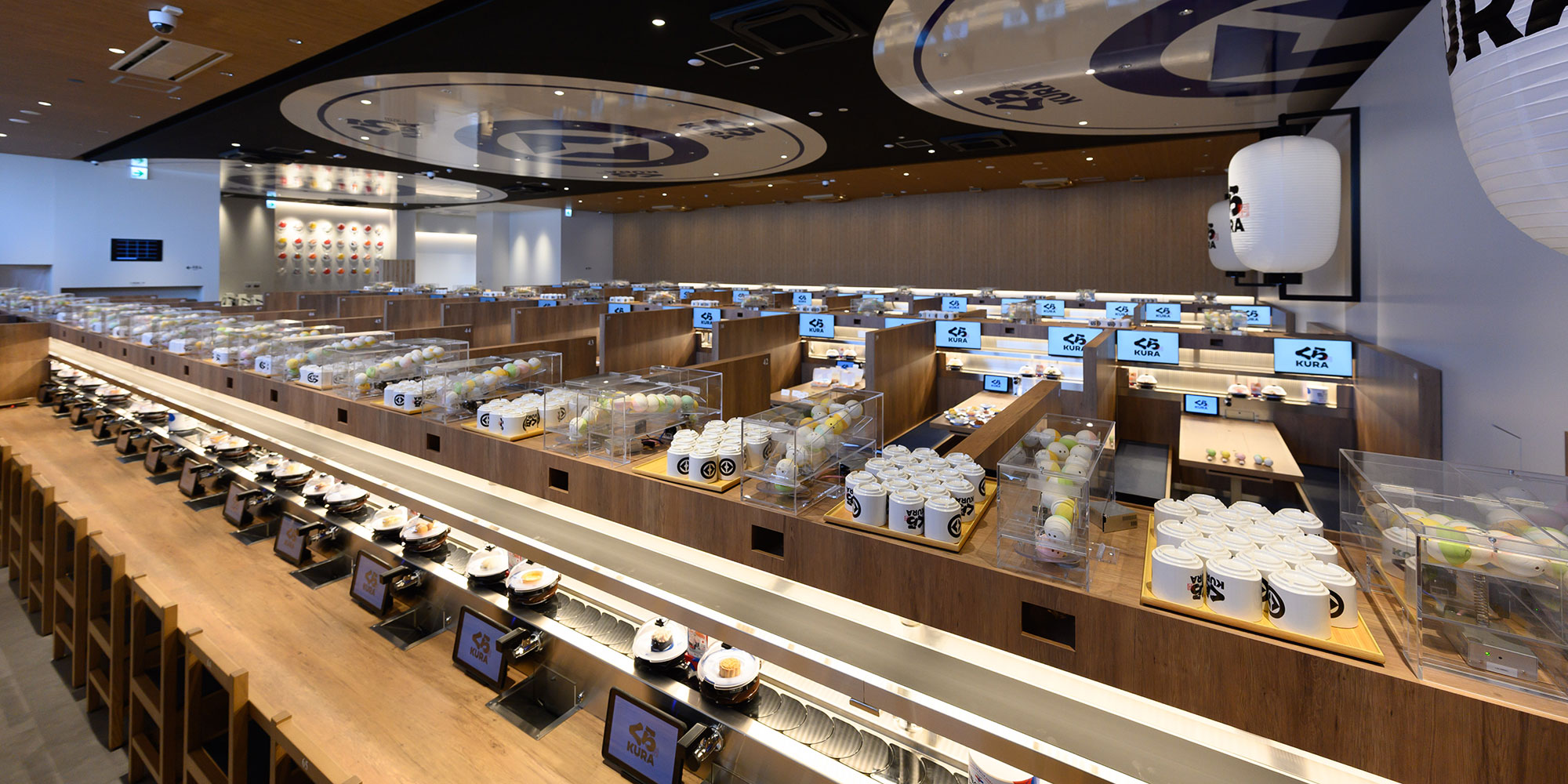
The Kura Sushi Osaka-Kansai Expo branch, which became a major topic of conversation with an 8-hour wait on opening day and serves international cuisine from 70 countries and regions as well as special Expo menus like “future sushi toppings,” has implemented BEEATS’ cloud signage “Clomoni”.
What is an Expo? Its history and role
Expos (World Expositions) have a long history as a place for the world to showcase the progress of industry, culture, and science and technology, and for each country to display its latest achievements. The first Expo was the “Great Exhibition” held in London in 1851, where countries from around the world exhibited the fruits of the Industrial Revolution. It seems that at the time, it was also a place to show off a nation’s prosperity to the world. Japan has also held multiple Expos to date, and the 1970 “Osaka Expo (EXPO’70)” in particular is remembered as an event that symbolized Japan’s rapid economic growth. This Expo was held under the theme of “Progress and Harmony for Mankind” and garnered attention for displays such as the Tower of the Sun and a linear motor car.
Major Expos held in Japan
World Expositions held in Japan reflect the social and economic background of their respective eras. From post-war recovery, rapid economic growth, the bubble era, and the IT revolution to the era of sustainability, Japan’s Expos have set themes corresponding to the times and communicated messages both domestically and internationally. Here is a brief introduction to the characteristics of each Expo.
1970 Osaka Expo (EXPO’70)Theme: “Progress and Harmony for Mankind”
● Japan’s first full-scale Expo and the first to be held in Asia ● A symbolic event of the rapid economic growth period ● The Tower of the Sun, moon rock exhibits, and moving walkways were among the highlights
1985 Tsukuba Expo (International Exposition, Tsukuba, Japan) Theme: "Humans, Living, Environment, and Science and Technology"
● An Expo specializing in science and technology ● Exhibits of robots and IT technology garnered attention ● First public demonstration of a maglev train in Japan
2005 EXPO 2005 AichiTheme: "Nature's Wisdom" Focused on environmental technology and sustainability under the theme of "Nature's Wisdom."
● An Expo themed around environmental protection ● Introduced fuel cell vehicles and Linimo (maglev train) ● “Morizo & Kiccoro” became popular as mascot characters
Japan's Expos have evolved while reflecting the flow of the times, such as development during the economic growth period, innovation of science and technology, and rising environmental awareness. So what will the 2025 Osaka-Kansai Expo be like?
Overview of the 2025 Osaka-Kansai Expo
The Osaka-Kansai Expo will be held in Osaka Prefecture, Japan, in 2025. Here is an overview. Theme: “Designing Future Society for Our Lives”
Concept People’s Living Lab – Experimental Ground for Future Society 1. Not only watching exhibits, but 8 billion people worldwide exchange ideas and "co-create" a future society. 2. Before the Expo, launch an online platform that can share issues and solutions from all over the world. 3. Collect global wisdom such as advanced technology to solve common human problems and become a place to create and disseminate new ideas.
Period: 184 days from Sunday, April 13, 2025, to Monday, October 13, 2025 Location: Yumeshima, Osaka City, Osaka Prefecture
Features of the Expo 2025 Osaka, Kansai, Japan and highlights for marketers
The 2025 Osaka-Kansai Expo is composed with a strong awareness of the evolution of digital technology and the perspective of solving social issues. In particular, for people involved in marketing, I think the following points will be helpful.
1. Experimental ground to know future consumption behavior At the Osaka-Kansai Expo, many "future purchasing experiences" that fuse digital and real are incorporated. For example, pay attention to spatial design utilizing virtual exhibits and digital twin technology. For marketers, it will be a perfect opportunity to observe how these technologies are actually accepted by consumers.
2. A place to experience the world view of brands Corporate pavilions will be an important place for each brand to perform its world view beyond the exhibition of products and services. As Panasonic (then Matsushita Electric) proposed a future home appliance life at the 1970 Osaka Expo, companies are deploying experiential marketing making full use of storytelling, which will be a hint for thinking about brand strategy.
3. Fusion of real events and online Through the COVID-19 pandemic, the fusion of real events and online has become a new common sense in marketing. At the Expo, many online participatory projects are being prepared as a "Digital Expo." It will be a place to learn how to design the interaction between real events and digital content.
4. Catch the latest trends in the global market The pavilions of countries around the world are packed with each country's latest technology and culture. International culture-rich exhibitions should be important sources of information for marketers aiming for market expansion in the future.
5. The forefront of SDGs and sustainability In recent years, how to incorporate SDGs (Sustainable Development Goals) in corporate marketing is considered important. Since sustainable technology and services that reduce environmental burden will be introduced at the Osaka-Kansai Expo, you will find many points that can be utilized for future marketing and brand strategies.
7 Areas of the 2025 Osaka-Kansai Expo
1. Signature Pavilions (Thematic Projects) Pavilions that symbolize the Expo, where major companies and organizations hold exhibits where you can “experience a future society.” ・Embodiment of “Designing Future Society for Our Lives” ・8 pavilions are scheduled to appear
2. Corporate and Organizational Pavilions Domestic and international companies and organizations exhibit future technologies and lifestyles. ・Major companies such as Toyota, Panasonic, NTT, and Mitsubishi are participating ・Utilizing AI, robots, mobility, digital technology, etc.
3. International Pavilions (Government Exhibits) Governments from each country exhibit and introduce solutions to their own technical, cultural, and social issues. ・About 150 countries are scheduled to participate ・Themes include SDGs, decarbonization, digital society, medical care, etc.
4. Future Society Showcase Demonstrating new technologies and social systems through the Expo. ・Operation of flying cars (eVTOL) ・Experiments with digital currency and contactless payments ・Experience of telemedicine and healthcare technologies
5. Participatory Programs (Events and Exchanges) Events where visitors can experience and participate. ・Experiential content utilizing VR/AR technology ・Workshops and conferences
6. Sustainability Ecosystem Realizing sustainable operations by reducing environmental impact. ・Architecture with decarbonized design (use of wood/recycled materials) ・Introduction of circular energy systems
7. Infrastructure/Access Related New transportation and infrastructure development for the Expo. ・New access to Yumeshima (subway extension, introduction of buses and ships) ・Movement experience utilizing MaaS (Mobility as a Service)
Areas to visit from a marketing perspective
Japanese Corporate Pavilions
Characterized by exhibits that fuse future technology and traditional culture. Through smart cities and experiential content, we propose new value to visitors, making it a perfect learning opportunity for marketing. Check out how top domestic companies envision the future of their brands.
Thematic Project “Future Society Showcase”
Experience the fusion of cyber and physical based on Society 5.0. It is attracting attention as a place to think about problem-solving in future cities and new forms of happiness. Next-generation lifestyles and urban designs are presented, serving as clues to gain consumer insights.
International Pavilions
You can experience the uniqueness and innovation of each country. Useful for planning marketing strategies from a global perspective as a place for international cooperation and cultural exchange. Experience global market trends and growth strategies of emerging countries.
Sustainability Zone
Exhibiting cutting-edge technology for solving environmental issues. Initiatives for next-generation energy and a circular society can be utilized to strengthen a company’s CSR activities. Gain hints for marketing methods that utilize environmental and eco-technologies.
The Osaka-Kansai Expo is a source of great inspiration not only for marketers but also for designers and creators. As an event that reflects the technological evolution and cultural changes of each era, creative expressions are made in various forms.
Full of highlights from a creator & designer perspective too!
1. Evolution of Mascot Characters Speaking of Expos, mascot characters are a symbol. In past Expos, characters ranging from futuristic designs to those incorporating the pop culture of the time have appeared, and it is expected that contemporary designs will follow this while adding new elements. These are also important from a marketing perspective, providing hints for conveying brand images and messages to target audiences.
2. Booth Construction and Exhibit Methods Booths for each country and company make full use of the latest architectural technologies and materials to express their unique concepts. This is very helpful for the design of exhibition and event booths. For example, in past Expos, sustainable booths using eco-materials became a topic of conversation. This shows how companies can creatively express their consideration for the environment, making an impact on visitors. It will serve as a reference for how to use space to effectively convey brand messages in the field of marketing and exhibition design. 3. Interactive Exhibits In recent Expos, interactive exhibits have been increasing, with formats where visitors deepen their understanding through experience becoming mainstream. Exhibit methods utilizing digital technology, AR (Augmented Reality), and VR (Virtual Reality) are also increasingly being adopted in events, store design, and exhibition sites. As a marketer, you will be able to learn the importance of conveying messages through “experience” to visitors at the Expo.
4. Signage and Information Displays Because a vast number of people move within the Expo venue, the design of signs and information displays is extremely important. While simple and easy-to-understand designs are necessary, it is also essential to incorporate creative elements that catch the attention of visitors. This point can also be applied to signage planning for commercial facilities, event venues, and exhibition booths, serving as a reference for design techniques to appropriately convey brands and messages.
5. Fusion of Digital and Analog While the Expo is a place to exhibit the cutting edge of digital technology, it often fuses the beauty of analog and traditional culture at the same time. This balance of digital and analog provides great hints for modern marketing and event design. For example, the combination of digital signage and handcrafted art provides fresh surprises to consumers.
The Osaka-Kansai Expo is not just an exhibition event; it is a place to foresee the future of marketing and design. The inspiration gained from the Expo will surely be very useful for marketers and creators.
The Osaka-Kansai Expo, including its “controversies,” is a microcosm of modern marketing
The Osaka-Kansai Expo has attracted a lot of attention on SNS before it was held, and various opinions were exchanged. Voices of all sizes have been sent, such as the increase in construction costs of the ring-shaped venue, changes in pavilions, and reactions to official characters and logo designs.
This series of events is very thought-provoking when considering how information spreads in current society and where empathy and discomfort are born. For us marketers and creators, it might be called a textbook that reflects the modern era.
What becomes a topic, and what kind of expression invites support or questions. Being able to observe that process in real-time is a charm unique to large-scale events like the Expo. I think the perspective of not fearing diverse reactions, but capturing them as clues to current values is becoming increasingly important.
Please consult BEEATS for solutions to your marketing challenges!
BEEATS, a marketing company in its 49th year of business, has supported many clients with their events and promotions to date. We are committed to providing special brand experiences in all scenarios, such as exhibitions, product events, and pop-ups.
Why not shape “new customer experiences” together with BEEATS? If you are a corporate representative with marketing challenges or are interested, please feel free to consult with us.
Q1. What is the overview and theme of the 2025 Osaka-Kansai Expo?
A1. The theme of the 2025 Osaka-Kansai Expo is "Designing Future Society for Our Lives." It upholds the concept of an "Experimental Ground for Future Society" and will be held for 184 days from April 13 to October 13, 2025, in Yumeshima, Osaka City, Osaka Prefecture, becoming a place for co-creation that gathers global wisdom such as advanced technology.
Q2. Why should marketers pay attention to the Osaka-Kansai Expo?
A2. Marketers should pay attention because it is a perfect opportunity to practically learn about future consumer behavior and the latest trends. You can gain numerous insights essential for thinking about future marketing strategies, such as building a brand’s worldview at corporate pavilions, the fusion of real events and online, and the forefront of the SDGs.
Q3. What are the highlights of the Expo for creators and designers?
A3. Highlights for creators and designers are the latest booth molding and interactive exhibition methods. You can learn methods to effectively convey messages using space, such as mascot character designs, spatial production using eco-materials, experience design utilizing AR and VR, and easy-to-understand sign plans.
Q4. Which areas of the Expo should be visited from a marketing perspective?
A4. From a marketing perspective, there are four areas that should be visited: Japanese Corporate Pavilions, the “Future Society Showcase” thematic project, International Pavilions, and the Sustainability Zone. Touring these will provide hints for next-generation lifestyles, global market trends, and promotions utilizing environmental and eco-technologies.