Frenzy, excitement, and the birth of a new culture. What is attracting hot attention in Japan's entertainment industry right now is "eSports". And at its center is Gen Z, who are called digital natives. Their passion and consumption behavior are growing the eSports market at an astonishing speed, affecting corporate marketing strategies. This time, we will introduce the new era of entertainment business woven by Gen Z and eSports.
1. Introduction: Rapid growth of the eSports market
The eSports industry is growing at a rapid pace.
According to estimates by the Japan eSports Union, the domestic eSports market size in 2022 reached 11.6 billion yen, approximately 1.5 times the previous year.
Along with the resumption of real-world events following the end of the COVID-19 pandemic, it is showing further excitement and is attracting attention as a new content industry.
2. What is eSports
eSports (electronic sports) involves activities where computer or video games are played as competitive sports. The mainstream style uses competitive game titles for individuals or teams to compete against each other.
■ Characteristics of eSports
•Competitiveness: Victory or defeat is determined by operating techniques, strategy, and judgment in the moment. Like sports, players hone their skills through daily practice. •Spectator Live Streaming: Live broadcasts of matches and tournaments with commentary are held, and many fans enjoy watching. •Diverse Genres: Competition takes place in diverse genres, such as First-Person Shooters (FPS), fighting games, Multiplayer Online Battle Arenas (MOBA), and sports games.
■ eSports competitive environment
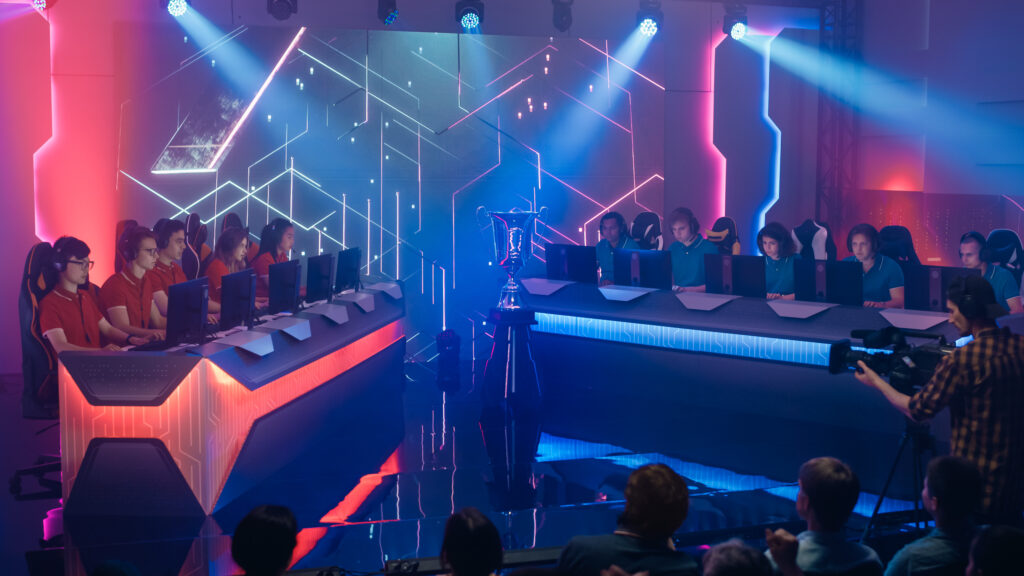
・Players operate individually or in teams, with competitive environments comparable to traditional sports, such as training facilities and coaching guidance. ・Global tournaments can offer millions of dollars in prize money, and top players are valued similarly to professional athletes.
eSports is a new era of sports where, in addition to competitiveness and appeal as a sport, business potential is also anticipated. Its appeal, which connects the online and real worlds, continues to attract more and more people.
3. Affinity between Gen Z and eSports
Gen Z has grown up as digital natives, doing much of their information gathering and communication through social media and video sharing services.
For Gen Z, for whom online communication and entertainment are daily routines, games and distribution platforms, which are the stages for eSports, are a very familiar presence.
In particular, on platforms such as YouTube and Twitch, game-related content boasts immense popularity, and game streamers and eSports athletes are attracting attention as "new stars" for Gen Z. Also, since there are many Gen Z players in "eSports", it is one of the factors that increases familiarity for the same generation.
Furthermore, eSports creates connections through games, fostering interactions during live spectating and forming fan communities where people "support" their favorite games, teams, and players. As seen in the "kaiwai-shohi" (community consumption) and "oshi-katsu-shohi" (fandom consumption) trends that have gained attention as Gen Z consumption habits in recent years, these communities also hold value as experiences that generate connections and empathy among fans.
For Gen Z, who tend to prioritize connection with communities and empathy, eSports is supported not as mere entertainment, but as an experience through empathy and sharing.
4. [Success in large-scale attraction even with paid entry!] eSports event case studies
eSports, which is gathering popularity like this, has already held events in Japan that have succeeded in attracting large crowds. The rise in its popularity can be seen from the fact that there is a large turnout even for events with a paid ticket format. Here are a few case studies below.
Case Study 1. VALORANT Challengers Japan 2023 Split 2
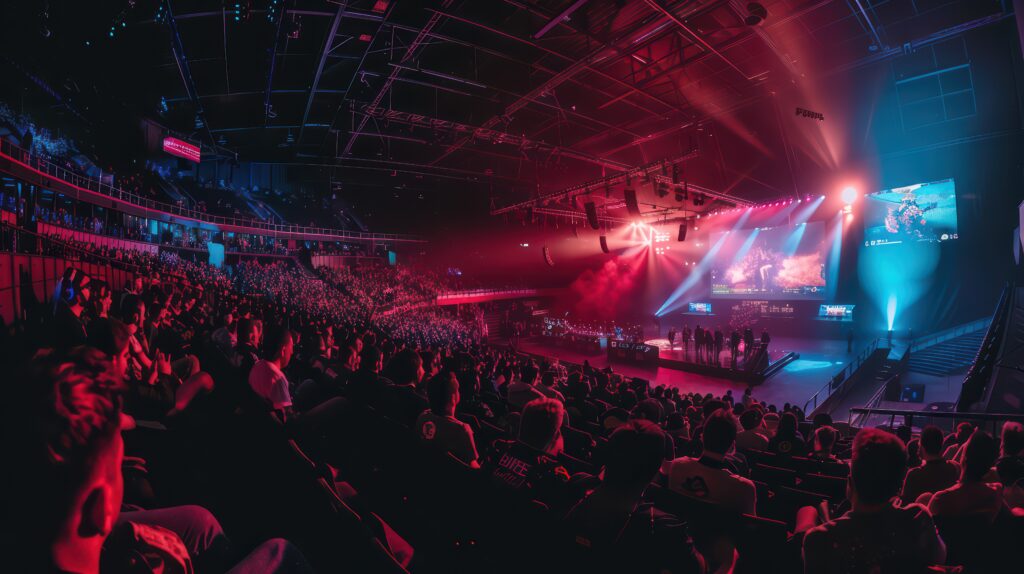
At the domestic tournament for the popular FPS game "VALORANT" held at the Saitama Super Arena in June 2023, more than 26,000 spectators visited over two days, achieving the highest attendance record in the history of eSports in Japan at the time.
Also, the two-day video stream set a record for that time with approximately 500,000 peak concurrent viewers for an offline tournament with a live audience.
Case Study 2. EVO Japan 2024
EVO Japan 2024 is the largest fighting game tournament in Japan and was held at Ariake GYM-EX for three days from April 27 to April 29, 2024.
In previous EVO Japan tournaments, in addition to the participation fee, admission was free except for the final tournaments of the three major titles held on the last day. However, this year, considering sound operation and ensuring continuity, participation fees and admission fees were charged. Therefore, there were concerns about attracting customers, but in reality, the 25,000 tickets prepared in advance were sold out. Although there has been no announcement of exact figures, the number of visitors over the three days recorded an all-time high.
In addition, the number of tournament participants exceeded a total of 9,000, making it the highest excitement ever with many people participating from overseas.
Case Study 3. "Street Fighter League: Pro-JP 2024"
"Street Fighter League: Pro-JP 2024" (SFL Pro-JP 2024) is the 7th season of the Japanese professional "Street Fighter" team competition hosted by Capcom. This league uses "Street Fighter 6", 12 teams participate, the largest ever, and the top 3 teams in each division advance to the playoffs and compete in a single-elimination format. The winner of the playoffs advances to the Grand Final, and the winning team earns the right to participate in the SFL World Championship 2024.
The playoffs will be held offline on December 21 (Sat) and December 22 (Sun), 2024, but spectators cannot watch at the venue; instead, WEB advance viewing tickets are on sale. The Grand Finals will be held offline on February 11 (Tue/Holiday), 2025, and tickets for local viewing are on sale. (Grand Finals also have WEB advance viewing tickets like the playoffs)
Street Fighter League provides online broadcasts of all sections on the official CAPCOM Fighters JP YouTube and Twitch channels, recording tens of thousands of concurrent connections each section. With the local viewing tickets for the Grand Final S seats and A seats already sold out (as of November 26, 2024), it is showing the largest excitement ever.
The author also plays "Street Fighter 6" and has already purchased WEB advance viewing tickets for the playoffs and grand finals!!
5. Impact of eSports on Gen Z marketing
Along with the expansion of eSports popularity and market, the number of companies emphasizing marketing utilizing eSports as an approach to Gen Z is increasing.
According to research data from the Ministry of Economy, Trade and Industry, there is a result that about 80% of Gen Z who watched eSports "take action toward sponsored products". Furthermore, it has been found that Gen Z has a higher tendency to "recommend sponsored products to those around them" than other generations.
Gen Z has the characteristic that the effect of improving brand image through sponsorship is significant, and information from favorite content easily leads to trust in the brand.
For this reason, eSports has become an attractive marketing tool for companies.
Corporate Case Study 1: UNITED ARROWS x Riot Games Collaboration
UNITED ARROWS planned and sold its first collaborative merchandise at the "Riot Games ONE Offline Event" held in December 2023. Regarding the first collaboration, designs expressing VALORANT caused a major reaction, with some products selling out on the day of the event.
Case Study 2. JCB x ZETA DIVISION Collaboration
JCB Co., Ltd. concluded a sponsorship agreement with the professional eSports team "ZETA DIVISION" in November 2022. The agreement was made with the goal of expanding awareness of the "JCB brand" and having people know the appeal that cannot be conveyed by general advertising alone, especially to make the JCB brand more widely known to Gen Z.
When JCB conducted a survey as "customer feedback" to people aged 18 to 39, more than 90% of customers responded that they had a favorable impression of the sponsorship for ZETA DIVISION, which caused a reaction.
6. Future Outlook and Corporate Challenges
According to research, about 1 in 4 Gen Z people play games almost every day, and their engagement is very high. Many also like "exercise/sports", and there are answers that they like both equally. These data indicate that Gen Z is open to diverse entertainment.
Thus, eSports and Gen Z are closely related, and their influence is expected to continue to expand. For companies and marketers, understanding and utilizing this relationship is important. Companies are required to successfully enter this "circle" and build strong engagement with Gen Z.
eSports is expected to attract more and more attention not as a mere game tournament but as a new content industry.
7. If you want spatial design & promotion for Gen Z, go to BEEATS!
We conduct spatial design and event planning that is conscious of Gen Z's characteristics, as well as kaiwai-shohi related to eSports!
We will utilize state-of-the-art creative from South Korea to design and construct more attractive stores.
We will broadly support everything from designing spaces where Gen Z gathers to promotional planning. When you are considering planning that targets Gen Z, please feel free to consult with us.
A1. eSports refers to activities that involve competing in computer games or video games. It has characteristics such as "competitiveness" where operating techniques and strategies determine victory or defeat, "spectator live streaming" where you can enjoy matches through distribution, and "diverse genres" such as FPS and fighting games, and is attracting attention as a new era of entertainment.
Q2. Why is the affinity between Gen Z and eSports high?
A2. This is because online entertainment and video streaming platforms are a familiar, everyday presence for Gen Z, who are digital natives. Furthermore, it aligns with their values such as "oshi-katsu consumption" (spending on supporting favorite idols/players) and "kaiwai-shohi" (consumption related to connecting with other fans within a specific circle), which is why they strongly support it.
Q3. What are the effects of companies utilizing eSports for marketing?
A3. Marketing utilization of eSports has the effect of eliciting purchasing behavior and recommendation behavior from Gen Z. There is data showing that about 80% of Gen Z who actually watched eSports take action toward sponsored products, and it is characterized by the fact that support for favorite content is easily linked to trust in the brand and image improvement.