When thinking about a plan as a sales promotion or marketing person, have you ever experienced worrying because no good ideas come up, or repeating the same things over and over and becoming at a loss...?
I think this is a wall that not only sales promotion and marketing staff, but anyone involved in planning or design will hit at least once.
We at BEEATS, who perform marketing support for various clients, worry in the same way, and we are constantly striving while exploring new approaches to generate better plans and designs.
"When you are worried about planning or design, is there a good hint on how to think about it?"
When the Retail Voice editorial team interviewed the leader of the creative promotion group at BEEATS, we encountered a very helpful way of thinking. That is 'Fundamental Thinking', which is also in the title of this article.
This 'Fundamental Thinking' is a method we at BEEATS value for changing our perspective and rethinking when we are worried, and it is a perspective useful not only for marketing and design, but also for daily work and life!
This time, to provide information that will be a hint for ideas for struggling marketers and those involved in planning and design, we will introduce what 'Fundamental Thinking' is, why it is important, and concrete ways to practice it. We hope this article serves as a trigger to significantly improve your planning and proposal skills!
What is 'Fundamental Thinking' useful for planning?
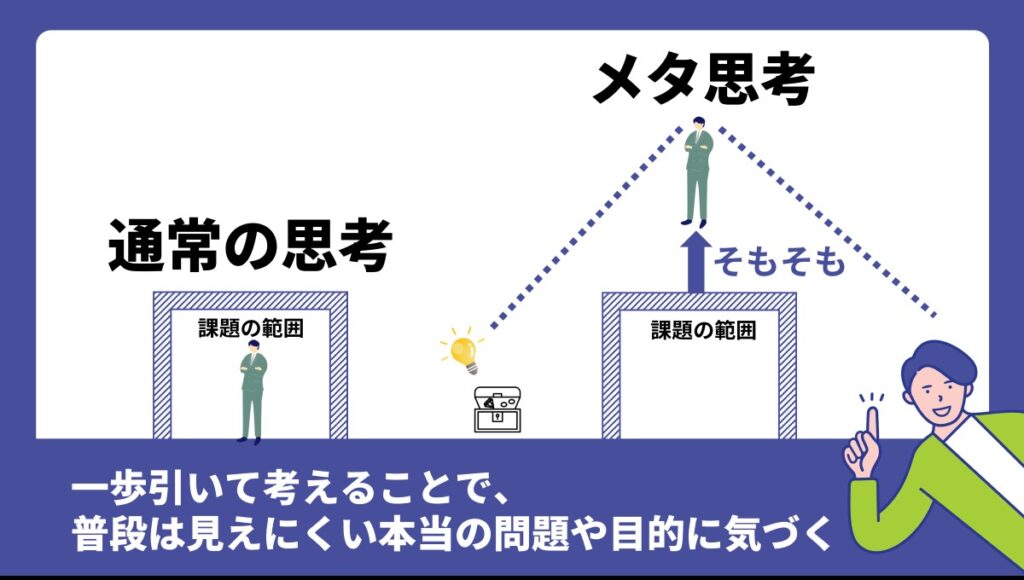
"Fundamental thinking" is a mindset that reexamines the root cause or true purpose when faced with problems or issues.
Simply put, instead of trying to solve the problem in front of you as it is, take a step back and think, "What is this for in the first place?" Just by doing this, you may be able to see the truly necessary solutions.
For example, it is common for business people to be busy every day and overwhelmed just by processing tasks one by one. But by asking, "What is the reason for doing this task in the first place?", efficiency can increase, and it may be possible to devote time to more important things.
In the next chapter, we will introduce how to utilize this 'Fundamental Thinking' with concrete examples. It will surely be useful as a hint for your daily work and planning!
Concrete examples of 'Fundamental Thinking'
We thought about concrete examples of how to actually use 'Fundamental Thinking' in work scenes.
case 1
When a new employee says, "I can't seem to remember it..."
Suppose you are teaching a job to a new employee at the company and they say, "I can't seem to remember it...". In this case, you tend to think, "Should I explain it more carefully?". However, if you stop and think, "Why can't they remember it in the first place?", the following causes can also be considered.
【Possible reasons】 ・Explained without grasping the new employee's level of understanding or prior knowledge ・Too many technical terms, making it hard to understand ・Few opportunities to actually try it, expecting them to memorize it just mentally ・One-sided explanation, creating an atmosphere where it was hard to ask questions
In this way, by thinking from a "fundamental" perspective, we can see not only how to explain things more carefully, but also how to provide guidance from the perspective of a new employee. For example, you can find ways to improve the quality of instruction, such as tailoring explanations to their level of understanding, increasing opportunities for practice, and creating an atmosphere where it is easy to ask questions.
case 2
When introducing a new system doesn't go well
In recent DX times, there are more cases where new systems are introduced into companies. However, even if a new system is introduced, there may be situations where members cannot use it well and work efficiency does not increase easily. If you are in charge of introducing a new system, you might first think, "Should I increase the time for training on operating the new system?" or "Should I hold an orientation again?". However, if you stop and think for a moment, "Why can't they use it in the first place?", the following reasons might also be why the system does not take root.
【Possible reasons】 ・The system does not match the actual situation on-site ・Operations are complex and take time to master ・Guidance and support on how to use it are lacking ・Members do not realize the benefits of the introduction
By thinking from a "fundamental" perspective, you can find fundamental improvement measures, such as not just increasing training opportunities, but reviewing system manuals or making training in line with actual operations (improvement of training content).
The spread of 'Fundamental Thinking' that leads to successful planning
'Fundamental Thinking' is, so to speak, 'meta-thinking' that slightly changes the perspective to look at the whole picture. By taking a step back and thinking, you can notice true problems and purposes that are usually hard to see. Through this, it is possible to approach the essence of the problem, rather than superficial solutions.
By incorporating meta-thinking, you can grasp the background and overall picture of an issue and derive the most effective actions, rather than staying with simple judgment and handling. In other words, meta-thinking is an important way of thinking for grasping the root cause and purpose of things beyond normal thinking.
By utilizing 'Fundamental Thinking (meta-thinking)', you can notice the background and true purpose, rather than just doing what you are instructed to do, and it is expected to raise the quality of proposals and plans.
'Fundamental Thinking' useful for daily life
'Fundamental Thinking' is effective not only in work and planning, but in all daily situations. Just asking yourself, "Why am I doing this in the first place?" when working on something is effective.
case 1
'Fundamental' in work tasks
Email processing Instead of just opening and replying to emails, let's think, "What is the goal of this email exchange in the first place?" If the purpose is just information sharing, you can save a lot of time by summarizing replies concisely or just confirming when a reply is unnecessary. Such small efforts lead to simpler and more effective communication.
Meeting preparation Even when making materials for a meeting, by thinking, "What is this material for in the first place?", you can omit unnecessary information and finish the material with narrowed-down points. This improves meeting time reduction and content enrichment.
case 2
'Fundamental' at home
Cleaning and tidying up If your room gets cluttered quickly, let's think, "Why does it not stay tidy in the first place?" Is there not enough storage space, are there too many items, or is it necessary to reduce the hassle of tidying up? By reviewing these causes, you can create an environment that is easier to keep tidy and reduce daily burdens.
Morning preparation Do you ever feel rushed in the morning and always feel like you are running out of time? In such cases, let's think, "Why is morning preparation so hectic in the first place?" By preparing tomorrow's clothes the night before, keeping necessary items together at the entrance, or keeping breakfast simple, you might find more peace of mind in the morning.
'Fundamental Thinking' helps broaden new ideas and options by looking at things from another angle. Without being caught by stereotypes, by asking, "What other ways are there in the first place?", you can use it in various daily situations.
Using 'Fundamental Thinking' in design
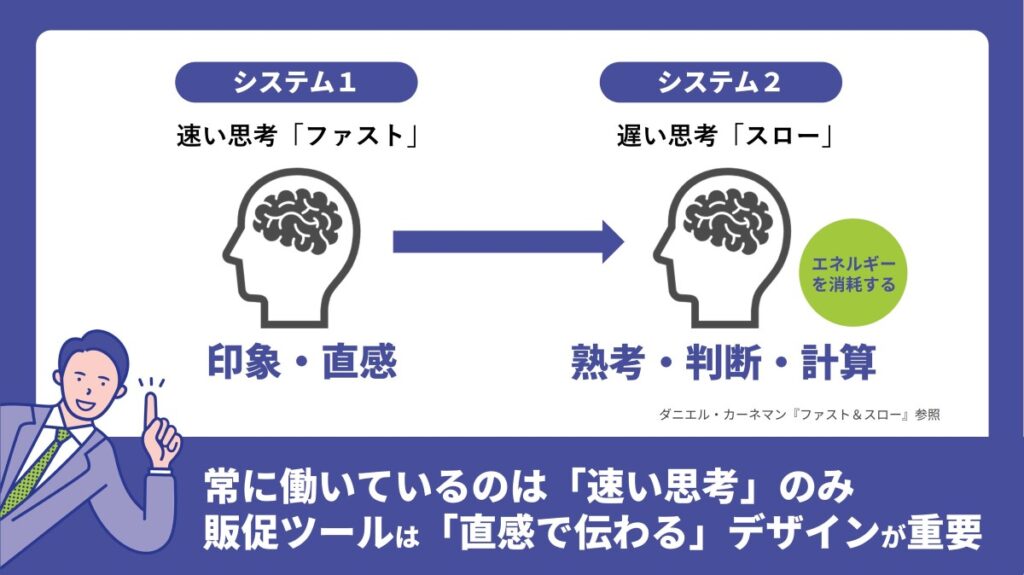
The 'Fundamental Thinking' perspective is also important in design. According to Daniel Kahneman's book 'Thinking, Fast and Slow', human thinking has two systems: intuitive 'fast thinking' and deliberate 'slow thinking'.
System 1. Fast (Fast Thinking)
...Judgments based on intuition and emotions based on experience. Automatic and quick.It works in situations where you react instantly without thinking about anything. Most daily decisions are made by this fast [system].
System 2. Slow (Slow Thinking)
...Judgments brought about by deliberation. Conscious and logical.Used when working on complex problems or learning new information, but it is rarely used normally because it requires time and energy.
What we use every day is overwhelmingly "fast thinking," and we make instantaneous judgments based on what we feel. For example, feeling "sad" when seeing a photo of a woman crying, feeling "luxury" when seeing a black box with gold leaf stamping, or feeling "spring-like" when seeing a poster with a cherry blossom pattern are also due to "fast" thinking.
◆◆◆ In-store sales promotion tools and 'Fast (Fast Thinking)'
Let's replace this with the design of in-store sales promotion tools. In a busy store, for customers who are not particularly seeking information, it only takes a few seconds for their eyes to land on sales promotion tools. In that brief moment, whether they "have interest" or "pass through" is decided by the visual impression. In other words, a design that customers can feel instantly is what is required.
No matter how detailed the explanation is, if it doesn't attract interest in an instant, "slow thinking" will not be activated, and the information will be overlooked. This is a challenge common to various designs, not just in-store sales promotion tools, but also DM, folded flyers, web ads, and signage advertisements in town.
◆◆◆ Points of 'Fundamental Thinking' in design
The "thinking from first principles" when considering design is to convey information simply and visually, based on the premise that it "won't be read in the first place."Narrowing down the message you want to convey and creating a design that is understood directly is an important point.
Even if you have a lot to convey, such as product features, user evaluations, functional improvements, or campaign information, stuffing too much information will actually make it harder to convey. It is important to be aware of the premise that it "won't be read in the first place" and to narrow down the most important messages.
By incorporating 'Fundamental Thinking', designs that convey instantly are born, and you can appeal effectively.
BEEATS-style! How to utilize 'Fundamental Thinking' for planning
At BEEATS, we incorporate 'Fundamental Thinking' into the process of marketing planning, including sales promotion, and aim to provide proposals that are truly valuable for the client. With this way of thinking as the axis, we consistently proceed with the process from proposal to design creation, and provide solutions that face essential issues.
To summarize briefly how to incorporate 'Fundamental Thinking' into the planning and design process,
STEP 1. Clarify the purpose in the first place First, clarify "What is the project's purpose?". Instead of being caught up in the immediate task, check the overall purpose and share it with the team. For example, when asked by a client to propose a spring campaign, we focus on digging into the background, such as "Why do we do a campaign in the spring?", rather than simply responding to the request.
STEP 2. Dig deep into the true needs of the client and target To grasp the client's true needs, we conduct thorough research and analysis. By also considering the target's perspective and understanding "Who is the target and what are they seeking?", we can make more effective proposals.
STEP 3. Refine plans with 'Fundamental Thinking' After clarifying the purpose and understanding the needs of the client and target, it is planning. We continue to ask "What is this plan to solve?" and shape solutions that match the issues.
STEP 4. Create effective designs Always being conscious of "Does it convey at a glance?" and "How can information be conveyed clearly?", we create designs that are easy to understand. We keep "effective" designs in mind and aim to increase visual appeal.
In this way, BEEATS incorporates 'Fundamental Thinking' when planning and designing.
Proposals for in-store sales promotion tools tailored to the launch of new products, etc.
・Why this tool structure in the first place ・Why this size/specification in the first place ・Why this design for the current tool in the first place ・Why this appeal content for the current tool in the first place ・・・
We are working while being conscious of various "fundamentals" like this.
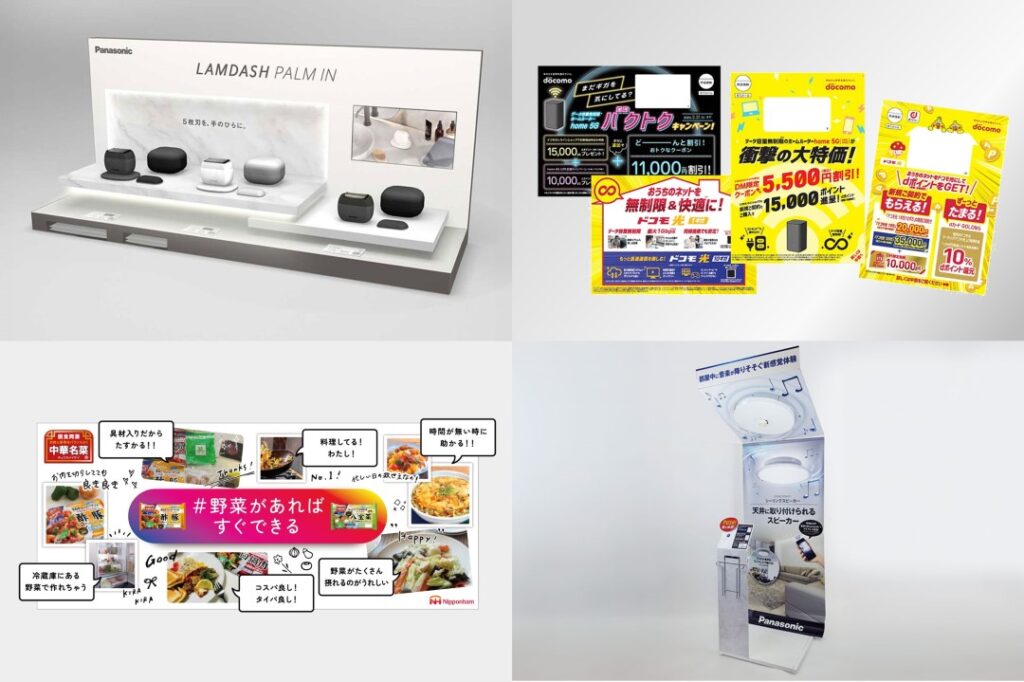
BEEATS sales promotion tool production examples
If reading this article has piqued your interest in the 'Fundamental Thinking' approach, please try incorporating it next time you are stuck on a plan. Just changing your perspective might provide hints that lead to new discoveries or ideas.
BEEATS refines plans with 'Fundamental Thinking'
For over 40 years since its founding, BEEATS has worked as a sales promotion professional in collaboration with leading companies in various industries, including manufacturing, telecommunications/IT, distribution, food, and apparel. In 2023, we drove approximately 6,900 projects annually. Throughout our extensive experience, we have honed our ability to look beyond superficial client requests, face essential needs and issues, and find effective solutions.
In this article, we introduced in detail about 'Fundamental Thinking', which BEEATS incorporates when making proposals. Did you feel even a little bit about how this approach of discerning the essence of issues leads to effective proposals and plans? If you are interested, thinking, "Will they make proposals with this way of thinking?", we are also very happy.
If you are interested, please experience a BEEATS proposal once. We will do our best to support you so that we can make better proposals for everyone!
Co-creating customer experiences in the retail domain
With the mission of "co-creating customer experiences in the retail domain," BEEATS provides marketing support that delivers client products and services to consumers as positive brand experiences that make them want to feel moved, surprised, happy, and share.
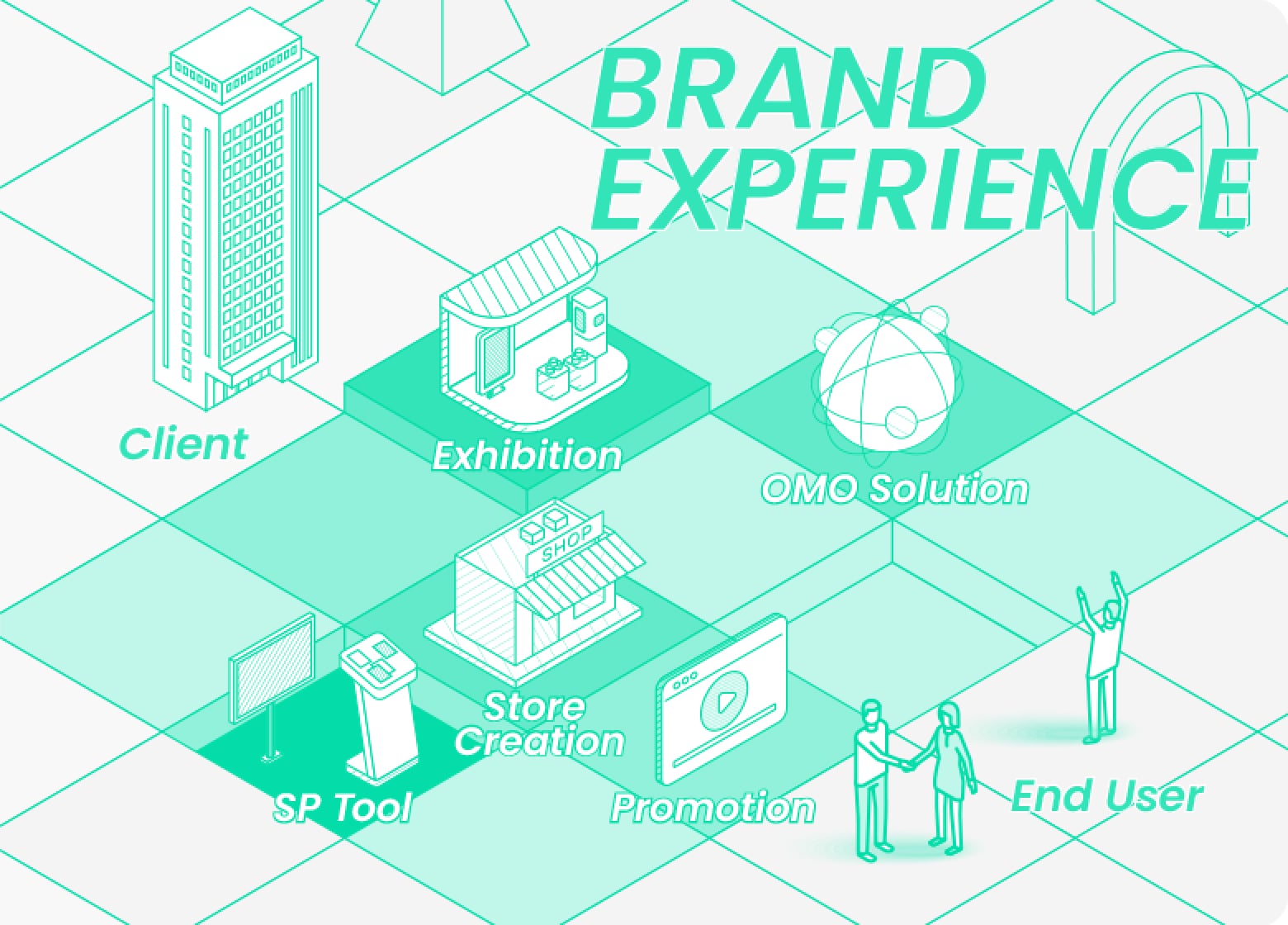
We provide optimal plans and solutions for various issues, ranging from sales promotion tools, exhibitions, store construction, pop-up stores, events, promotions, and even OMO solutions. If you have any worries or issues regarding marketing or planning, please feel free to consult us first.
A1. It is a way of thinking that involves re-examining the root cause or true purpose when facing a problem or issue. By taking a step back and looking at the whole picture with the question, "What is this for in the first place?", you can realize the truly necessary solutions and essential approaches, rather than just superficial ones.
Q2. How is 'Fundamental Thinking' useful in design?
A2. Standing on the premise that it "won't be read in the first place," it is useful for creating designs that convey information simply. Since humans judge instantly with intuitive "fast thinking," it is important to narrow down the messages you want to convey and appeal in an easy-to-understand visual way.
Q3. How does BEEATS incorporate 'Fundamental Thinking' into the planning process?
A3. We incorporate it in four steps: clarifying the purpose, digging deep into true needs, planning, and creating effective designs. We produce essential proposals that solve the client's true issues and designs with high visual appeal, without being caught up in the task in front of us.